
What Are Sanitary Valves and Fittings?
Sanitary valves and fittings are engineered to move, control, and connect product while supporting effective cleaning. You will find them in dairy lines, beverage plants, and pharmaceutical processing rooms. Their polished metal surfaces, smooth welds, and drainable shapes are practical details, not decoration. Small design choices matter.
The stakes are measurable. The U.S. Centers for Disease Control and Prevention estimates that foodborne diseases cause about 48 million illnesses, 128,000 hospitalizations, and 3,000 deaths in the United States each year. These figures describe the wider food-safety challenge; they do not measure failures caused by valves or fittings alone. Food-safety expert Frank Yiannas has emphasized, “Food safety is a shared responsibility.” That principle helps explain why equipment design, installation, cleaning, and maintenance all deserve attention.
What makes a valve sanitary? The answer involves more than stainless steel. Product-contact surfaces, seals, crevices, drainage, and cleaning access all affect hygienic performance. Standards and guidance from organizations such as 3-A Sanitary Standards, Inc. and EHEDG help engineers assess equipment design. Still, a compliant component cannot correct a poorly designed process line. That is easy to overlook. This introduction examines the main valve and fitting types, their materials, hygienic design features, and common applications. It also considers selection and maintenance, where real-world conditions can expose gaps between a specification and a cleanable system.
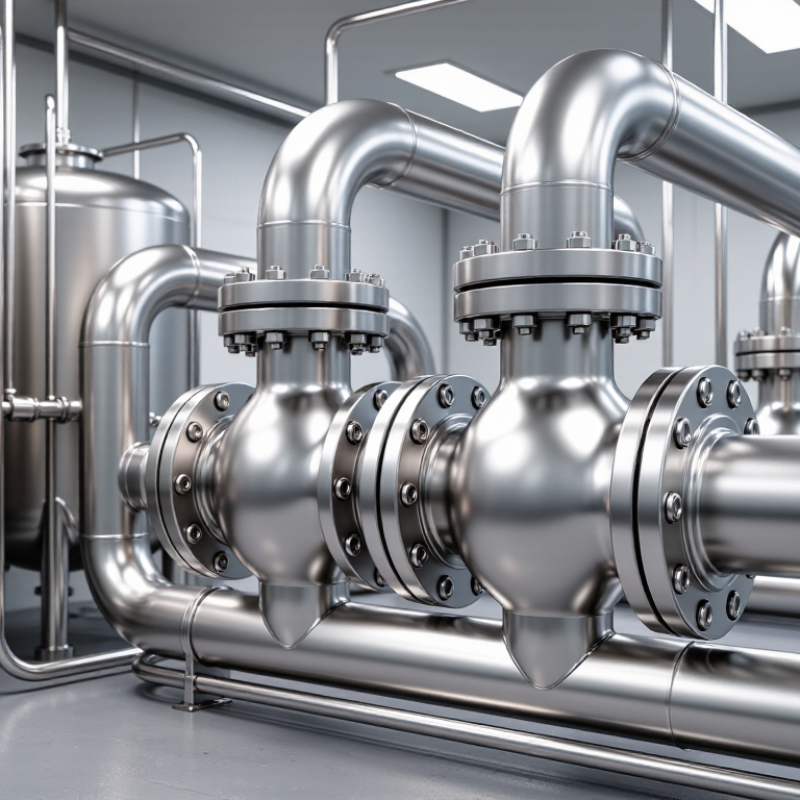
Definition and Purpose of Sanitary Valves and Fittings
Sanitary valves and fittings are fluid-system components designed for hygienic processing. Valves start, stop, or regulate product flow; fittings connect pipes, change direction, or join equipment. They are used in food, beverage, pharmaceutical, and personal-care production, where product-contact surfaces must be cleanable and corrosion resistant. Smooth surfaces and drainable designs help limit residue and microbial harborage. They do not make a process sterile by themselves.
The purpose is practical: move ingredients through tanks, pumps, and filling lines while supporting effective cleaning. ASME BPE provides design guidance for equipment used in bioprocessing, including hygienic components. The need for careful hygiene is substantial: the World Health Organization estimated that contaminated food causes 600 million illnesses and 420,000 deaths worldwide each year (WHO, 2015). A valve alone cannot prevent contamination. Installation, cleaning procedures, and maintenance matter too.
Tips: Check the valve’s material compatibility, operating temperature, and cleaning method before selecting it. Look for crevices, trapped liquid, or hard-to-reach seals during inspection. A polished surface helps, but it is not a guarantee. That detail is easy to overlook.
What Are Sanitary Valves and Fittings? — Definition and Purpose
| Component or Type | Definition and Design | Primary Purpose | Common Materials and Connections | Hygienic Design Considerations |
|---|---|---|---|---|
| Sanitary valves | Valves designed for product-contact piping in hygienic processing systems. They control, divert, or stop the flow of liquids and other process materials. | Manage product movement while supporting cleaning and, where required, sterilization procedures. | Commonly stainless steel, often 304 or 316L; connections may include sanitary clamps, butt welds, or other hygienic end connections. | Product-contact surfaces, seals, and internal geometry are selected to reduce residue retention and suit the process and cleaning method. |
| Butterfly valve | A quarter-turn valve with a rotating disc positioned in the flow path. | Provide relatively simple on-off control or isolation in suitable process lines. | Typically a stainless-steel body and disc with an elastomer seat; commonly supplied with clamped or welded ends. | Seat material and surface finish should be compatible with the product, operating temperature, and cleaning chemicals. |
| Diaphragm valve | A valve that uses a flexible diaphragm to separate the operating mechanism from the process fluid and close against a weir or seat. | Control or isolate flow, including in applications that benefit from a separated actuator mechanism. | Commonly a stainless-steel body with a process-compatible diaphragm; sanitary clamp and welded connections are available. | The diaphragm is a product-contact component and must be selected for chemical compatibility, temperature, and pressure conditions. |
| Sanitary ball valve | A quarter-turn valve that uses a bored sphere to open or block the flow path. | Provide shutoff or flow diversion in systems using a design suitable for the product and cleaning requirements. | Often stainless steel with polymer seats and seals; hygienic versions may use clamp or welded connections. | For hygienic service, the internal design should limit crevices and trapped product; not every standard ball valve is suitable for sanitary processing. |
| Check valve | An automatic valve that allows flow in one direction and closes to help prevent reverse flow. | Reduce backflow that could disrupt a process or contribute to cross-contamination. | Commonly stainless steel with compatible sealing elements; connection styles depend on the piping system. | Check internal parts and seat design for cleanability, orientation requirements, and compatibility with the process fluid. |
| Sanitary elbow | A formed or fabricated fitting that changes the direction of a pipe run, commonly by 45 or 90 degrees. | Route process piping while maintaining a continuous, appropriately sized flow path. | Often 304 or 316L stainless steel; may be supplied with butt-weld ends or sanitary clamp ends. | Internal surface finish, weld quality, and correct alignment help avoid ledges or gaps where product could collect. |
| Sanitary tee and reducer | A tee branches or combines process lines; a reducer transitions between different pipe diameters. | Distribute flow or connect piping of different sizes within a hygienic system. | Commonly stainless steel with welded or clamp-style ends sized to match the piping system. | Branch geometry and transitions should suit the process and cleaning approach; reducers may be concentric or eccentric depending on the layout. |
| Sanitary clamp connection | A detachable connection that joins compatible ferrules using a clamp and a gasket. | Allow piping or equipment sections to be assembled and disassembled for inspection, maintenance, or cleaning. | Typically stainless-steel ferrules and clamp with a gasket made from a process-compatible elastomer or polymer. | Correct gasket selection, clean sealing faces, and proper assembly are important to help maintain a hygienic joint. |
| Sanitary gasket and seal | A replaceable sealing element used at joints or within valves to prevent leakage and separate process fluids from the environment. | Maintain a leak-resistant connection or valve seal under specified operating conditions. | Common materials include EPDM, silicone, and PTFE; the suitable choice depends on the application. | Confirm chemical and temperature compatibility, pressure limits, and applicable food-contact or regulatory requirements for the intended market. |
Related Posts
-
Top 10 Sanitary Valves and Fittings You Need to Know?
-
7 Tips for Choosing Sanitary Valves and Fittings?
-
Top Stainless Sanitary Fittings Suppliers in China?
-
Top 5 Sanitary Valves and Fittings You Need to Know?
-

The 5 Best Sanitary Ball Valves for Optimal Performance in Your System?
-
What Are the Best Sanitary Valves in 2026?