Sanitary ball valves are compact control points used where product purity, cleanability, and dependable flow matter. They appear in dairy plants, breweries, pharmaceutical facilities, cosmetics production, and modern water-processing systems. Their polished stainless-steel bodies may look simple. The internal details are not.
A sanitary ball valve uses a drilled sphere to start, stop, or redirect fluid. When the handle turns, the bore aligns with the pipeline. Flow passes through with minimal obstruction. A quarter-turn rotates the bore away from the line. The valve closes. Think of a clean metal gate inside a pipe.
Hygienic process engineer Professor John Holah emphasizes a practical principle: “Good hygienic design prevents contamination rather than relying only on cleaning.” That idea explains why sanitary ball valves use smooth surfaces, crevice-resistant seals, drainable layouts, and carefully selected elastomers. These features reduce places where milk solids, sugar syrup, or microbial residue might remain.
Small details matter.
A valve can be labeled sanitary yet perform poorly if installed incorrectly. Dead legs, damaged seats, weak welds, and incompatible cleaning chemicals can undermine the design. This is where real operating experience becomes valuable. Inspectors and maintenance teams must examine the valve after repeated clean-in-place cycles, not only after installation.
This guide explores what sanitary ball valves are, how their components work, and why hygienic design affects safety and efficiency. It also considers pressure limits, temperature exposure, surface finish, seal materials, cleaning practices, and common selection mistakes. Some applications need more than a standard valve. That distinction deserves careful attention.
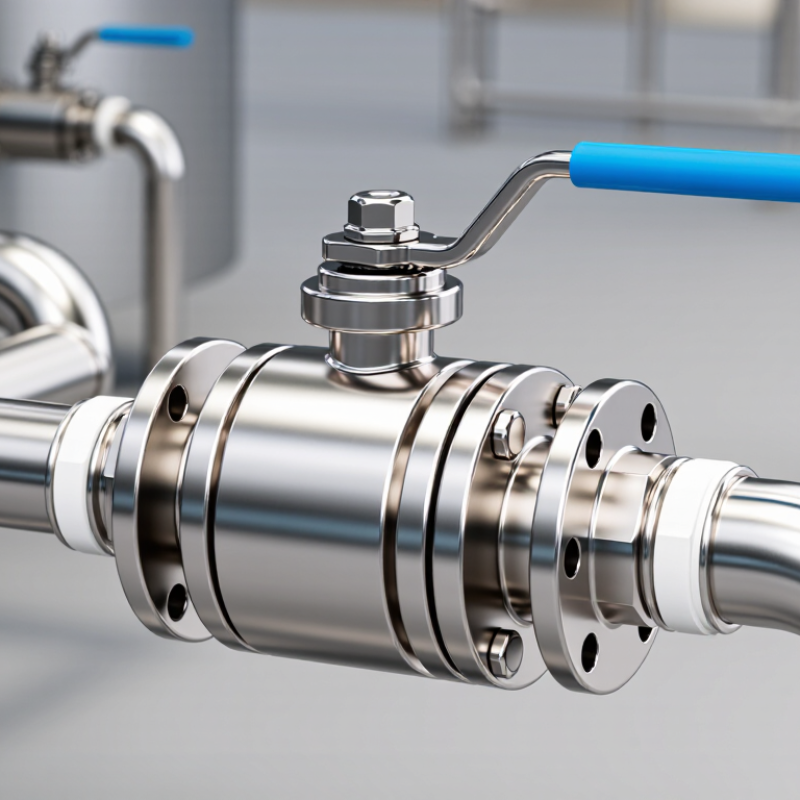
Sanitary ball valves are quarter-turn valves designed for clean processing lines.
A polished 316L stainless steel body resists corrosion from water, acids, and cleaning chemicals. The valve uses a drilled ball to control flow. Turning the handle 90 degrees aligns or blocks the passage.
Turning the handle 90 degrees aligns or blocks the passage.
The important detail is hygienic design. Smooth internal surfaces reduce product buildup, while minimal dead legs support effective cleaning and drainage.
Hygienic valves commonly follow principles in 3-A Sanitary Standards, EHEDG guidance, and ASME BPE practices. These frameworks address surface finish, drainability, weld quality, and cleanability.
The World Health Organization estimated that contaminated food causes about 600 million illnesses worldwide each year.
That figure explains why valve design matters beyond simple flow control. A clean-looking valve is not automatically a hygienic valve.
Tips:
Check the surface finish, seat material, weld quality, and installation slope. Confirm that the valve suits the cleaning temperature and chemical concentration. Inspect the cavity after repeated cycles.
Small residue can become a large process problem. In real plant audits, operators sometimes focus on external cleanliness and miss trapped product inside the valve. That assumption needs review.
Maintenance records should include leak tests, seal replacement dates, and inspection photographs. Use verified certificates for 316L material, not only supplier descriptions. Proper selection improves sanitation, but disciplined cleaning and inspection remain essential.
What Are Sanitary Ball Valves and How Do They Work?
Sanitary ball valves control product flow through a drilled ball inside the valve body. Turning the handle aligns the opening with the pipeline. A quarter-turn then closes the passage. Their compact design supports quick isolation during cleaning, maintenance, or process changes. However, smooth operation alone does not make a valve sanitary.
A key requirement is the 3-A surface finish, commonly specified below 0.8 μm Ra on product-contact surfaces. This limit reduces microscopic grooves where milk, beverages, or pharmaceutical liquids could remain. The result supports more effective cleaning and lowers contamination risks. A polished surface should feel even, without visible pits, scratches, or rough weld transitions. The details matter.
Ra is an average value, not a complete quality judgment. A surface can meet the reading while still containing a sharp defect or poorly finished weld. Qualified inspectors should measure representative areas with a calibrated roughness instrument. They should also examine seals, valve cavities, drainability, and dead spaces. During production audits, this broader check is often more useful than relying on paperwork alone. Electropolishing may improve cleanliness, but it does not repair bad geometry. That point is sometimes overlooked. Proper installation also matters, because trapped liquid can undermine an excellent finish.
| Data Dimension | Typical Requirement or Description | Why It Matters |
|---|---|---|
| Valve Type | Sanitary quarter-turn ball valve | Provides rapid on/off control with a compact flow path and relatively low pressure loss when fully open. |
| Operating Principle | A drilled spherical ball rotates 90° between the open and closed positions. | The bore aligns with the pipeline in the open position and turns perpendicular to the pipeline in the closed position. |
| Common Wetted Material | Austenitic stainless steel, commonly 316L for product-contact parts | 316L offers good corrosion resistance and is widely used in hygienic fluid-processing equipment. |
| Product-Contact Surface Finish | Below 0.8 μm Ra (approximately 32 μin Ra) for applicable hygienic product-contact surfaces | A smooth surface reduces areas where product residue and microorganisms can accumulate and supports effective cleaning. |
| Relevant Hygienic Standard | 3-A Sanitary Standards may specify a maximum roughness of 0.8 μm Ra for applicable product-contact surfaces. | The requirement helps establish cleanable, hygienic surface conditions for dairy and food-processing applications. |
| Seat Function | Elastomeric or polymeric seats support sealing around the rotating ball. | Seat selection affects leakage performance, temperature capability, chemical compatibility, and service life. |
| Typical Seat Materials | EPDM, PTFE, and FDA-compliant elastomer compounds are commonly selected according to service conditions. | The material must be compatible with the process fluid, cleaning chemicals, temperature, and pressure. |
| Connection Styles | Tri-clamp, butt-weld, hygienic threaded, or other sanitary process connections | Connection design influences installation speed, drainability, cleanability, and the risk of dead spaces. |
| Flow Path | Full-port or reduced-port bore, depending on valve design | A full-port design generally minimizes flow restriction and can improve pipeline pigging or drainage where applicable. |
| Cleaning Method | Clean-in-place (CIP), manual cleaning, or sterilization-in-place (SIP) when the complete valve assembly is designed for it | The valve must be evaluated as an assembly, including seats, seals, cavities, orientation, and operating procedure. |
| Dead-Leg Consideration | Internal pockets and stagnant zones should be minimized through hygienic geometry and correct installation. | Reducing stagnant areas improves drainability and lowers the risk of product retention and microbial growth. |
| Actuation Options | Manual handle, pneumatic actuator, or automated electric actuator | Automation enables remote operation, repeatable sequencing, and integration with process-control systems. |
| Primary Applications | Dairy, beverage, food, pharmaceutical, biotechnology, and personal-care processing | These industries require hygienic design, corrosion resistance, cleanability, and reliable shutoff performance. |
| Selection Checks | Confirm pressure, temperature, fluid compatibility, surface finish, connection size, drainability, and cleaning procedure. | Correct selection helps prevent leakage, premature seat wear, contamination risks, and maintenance problems. |
A sanitary ball valve controls fluid with a polished, drilled ball inside its body. When the stem turns the ball 90 degrees, the bore aligns with the pipeline. Flow passes through with limited resistance. Turning it again places the solid side across the passage. Flow stops quickly. This simple action suits food, beverage, pharmaceutical, and other hygienic process lines.
The ball must have a smooth surface because scratches can trap residue. Two valve seats press against the ball and create the primary shutoff. Their fit affects both leakage and operating torque. The stem transfers movement from the handle or actuator. A stem seal surrounds this moving part and prevents product or cleaning fluid from escaping. Body seals protect the joint between valve sections. Small details matter here. Poor alignment can damage seats during repeated cycles.
EPDM and PTFE serve different sealing needs. EPDM commonly performs well with water, steam, and selected cleaning solutions, but it may react poorly to oils or hydrocarbons. PTFE offers broad chemical resistance and handles demanding temperatures, although it can deform under prolonged pressure. Seal choice should match the actual fluid, temperature, pressure, and cleaning cycle. Maintenance teams should inspect discoloration, flattening, cracks, and unusual handle resistance. A valve may still look clean while its seals are aging. This is an easy point to overlook. Always verify material compatibility with reliable technical data, since assumptions can turn a minor leak into a sanitation problem.
Sanitary ball valves use a polished spherical ball with a bore to control flow. The stem rotates the ball, while the seats support the ball and create the shutoff. EPDM and PTFE seals help prevent leakage around the stem and valve body.
The chart shows common typical continuous-use temperature ranges for EPDM and PTFE sealing materials. Actual limits vary by compound, pressure, cleaning chemicals, steam exposure, and valve design.
Sanitary ball valves control hygienic process lines with a simple quarter-turn mechanism. Inside the polished body, a spherical ball contains a straight passage, called the bore. When the handle rotates 90 degrees, the bore aligns with the pipeline. Product can then pass through with minimal resistance. The handle sits parallel to the pipe.
Turn the handle another quarter turn. The ball blocks the passage, and flow stops. The handle now sits across the pipe. This motion is quick and visually clear, which helps operators check valve position during production. Full-bore designs keep the opening nearly equal to the connected tube diameter. That reduces turbulence, pressure loss, and areas where product may collect.
During a real line inspection, the details matter. A valve may look clean outside but still contain residue around a damaged seat or poorly aligned connection. Sanitary valves commonly use polished surfaces and hygienic clamp fittings to support cleaning. Their suitability for cleaning-in-place or sterilization depends on the design, temperature, seal material, and validated procedure. Do not assume every quarter-turn valve performs identically. A slow handle movement can also signal internal friction, contamination, or excessive seal wear. Maintenance teams should inspect the bore, seats, stem, and connections at defined intervals. Small defects can become serious process risks.
Sanitary ball valves control liquid flow through a polished, rounded passage. A quarter-turn handle rotates the internal ball, opening or closing the line quickly. Their smooth surfaces reduce areas where milk, syrup, or other residues can collect. In processing plants, cleaning performance matters as much as flow control. CIP temperatures commonly reach 80–85°C, helping soften fats, proteins, and dried product films. Heat helps, but it cannot replace correct chemical concentration and flow speed.
During CIP, the valve should remain in the correct position so cleaning solution contacts the ball, seat, and internal cavity. Strong turbulence can remove residue from difficult surfaces. However, poor drainage or an unsuitable valve design may leave small pockets behind. Repeated exposure to 80–85°C can also age seals and increase maintenance needs. A perfect clean is not guaranteed. Operators must verify results instead of trusting temperature alone.
Tips: Confirm the valve’s temperature rating before each CIP program. Check seat condition, drainability, and visible surface damage regularly. Record CIP temperature, time, and chemical strength for reliable process reviews. If residue remains, investigate flow, valve position, and spray coverage. More heat is not always the better answer.
By continuing to browse or by clicking “Accept All Cookies,” you agree to the storing of first- and third-party cookies on your device to enhance site navigation, analyze site usage, and assist in our marketing efforts. View our Privacy and Cookie Policy.