Choosing China’s best butterfly valves supplier depends on more than price or a polished catalog. The right partner should match your operating conditions, delivery needs, and quality requirements. A valve for clean water may need different materials and testing than one used with abrasive slurry or changing temperatures. Details count.
Compare suppliers using practical evidence. Ask for material specifications, pressure and temperature ratings, inspection records, and clear information about applicable product standards. Check whether the factory can explain seat materials, disc coatings, actuation options, and maintenance needs in plain terms. Requesting a sample or reviewing a documented inspection process can help reveal gaps before a large order. Still, a certificate or factory tour alone cannot guarantee consistent performance. That deserves a closer look.
Communication matters, too. Confirm lead times, spare-parts availability, packaging, and how the supplier handles design changes or reported defects. Ask specific questions and note whether answers are prompt, consistent, and supported by documents. A low quotation may exclude testing, customization, or after-sales support, so compare the full scope. No supplier is automatically the best choice for every project. This guide examines how to assess Chinese butterfly valves manufacturers and distributors, weigh technical and service factors, and build a shortlist suited to your application. Some details can be missed during sourcing; careful verification reduces, but does not remove, that risk.
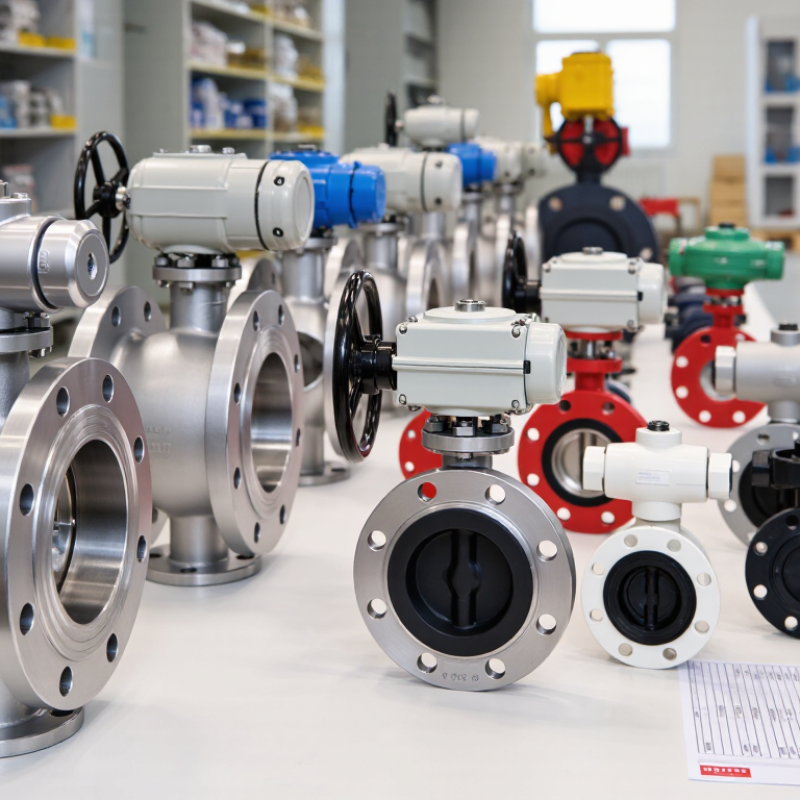
Butterfly valves use a rotating disc to open, restrict, or stop flow. Their compact bodies suit large pipes where space and weight matter. In water treatment plants, they isolate filtration lines and regulate distribution mains. In factories, they also serve cooling-water circuits, ventilation ducts, and some chemical-processing lines. They are not ideal for every duty: abrasive slurry can wear sealing surfaces, while precise low-flow control may require another valve design. Small details matter.
The UNESCO World Water Development Report 2024 estimates that agriculture accounts for about 70% of global freshwater withdrawals. That figure highlights the scale of water systems where dependable flow control matters, including irrigation and treatment networks. The International Energy Agency reports that industry uses roughly 37% of global energy. This is not a valve-efficiency figure; pumps, pipe layout, and operating practice also shape energy use.
Still, an incorrectly sized valve can add pressure loss or make control unstable. Check the medium, temperature, pressure, and required shutoff performance against documented test data. A useful specification states the operating range, not just the pipe diameter. And field conditions can differ from the design sheet.
Butterfly valves are compact, quarter-turn devices, but their service conditions vary widely. A concentric, resilient-seated design often suits water and moderate-pressure duties. Double-offset valves reduce seat contact during rotation, while triple-offset metal seats can handle hotter or more demanding service. Choose by operating conditions, not appearance. Small detail, big consequence: disc clearance can affect flow and shutoff.
Body materials commonly include ductile iron, carbon steel, and stainless steel. Discs may use coated iron or stainless steel; seat materials include EPDM, NBR, and PTFE. Match each wetted material to the fluid and temperature range. Compatibility tables are useful, but they cannot replace checking concentration, cleaning chemicals, and cycling frequency. A familiar material is not automatically a safe choice.
Compare nominal size, pressure rating, allowable temperature, face-to-face dimensions, end connection, and leakage class. Review the flow coefficient, Cv or Kv, where control accuracy matters. For automated service, confirm actuator torque at the actual differential pressure, not just a catalog reference point. Ask about test records and traceability. Specs still leave gaps. Installation alignment and seat wear can change real performance, so planned inspection matters too.
Assessing a Chinese butterfly valve supplier takes more than comparing unit prices. Start with the valve’s actual duty: medium, temperature, pressure, connection type, and operating frequency. Share these details and ask for a written selection rationale. A capable technical team should explain seat and disc material choices, not just send a catalogue. Check that drawings match your pipe dimensions and actuator requirements.
Request recent inspection records for pressure testing, dimensions, coating, and material traceability. Look for batch or heat numbers that connect the paperwork to the parts. Details matter. Ask how rejected components are handled and whether test results cover the specific model you plan to buy. A polished certificate alone is not enough. One awkward gap can matter: records may be complete for one size but not another.
Assess production controls as well as product samples. Ask how the supplier checks machining, assembly, and final operation, then compare the answers with factory records or a site review. Response quality is useful evidence. Do technical questions receive precise answers, or vague promises? A sample can help, but it cannot prove consistent batch quality. I would not treat a neat spreadsheet as proof; it can hide missing details. Set clear acceptance criteria, inspection points, and packaging requirements before placing an order.
A butterfly valve can look sound on a product page, yet small details matter once it reaches the pipework. Ask for material specifications, pressure-test records, and traceability documents for the body and disc. For water service, corrosion resistance may be central; for higher temperatures, seat material and operating limits deserve closer review. Certifications should match the intended application, not just decorate a quotation. Check the certificate scope and issuing organization. Details can be easy to overlook.
Compare prices only after confirming the same size, pressure class, materials, and accessories. A lower quotation may exclude actuators, inspection records, or protective packaging. Request an itemized offer, then check lead time and payment terms. The cheapest option is not always poor value, but an unexplained price gap needs a clear answer. I would still verify sample data against the final production specification; paperwork can lag behind a real change.
After-sales support becomes practical when a valve sticks or a seat leaks. Ask who handles technical questions, how quickly they respond, and whether spare seats or discs are available. A useful supplier can explain installation limits and provide clear maintenance instructions. Test that support before ordering: send a specific question about torque or seat replacement. A vague reply is a warning, though one slow email alone may not tell the whole story.
Choosing a butterfly valve supplier starts with the service conditions, not a catalogue photo. Define the line size, pressure range, temperature, and media, including any solids or corrosive components. A valve handling clean cooling water may need different seat materials from one used in a warm chemical process. Details matter.
Ask suppliers to explain how the body, disc, shaft, and seat match your specification. Request dimensional drawings, material records, and relevant pressure-test documentation before approval. Check that the proposed flange pattern fits your piping and that the actuator can meet the required operating torque. Ask for evidence. If the project has a tight shutdown window, confirm production and delivery dates in writing, rather than relying on a quick estimate.
Technical support matters after delivery, too. Find out who can help resolve installation questions and whether replacement seats or other parts are available. Compare quotations line by line; a lower price may exclude testing, accessories, or clear documentation. I would not treat a longer specification as automatically better, either. Extra features can add cost without solving a real operating need. Share the duty conditions and ask the supplier to identify any assumptions that still need checking.
Use the chart as a starting point when discussing pressure requirements with potential suppliers. PN numbers are nominal pressure-class designations, not guaranteed operating pressures. Confirm the valve’s allowable pressure at your operating temperature, materials, applicable standard, size, and service conditions before selecting a supplier.
By continuing to browse or by clicking “Accept All Cookies,” you agree to the storing of first- and third-party cookies on your device to enhance site navigation, analyze site usage, and assist in our marketing efforts. View our Privacy and Cookie Policy.