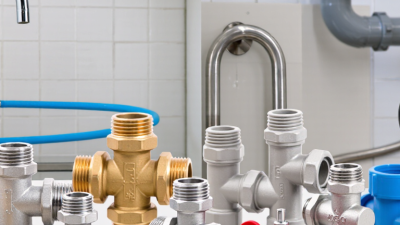
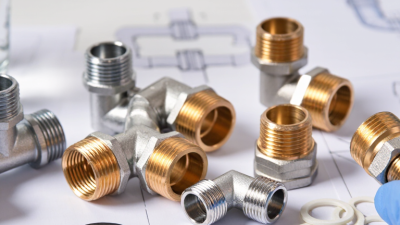
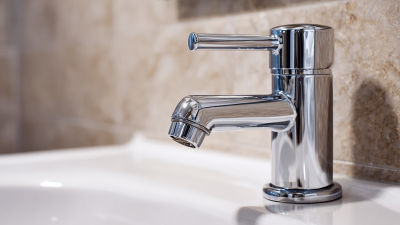
Global projects depend on small components that must perform reliably every day. Sanitary fittings connect water systems to the places where people wash, cook, and work. Their quality affects maintenance needs, water use, and the user experience. These details matter on a busy hospital ward, where a leaking tap can disrupt routine care, and in a remote school, where replacement parts may take weeks to arrive.
The scale of the need is substantial. The WHO/UNICEF Joint Monitoring Programme’s 2023 report estimated that 2.2 billion people lacked safely managed drinking water in 2022, while 3.5 billion lacked safely managed sanitation. These figures describe access, not the performance of individual fittings. Still, they underline why dependable, maintainable plumbing matters in buildings and public infrastructure. Good specifications can help project teams choose products suited to local water conditions, usage levels, and repair capacity.
That choice is not automatic. A fitting that works well in one climate or supply chain may be difficult to service elsewhere. Project teams should examine material quality, compatibility, installation requirements, spare-part availability, and documented testing. Look beyond the catalogue photograph. A polished finish is useful, but it cannot replace clear technical evidence. For global projects, choosing sanitary fittings is a practical decision about long-term operation, not just upfront cost. Even careful planning has limits; local maintenance realities are sometimes underestimated. That deserves a second look.
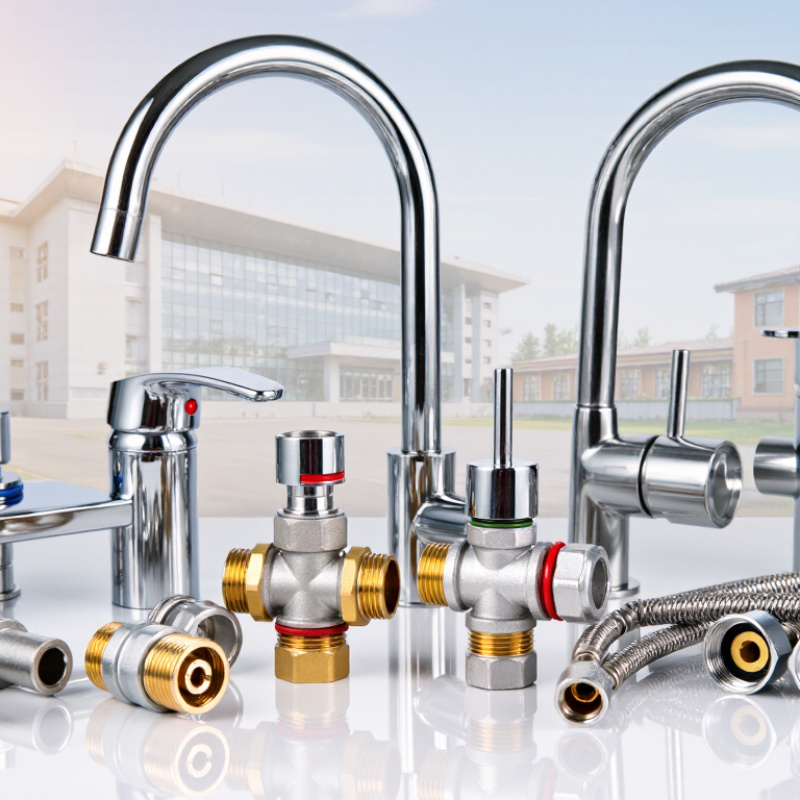
Sanitary fittings are pipe components designed to move liquids through systems that need regular cleaning and controlled hygiene. Common types include elbows, tees, reducers, clamps, valves, and gaskets. Their smooth internal surfaces and carefully matched joints help limit residue traps. Cleanability matters. A small crevice can make routine washing less effective.
These fittings appear in food and beverage processing, dairy production, pharmaceutical manufacturing, cosmetics, and some water-treatment systems. For example, a dairy line may use stainless-steel elbows to route milk around equipment, while removable clamps allow sections to be inspected. The right fitting depends on the fluid, temperature, cleaning method, pressure, and connection standard. Requirements differ by project. A fitting that works well in one plant may not suit another. Mismatched dimensions or incompatible gasket materials can cause leaks and costly rework.
Tips: Confirm the line size, material, surface finish, and cleaning process before ordering. Check that fittings align with adjoining pipes and equipment. Do not rely on appearance alone; ask for relevant technical data and inspect sample connections when practical. Even good specifications can miss site details. Recheck them.
In global projects, fitting material affects how clean a water system stays between service visits. Smooth, well-finished stainless steel resists corrosion in many settings, but chloride-rich water can still cause pitting or crevice corrosion. Brass grades vary, too; unsuitable alloys may suffer dezincification in aggressive water. Polymer fittings avoid some metal corrosion, yet their temperature and cleaning-chemical limits need checking. Small details matter. Inspect seals, joints, and internal surfaces, where deposits can build up and complicate cleaning.
The CDC reports that nearly 9 in 10 Legionnaires’ disease outbreaks could have been prevented through more effective water management. Material selection alone cannot prevent an outbreak, but fittings that tolerate cleaning and reduce corrosion-related buildup can support a sound maintenance plan. Durability also carries a cost signal: a 2013 NACE International IMPACT study estimated global corrosion costs at US$2.5 trillion, or 3.4% of global GDP. That figure covers many industries, not fittings specifically. Still, it shows why project teams should assess water chemistry, temperature, and service access before specifying materials. A polished surface is not a maintenance plan. And a premium alloy may be unnecessary where local water conditions are mild. That judgment deserves review.
Thermal conductivity is one material property that can affect heat transfer in a fitting. The approximate room-temperature values below illustrate how common materials differ; actual values vary by grade and composition.
Project note: Thermal conductivity alone does not determine hygiene or service life. For sanitary applications, also consider surface finish, corrosion resistance, water chemistry, cleanability, and applicable local standards. Smooth, non-porous surfaces are generally easier to clean.
When a project spans countries, a fitting must do more than connect pipes. It must match the specified pressure, temperature, fluid, and cleaning regime. ISO 9001 supports consistent quality systems, while product standards and test records help teams verify dimensions, materials, and pressure performance. For drinking-water applications, select products certified for the destination market. A certificate from one region may not satisfy another. The WHO/UNICEF Joint Monitoring Programme reported that 2.2 billion people lacked safely managed drinking-water services in 2022. Reliable, traceable infrastructure matters.
Standards make procurement less dependent on assumptions. Ask suppliers for current test reports, material declarations, batch traceability, and installation instructions. Check that each document covers the exact fitting, seal, and intended service—not just a similar product family. On site, compare markings with submittals and record pressure-test results. These steps align with ISO 9001’s quality-management approach. Still, paperwork is not performance. Poor alignment, incompatible seals, or rushed installation can undermine a compliant design. A detail is easy to miss.
Tips: Build a compliance matrix before ordering. List each market, applicable standard, required certificate, and acceptance test. Confirm revisions with the project engineer; standards and local specifications can differ.
Why Choose Sanitary Fittings for Global Projects?
How Design Compatibility Simplifies Installation Across Markets
A fitting that matches local pipe dimensions can save hours on site. Installers can connect familiar threads, standard diameters, and practical mounting points without forcing parts into place. That matters when crews work from different drawings or receive supplies in separate shipments. Less adjustment means fewer delays.
Compatibility is more than a matching connection. Clear dimensions, consistent tolerances, and accessible service points help teams inspect joints and replace components later. For example, a basin fitting with adequate clearance beneath the counter is easier to tighten and maintain. Small details count.
Still, “standard” does not mean identical everywhere. Pipe sizes, wall conditions, and installation habits can vary between markets. Teams should check technical drawings against actual site measurements before ordering. A missed measurement can turn a simple installation into a return visit. Not ideal.
Providing dimensioned product data and clear connection details gives designers and installers a shared reference. It also helps project teams compare alternatives without relying on assumptions. Compatibility will not solve every site problem, but it can make coordination more predictable across locations.
| Connection Interface | Relevant Standard | How the Connection Works | Design Compatibility Check | Installation Benefit |
|---|---|---|---|---|
| Parallel pipe thread (G / BSPP) | ISO 228-1 | The thread is parallel; the thread itself is not designed to make the pressure-tight seal. | Confirm the thread size and the specified sealing method, such as a washer, gasket, or O-ring. | Separating the thread connection from the seal makes the sealing component clear to specify and replace. |
| Pipe thread for pressure-tight joints (R / Rp) | ISO 7-1 | R denotes an external tapered thread; Rp denotes an internal parallel thread. The joint is designed to seal at the threads. | Check the male and female thread designations and follow the fitting maker’s instructions for thread sealing. | Identifying both thread forms before ordering helps prevent mismatched components on site. |
| National Pipe Taper (NPT) | ASME B1.20.1 | NPT uses tapered threads. Thread dimensions and form differ from ISO pipe-thread systems. | Do not assume an NPT connection is interchangeable with a BSP connection, even when nominal sizes appear similar. | Explicit thread callouts help procurement teams select compatible fittings for the specified plumbing system. |
| Nominal pipe size designation | ISO 6708 (DN designation) | DN is a nominal size designation; it does not, by itself, state the exact measured diameter of a component. | Verify the actual connection dimensions and product drawing rather than relying on a DN label alone. | Using drawings alongside nominal sizes reduces measurement assumptions during coordination and installation. |
| Water-supply fitting with a replaceable seal | Product-specific dimensional and performance requirements | The fitting may rely on a flat washer, gasket, or O-ring at the mating face rather than on the thread for sealing. | Confirm seal material, dimensions, seat geometry, and whether the seal is included with the fitting. | Clearly specified seals support straightforward assembly and maintenance across different project locations. |
| Fixture connection and installation envelope | Project drawings, product datasheet, and applicable local requirements | Outlet position, fixing points, access for tools, and service clearances depend on the fixture and installation layout. | Coordinate connection locations and clearances with the selected fixture, pipework, and wall or countertop details. | Early coordination reduces on-site alterations and helps installers work within the available space. |
| Compatibility note: Thread names or nominal sizes alone do not guarantee interchangeability. Verify the complete connection specification, sealing method, product drawings, and applicable local plumbing requirements before purchase and installation. | ||||
For global projects, assess sanitary fittings against the actual process, not just a catalog description. Confirm the product-contact material suits the fluid, cleaning agents, temperature, and operating pressure. A fitting used on a chilled beverage line may face very different conditions from one in a hot cleaning cycle. Small details matter.
Check dimensions, connection types, surface finish, and tolerances against the project drawings and equipment already on site. A mismatch can mean extra adapters, leak risks, or delayed installation. Ask suppliers for material declarations, inspection records, and relevant test documentation. Requirements vary by market and application, so verify the project’s specifications rather than assuming one document covers every site. Drawings are not always the full story.
Consider cleaning access, drainage, and routine maintenance. Crevices or poorly aligned joints can complicate washdown and inspection. Ask how seals are identified and replaced, and whether spare parts can be supplied consistently across locations. Packaging and lead times deserve attention too; remote sites may need clear labeling and protective packing. Where uncertainty remains, review a sample with the installation team before ordering at scale. It may add time, but discovering a fit problem after shipment costs more. Even a detailed specification can miss a practical site constraint, so leave room for a final technical check.
By continuing to browse or by clicking “Accept All Cookies,” you agree to the storing of first- and third-party cookies on your device to enhance site navigation, analyze site usage, and assist in our marketing efforts. View our Privacy and Cookie Policy.