
What Are the Top Water Fittings for Global Buyers?
For global buyers, choosing water fittings is no longer a simple price comparison. A connector may sit inside a hospital wall, under a kitchen sink, or beside a municipal meter. Its failure can cause leakage, contamination, downtime, and expensive repairs. The WHO and UNICEF Joint Monitoring Programme reported that 2.2 billion people lacked safely managed drinking water in 2022. This figure makes dependable plumbing components more than a procurement detail. They support public health, operating efficiency, and long-term infrastructure resilience.
Material choice matters. Brass fittings offer strength and broad market availability. Stainless steel performs well where corrosion resistance is critical. PEX, HDPE, and engineered polymer connectors can reduce weight and simplify installation. Yet no single option fits every project. The 2024 United Nations World Water Development Report connects water security with resilient infrastructure and responsible resource management. That direction affects how buyers assess leakage control, service life, recyclability, and maintenance access. It also supports closer attention to pressure ratings, temperature limits, and potable-water contact approvals.
Certification must match the destination market. NSF/ANSI/CAN 61, WRAS, ACS, and relevant EN or ASTM requirements may apply differently. Buyers should request test reports, traceable material records, factory quality controls, and verified warranty terms. Supplier experience matters here. A polished catalog is not proof of consistent production. A ranking can still mislead. Even experienced purchasing teams may overvalue low unit prices and overlook installation labor or replacement risks. This guide compares leading water fittings by application, material, compliance, durability, and total ownership value, while recognizing that local conditions can change the final answer.
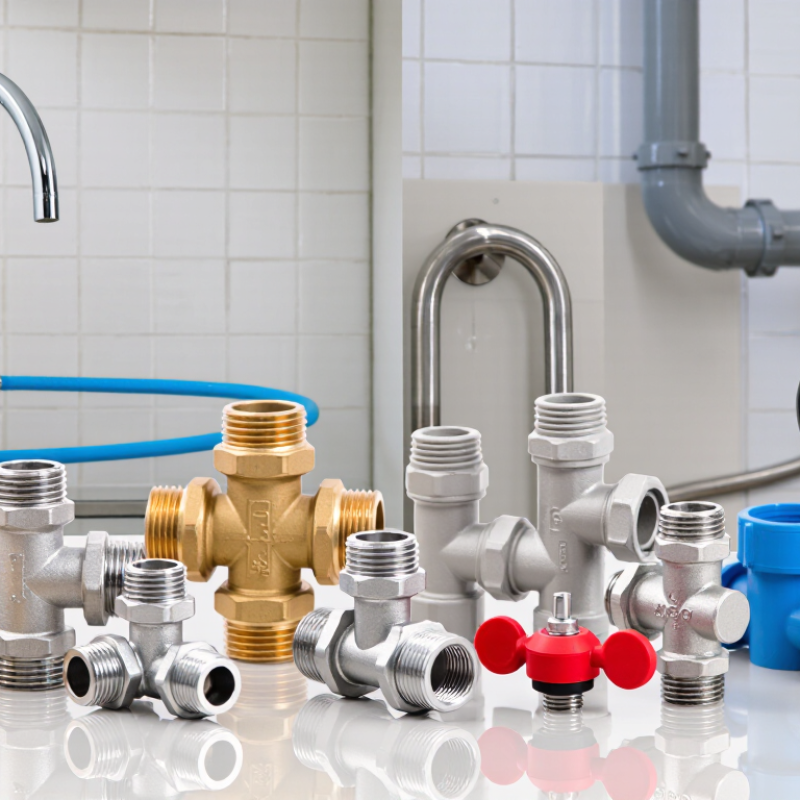
Water Fitting Basics: Types, Materials, and Key Applications
What Are the Top Water Fittings for Global Buyers?
Water fitting basics begin with connection type, material, and service conditions. Threaded fittings suit repairable joints and compact equipment. Compression fittings work well where welding is impractical. Press-fit systems can reduce installation time, but tools and training remain essential. No single fitting wins every site.
Material choice should follow water chemistry, temperature, pressure, and local codes. Brass offers strong threads for household and commercial plumbing. Stainless steel resists corrosion in demanding environments, including coastal facilities. PVC, CPVC, polypropylene, and polyethylene provide lightweight options for treated water, drainage, and irrigation. FAO AQUASTAT reports that agriculture uses about 70% of global freshwater withdrawals, making dependable irrigation connectors especially important. A fitting that survives indoors may fail quickly under ultraviolet exposure or abrasive soil.
Application changes the buying decision. Potable-water projects need verified materials, clean surfaces, and documented compliance with relevant standards, such as NSF/ANSI/CAN 61 or equivalent national requirements. Industrial systems require closer review of pressure ratings and chemical compatibility. The WHO and UNICEF Joint Monitoring Programme reported that 2.2 billion people lacked safely managed drinking water in 2022. That figure makes leakage control more than a maintenance issue. It becomes a public-health concern. Buyers should request test reports, traceability records, dimensional drawings, and sample inspections. I have seen specifications look complete while omitting gasket compatibility. That small gap deserves more attention.
What Are the Top Water Fittings for Global Buyers? - Water Fitting Basics: Types, Materials, and Key Applications
| Fitting Type | Main Function | Common Materials | Typical Sizes | Typical Pressure Range | Key Applications | Buyer Considerations |
|---|---|---|---|---|---|---|
| 90° Elbow | Changes the direction of water flow by 90 degrees. | PVC, CPVC, PP-R, PE, copper, stainless steel, ductile iron | 15–500 mm nominal diameter | Approximately 6–25 bar, depending on material, size, and temperature | Residential plumbing, irrigation, industrial water lines, municipal networks | Check bend radius, flow loss, connection method, and pressure rating. |
| 45° Elbow | Provides a gradual change in flow direction with lower turbulence than a 90° elbow. | PVC, CPVC, PP-R, PE, copper, stainless steel | 15–500 mm nominal diameter | Approximately 6–25 bar, depending on material and design | High-flow water distribution, pump systems, process-water piping | Useful where reduced pressure loss and smoother flow are important. |
| Equal Tee | Splits one water line into two branches of the same nominal size. | PVC, CPVC, PP-R, PE, copper, stainless steel, ductile iron | 15–500 mm nominal diameter | Approximately 6–25 bar, depending on material and size | Branch connections, cold-water systems, irrigation and treatment plants | Confirm branch flow capacity and whether the fitting is suitable for potable water. |
| Reducing Tee | Creates a branch connection with a smaller outlet diameter. | PVC, CPVC, PP-R, PE, copper, stainless steel | Main line 20–500 mm; branch line commonly 15–300 mm | Approximately 6–25 bar, depending on material and size | Fixture branches, service connections, process-water distribution | Verify reducer dimensions, flow direction, and compatibility with joining equipment. |
| Coupling | Joins two pipes with the same nominal diameter in a straight line. | PVC, CPVC, PP-R, PE, copper, brass, stainless steel, ductile iron | 15–600 mm nominal diameter | Approximately 6–25 bar; higher ratings may be available for selected metal systems | Pipe extensions, repairs, prefabricated assemblies, underground water lines | Select the correct joining method: solvent cement, fusion, press, threaded, or mechanical. |
| Union | Connects two pipes while allowing convenient disassembly for maintenance. | PVC, CPVC, PP-R, brass, stainless steel | 15–100 mm nominal diameter | Approximately 6–25 bar, depending on material and sealing design | Water heaters, pumps, filters, meters, valves, and serviceable equipment | Inspect gasket material, sealing surface, and repeated-use durability. |
| Reducer | Connects pipes of different diameters and manages changes in flow capacity. | PVC, CPVC, PP-R, PE, copper, stainless steel, ductile iron | 15–600 mm nominal diameter | Approximately 6–25 bar, depending on material, profile, and size | Pump transitions, distribution headers, treatment systems, building services | Use concentric reducers for centered vertical layouts and eccentric designs where air or drainage control is needed. |
| Threaded Adapter | Transitions between threaded components and solvent-welded, fusion, press-fit, or flanged pipe. | Brass, stainless steel, PVC, CPVC, PP-R, PE | 15–100 mm nominal diameter | Approximately 6–25 bar, depending on material and thread design | Taps, gauges, pumps, filters, valves, and equipment connections | Match thread profile, thread gender, sealing method, and potable-water requirements. |
| Flange Adapter | Creates a bolted connection for large pipes, valves, pumps, and equipment. | Ductile iron, carbon steel, stainless steel, PVC, PE | 50–1,200 mm nominal diameter | Commonly 6–25 bar, based on flange class, material, and bolt configuration | Municipal water mains, pumping stations, treatment facilities, industrial plants | Confirm bolt-hole pattern, gasket dimensions, face type, and corrosion protection. |
| Check Valve | Allows flow in one direction and helps prevent reverse flow. | Brass, stainless steel, ductile iron, PVC, reinforced polymers | 15–1,200 mm nominal diameter | Commonly 6–25 bar, depending on valve type and size | Pump discharge, storage tanks, booster systems, irrigation, backflow control | Evaluate cracking pressure, water hammer risk, installation orientation, and maintenance access. |
| Ball Valve | Provides quarter-turn shutoff and full-bore flow control. | Brass, stainless steel, PVC, CPVC, polypropylene | 15–300 mm nominal diameter | Commonly 6–40 bar, depending on material, size, and temperature | Building water supply, irrigation, equipment isolation, process-water lines | Confirm media compatibility, seal material, temperature limits, and whether throttling is permitted. |
| Flexible Connector | Absorbs vibration, minor movement, and installation misalignment. | Stainless steel, EPDM, reinforced rubber, braided polymers | 15–300 mm nominal diameter | Commonly 6–25 bar, depending on construction and movement requirements | Pump connections, water heaters, HVAC systems, building services | Check maximum movement, burst pressure, bend radius, vibration level, and service life. |
| Technical note: Dimensions and pressure ranges are representative purchasing guidelines, not universal limits. Actual ratings depend on the applicable standard, operating temperature, wall thickness, connection method, fluid quality, and manufacturer test data. For drinking-water systems, buyers should verify local approval requirements and material compatibility before purchase. | ||||||
Related Posts
-
Understanding the Importance of Quality Water Fittings for Your Home Plumbing System
-

Top 10 Best Pump Valves for Optimal Performance in Industrial Applications
-

How to Choose the Right Ball Valves for Your Industrial Applications
-
What is a Butterfly Valve and How Does It Work?
-

Top Sanitary Fittings Suppliers in China for Global Buyers?
-

Top 10 Benefits of Using Plug Valves in Industrial Applications?