
Top 10 Sanitary Ball Valves for Global Buyers
Choosing among the top 10 sanitary ball valves requires more than comparing prices or polished product images. Global buyers need dependable flow control, hygienic construction, and documentation that supports real installation decisions. These valves commonly serve food processing, beverage filling, dairy production, pharmaceuticals, cosmetics, and biotechnology. Each application brings different demands for pressure, temperature, cleaning chemicals, and sterilization cycles.
This guide examines sanitary ball valves through practical purchasing criteria. We consider wetted materials, surface finish, seat design, port configuration, actuation options, drainability, and clean-in-place performance. Manufacturer certifications and traceable technical documents also matter. Depending on the market, buyers may review 3-A, EHEDG, FDA-related material requirements, ISO standards, or other regional approvals. Compliance should be confirmed with the supplier before ordering.
Small details matter.
A valve may look hygienic but retain liquid around its stem or seat. A polished body may still require careful gasket selection. Installation orientation can influence drainage and cleaning results. Our evaluation draws on engineering principles, published specifications, and common maintenance experiences across hygienic process lines. However, no ranking fits every plant. Product availability, service support, and local conformity requirements can change the final choice.
Some information may need verification.
The following selection highlights reputable options while acknowledging practical limitations. Buyers should compare current datasheets, validation records, spare-part access, and total ownership costs. A reliable valve is not simply one that opens and closes. It should support clean production, predictable maintenance, and long-term process confidence.
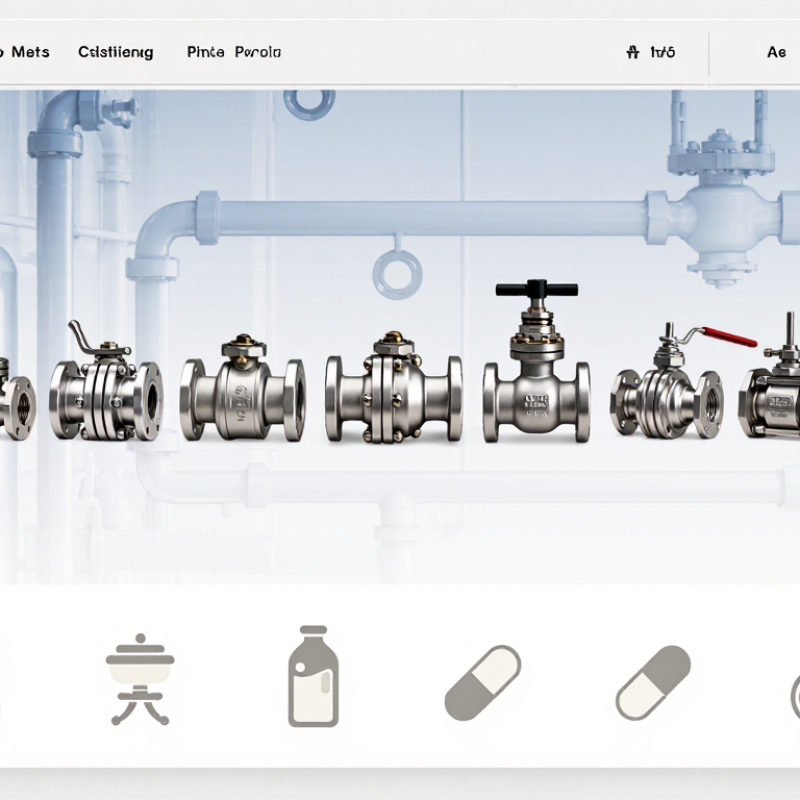
What Defines a Sanitary Ball Valve and Where It Is Used
A sanitary ball valve controls process flow with a quarter-turn rotation. Its central ball contains a drilled passage that opens or blocks the line. Unlike ordinary industrial valves, it is designed to reduce contamination risks and support thorough cleaning.
Typical construction includes 316L stainless steel, polished internal surfaces, hygienic seals, and clamp or welded connections. A full-port design helps products pass with less turbulence and fewer residue traps. However, a shiny finish alone does not guarantee cleanliness. Internal dead legs, damaged seats, and incompatible elastomers can still create serious process problems.
These valves are widely used in dairy, beverage, food processing, pharmaceutical, cosmetic, and biotechnology systems. Operators often connect them to clean-in-place and sterilize-in-place procedures. For example, a valve may isolate a filling line while hot water or cleaning chemicals circulate through nearby equipment. Correct temperature, pressure, and seal selection matter greatly.
Small details matter.
During equipment reviews, engineers should check drainability, actuation speed, maintenance access, and product compatibility. A valve that performs well during water testing may behave differently with syrup, cream, or powder-laden fluids. This is where specifications can become too optimistic. Hygienic design must be judged within the complete piping system, not by the valve alone. Regular inspection remains necessary, even when installation appears flawless.
Top 10 Sanitary Ball Valves for Global Buyers - What Defines a Sanitary Ball Valve and Where It Is Used
A practical comparison of commonly specified sanitary ball-valve configurations for hygienic process systems. Actual limits depend on design, seal material, size, certification, and supplier documentation.
| Rank | Sanitary Ball Valve Type | Typical Size Range | Typical Working Pressure | Typical Temperature Range | Common Wetted Materials | Seat and Seal Options | Hygienic End Connections | Common Standards or Requirements | Typical Uses | Cleaning and Drainability |
|---|---|---|---|---|---|---|---|---|---|---|
| 1 | Three-Piece Full-Port Ball Valve | DN15–DN100 ½–4 in |
Approximately 10–16 bar at ambient temperature |
About −20°C to +150°C | 316L stainless-steel body and ball; low-sulfur, polished product-contact surfaces | PTFE, modified PTFE, EPDM, or FKM depending on process media | Tri-clamp, butt weld, orbital-weld ends, or hygienic threaded adapters | 3-A or EHEDG design expectations where specified; ASME BPE may apply to bioprocess systems | Food, beverage, dairy, brewing, cosmetics, and general hygienic process lines | Excellent cleanability when full-port and properly oriented; body can be dismantled for inspection |
| 2 | Two-Piece Full-Port Ball Valve | DN15–DN100 ½–4 in |
Approximately 10–16 bar at ambient temperature |
About −20°C to +150°C | 316L stainless steel; electropolished options are available for demanding hygienic service | PTFE, EPDM, FKM, or silicone seals selected for compatibility | Tri-clamp, hygienic weld, DIN, ISO, or other regional sanitary connections | Material traceability and surface-finish documentation are commonly requested | Liquid transfer, ingredient handling, water treatment, and hygienic utility isolation | Low hold-up design supports CIP; verify internal cavities and drain orientation before purchase |
| 3 | Tank-Bottom Sanitary Ball Valve | DN25–DN100 1–4 in |
Approximately 6–10 bar depending on tank connection |
About −10°C to +140°C | 316L stainless steel with a hygienic tank outlet and flush product-contact geometry | EPDM, PTFE, FKM, or silicone; seal selection depends on product and cleaning chemicals | Tank weld outlet with tri-clamp, orbital-weld, or other hygienic process connection | Hygienic tank design practices; 3-A acceptance may be relevant for dairy applications | Vessel discharge, mixing tanks, fermenters, storage tanks, and process skids | Designed to reduce product retention at the vessel outlet; installation slope and drainability are critical |
| 4 | CIP-Compatible Sanitary Ball Valve | DN15–DN150 ½–6 in |
Approximately 8–16 bar depending on size and cycle |
About −10°C to +150°C | 316L stainless steel with smooth internal surfaces and hygienic weld quality | EPDM, PTFE, FKM, or peroxide-cured elastomers rated for cleaning chemistry | Tri-clamp, hygienic butt weld, DIN 11850, ISO, or SMS connections | Cleaning validation, surface-finish records, and elastomer compliance documentation | Automated processing lines requiring frequent clean-in-place cycles | Must be validated for flow velocity, chemical concentration, temperature, and seat coverage |
| 5 | Steam-Sterilizable Ball Valve | DN15–DN80 ½–3 in |
Approximately 6–10 bar process-dependent |
Typically up to 140–160°C for qualified cycles |
316L stainless steel; internal finish commonly specified for sterile processing | PTFE, EPDM, or other steam-compatible seals with documented cycle life | ASME BPE-style clamp or weld connections; hygienic tubing interfaces | ASME BPE practices, applicable pressure rules, and validated sterilization procedures | Biopharmaceutical, sterile filling, fermentation, and high-purity process systems | Requires verified steam-in-place capability, condensate drainage, and validated seal performance |
| 6 | Pneumatically Actuated Sanitary Ball Valve | DN15–DN150 ½–6 in |
Approximately 8–16 bar depending on valve size |
About −20°C to +150°C actuator limit may differ |
316L stainless-steel valve body; actuator housing commonly aluminum or stainless steel | PTFE, EPDM, FKM, or silicone; double-acting or spring-return actuator | Tri-clamp, hygienic weld, DIN, ISO, or SMS connections | IP-rated actuator options, food-contact documentation, and automation compatibility | Automated batching, filling, diverting, dosing, and high-cycle isolation | Supports automated CIP sequencing; actuator and air connections should be protected from washdown |
| 7 | Electric Actuated Sanitary Ball Valve | DN15–DN100 ½–4 in |
Approximately 6–16 bar depending on configuration |
About −10°C to +120°C actuator limit may differ |
316L stainless steel wetted components with a corrosion-resistant actuator arrangement | PTFE, EPDM, FKM, or silicone seals; position feedback may be included | Tri-clamp, weld, DIN, ISO, or sanitary threaded connections | Ingress-protection rating, electrical safety requirements, and control-system compatibility | Utilities, remote isolation, water systems, and installations without compressed air | Suitable for controlled opening and closing; confirm duty cycle and washdown rating |
| 8 | Manual Lever-Operated Ball Valve | DN15–DN100 ½–4 in |
Approximately 10–16 bar at ambient temperature |
About −20°C to +150°C | 316L stainless steel body and ball; hygienic polished finish options | PTFE, EPDM, FKM, or silicone depending on temperature and media | Tri-clamp, hygienic weld, DIN, ISO, and SMS connections | Food-contact declarations, surface-finish specifications, and applicable hygienic design rules | Low-frequency isolation, sampling points, small process skids, and maintenance sections | Simple and easy to inspect; avoid dead legs and ensure the valve can drain in its installed position |
| 9 | Reduced-Port Sanitary Ball Valve | DN15–DN100 ½–4 in |
Approximately 10–25 bar depending on design |
About −20°C to +180°C seal-dependent |
316L stainless steel; reduced bore may be used where compactness or pressure capability is prioritized | PTFE, reinforced PTFE, EPDM, or FKM | Clamp, weld, DIN, ISO, or other sanitary process connections | Pressure-rating documentation, hygienic surface specification, and chemical compatibility data | High-pressure hygienic utilities, compact manifolds, and space-constrained equipment | May create higher pressure drop and more retention than a full-port design; verify CIP performance |
| 10 | High-Purity Electropolished Ball Valve | DN10–DN100 ⅜–4 in |
Approximately 6–16 bar depending on size and specification |
About −20°C to +150°C cycle-dependent |
316L stainless steel with electropolished product-contact surfaces and controlled weld finish | PTFE, EPDM, FKM, or qualified high-purity elastomers | ASME BPE-style orbital weld, hygienic clamp, or high-purity tube connections | ASME BPE practices, material certificates, roughness records, and cleanroom or bioprocess requirements | Biotechnology, pharmaceutical water, laboratory, and high-purity chemical processing | Low surface roughness helps reduce contamination risk; cleaning and sterilization must still be validated |
Buyer note: A sanitary ball valve is defined by hygienic materials, smooth and cleanable product-contact surfaces, minimized dead space, drainable construction, and connections suitable for sanitary tubing. Always confirm pressure, temperature, seal compatibility, surface roughness, certification, and CIP/SIP requirements against the supplier’s technical documentation.
Related Posts
-

How to Choose the Best Sanitary Ball Valves for Your Industrial Needs
-
2026 Guide: How to Choose the Right Sanitary Ball Valves for Your Needs
-
How to Choose the Right Sanitary Ball Valves for Your Needs?
-

Top Steel Fittings Types You Need to Know in 2026?
-

China Top 10 Pump Fittings Suppliers for Global Buyers
-
What is Tubing Fittings and How Are They Used in Various Industries?