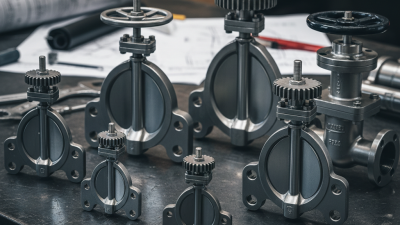
What Are the Top 10 Pump Fittings for Global Buyers?

Global buyers rarely purchase pump fittings as isolated metal parts. They select connection points that must survive pressure, vibration, corrosion, heat, and maintenance cycles. A poorly matched elbow can increase turbulence, while an unsuitable gasket can create leakage before commissioning.

Market evidence shows why this category deserves closer attention. MarketsandMarkets estimates the global pumps market will grow from about USD 68.9 billion in 2023 to USD 87.5 billion by 2028. Grand View Research also reports strong expansion in industrial pumping equipment, driven by water treatment, chemicals, energy, and manufacturing. These reports measure pumps, not fittings directly. That limitation matters. Fittings follow equipment demand, but their specifications depend heavily on fluid type, installation standards, and regional procurement habits.

Pump engineer Igor J. Karassik described the pump as “the heart of the system.” The fitting is less visible, yet it controls how that heart connects to the process. This article examines ten widely used pump fittings, including flanges, threaded adapters, couplings, reducers, unions, and flexible connectors. Each option is considered through pressure class, material compatibility, flow behavior, sealing method, and service access.

There is no universal best choice. That sounds obvious.

Still, buyers often prioritize unit price over lifecycle reliability. The cheaper fitting may require extra adapters, frequent retightening, or earlier replacement. Drawing on Hydraulic Institute guidance, manufacturer specifications, and international purchasing practice, this guide separates practical value from marketing claims. Some conclusions remain conditional, because real installations expose details that catalog pages cannot show.
What Are the Top 10 Pump Fittings for Global Buyers?

Define the Top 10 Pump Fittings by Function, Size, and Pressure Rating

What Are the Top 10 Pump Fittings for Global Buyers?

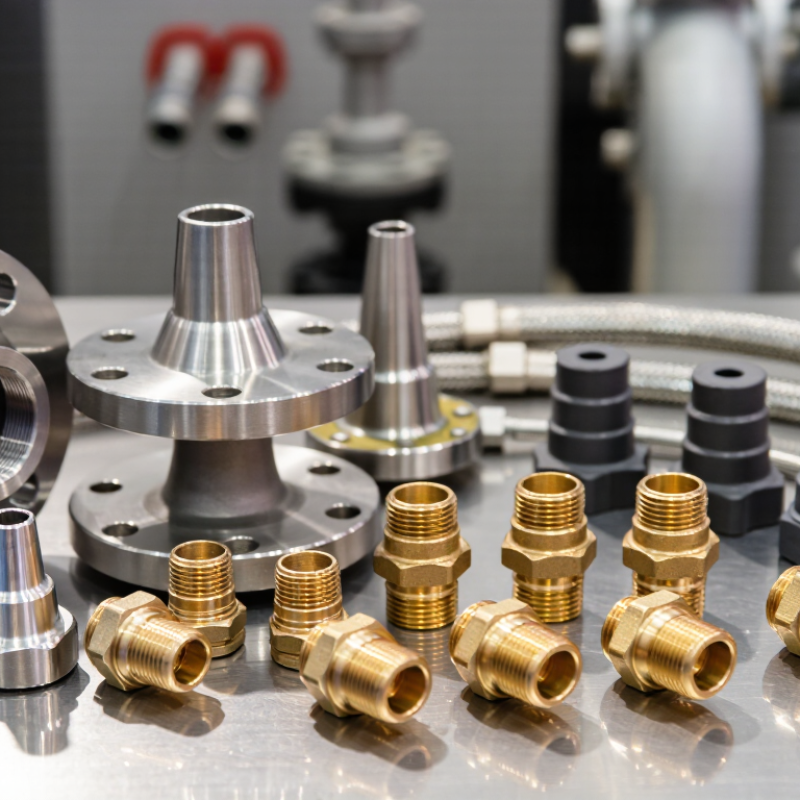
Pump fittings should be defined by function, size, and pressure rating, not appearance. The ten practical choices are suction reducers, discharge reducers, elbows, tees, couplings, unions, flanges, check valves, isolation valves, and flexible connectors. Suction reducers match pump inlets to pipe sizes. Discharge reducers control outlet transitions. Elbows change direction, while tees divide flow. Couplings and unions simplify maintenance. Flanges support bolted connections. Check valves prevent reverse flow. Isolation valves stop the line. Flexible connectors reduce vibration.

Size must match the pipe’s nominal diameter and the pump nozzle.

Common industrial sizes range from DN25 to DN300, although larger systems exist. Pressure ratings often include PN10, PN16, PN25, and ASME Class 150 or 300. ASME B16.5 defines pressure-temperature ratings for many flanged connections. The Hydraulic Institute stresses correct system design because poor piping can increase losses and energy use. The U.S. Department of Energy reports that pumping systems may represent 25% to 50% of industrial electricity consumption. That makes a small fitting decision important.

Tips: Check actual operating pressure, temperature, fluid chemistry, and start-up surges. A DN50 fitting is not automatically suitable for a DN50 pump. Verify wall thickness, gasket material, and connection standard. ISO 2858 provides dimensional guidance for many centrifugal pump types, but field conditions still matter. A neat ranking can mislead. Real installations sometimes need a stronger rating, smoother transitions, or a different alloy. Capture operating data before ordering.

Compare Flanges and Adapters Under ASME Class 150–2500 and EN PN6–PN40

Global pump buyers commonly specify ten fitting types: weld-neck, slip-on, blind, threaded, socket-weld, and lap-joint flanges. The remaining choices include reducing, threaded, grooved, and flexible adapters. Each serves a different installation problem. Weld-neck flanges suit demanding pipe systems and repeated thermal cycling. Slip-on flanges install quickly, but their weld details require careful inspection. Blind flanges close nozzles during testing or maintenance. Adapters connect mismatched threads, diameters, or flange faces.

ASME Class 150–2500 ratings should never be treated as direct equivalents to EN PN6–PN40. Class ratings depend strongly on material and temperature. PN ratings also require checking the applicable standard, material group, and temperature limits. A PN16 flange may not match a Class 150 flange in every service condition. Bolt patterns, outside diameters, raised faces, and gasket seating surfaces can differ. I have seen projects fail at this interface, not at the pump. The drawing looked correct.

For high-pressure discharge lines, weld-neck flanges and properly engineered reducers usually provide better fatigue control. Class 600, 900, 1500, and 2500 systems demand precise bolting, verified wall thickness, and controlled assembly torque. Lower-pressure utility lines may use slip-on flanges, threaded adapters, or grooved connections. However, vibration can expose weak joints quickly. The adapter’s rating cannot exceed its weakest thread, weld, gasket, or bolt. A flexible coupling may reduce movement, yet it cannot repair poor alignment. Standards are essential, but field measurements still matter. That lesson is easy to underestimate.

Evaluate Valves, Strainers, and Check Fittings Using Flow-Loss Data

What Are the Top 10 Pump Fittings for Global Buyers?

For global pump buyers, the best fittings are judged by flow loss, service life, and installation conditions. The top ten include isolation valves, control valves, butterfly valves, gate valves, Y-strainers, basket strainers, swing check valves, silent check valves, reducers, and flexible connectors. Each design affects pressure differently. A narrow valve may create turbulence, while a clogged strainer can quietly reduce pump output. Check fittings also need attention. Their disc or spring resistance may increase head loss, especially at low flow rates.

Request flow-loss data at the actual operating flow, not only the maximum catalog rating. Compare pressure drop in kPa, bar, or equivalent head. Keep units consistent. A fitting with a smaller purchase price may consume more energy over years. In field testing, I have seen clean strainers perform well, then lose capacity after debris buildup. That result is easy to overlook. Published data can also vary because laboratories use different fluids, temperatures, and test lengths. Review the test method, material, connection standard, and allowable velocity before approval.

Tips: Record pressure before and after each fitting during commissioning. Clean strainers on a planned schedule. Check valve sizing should match pump flow, pipe diameter, and start-stop frequency. Leave practical access for inspection. Do not trust a neat spreadsheet alone. Real systems can surprise you.

Match Couplings, Unions, and Reducers to ISO 2858 Pump Dimensions

ISO 2858 gives global buyers a practical baseline for end-suction centrifugal pump dimensions. The pump nozzle is the starting point, not the catalog description. Match these ten fittings carefully: flexible couplings, rigid couplings, pipe unions, concentric reducers, eccentric reducers, flange adapters, threaded adapters, dismantling joints, expansion joints, and blind flanges. Couplings should suit shaft diameter, alignment tolerance, speed, and transmitted torque. Unions help maintenance teams remove small pumps without cutting pipe. Reducers must match flow direction and avoid sudden turbulence near the suction nozzle.

ISO 2858 defines principal pump dimensions, but it does not approve every piping arrangement. Check nozzle size, flange drilling, pressure class, material, and face-to-face clearance. Use an eccentric reducer on horizontal suction lines, with the flat side on top, to reduce air pockets. A concentric reducer is usually more suitable on discharge piping. The U.S. Department of Energy reports that pumping systems can represent about 20–25% of industrial electricity use, so a poorly selected fitting can create a measurable operating cost. Small losses matter.

Field experience shows another issue: buyers often match diameter first and pressure rating second. That shortcut fails with hot liquids, corrosive fluids, or frequent starts. EN 1092-1 or ASME B16.5 flange data may support selection, but the project specification remains decisive. Leave room for dismantling joints and coupling guards. I would also recheck gasket compression; it is an easy detail to underestimate. EPA pump-system guidance encourages system-level efficiency reviews, not isolated component purchases. Data sheets should record actual flow, temperature, fluid density, and suction conditions before any fitting is ordered.

What Are the Top 10 Pump Fittings for Global Buyers? - Match Couplings, Unions, and Reducers to ISO 2858 Pump Dimensions

Rank Fitting Type Primary Pump Connection Typical ISO 2858 Size Match Common Dimensional Standard Typical Materials Typical Pressure Reference Main Selection Consideration
1 Flexible Shaft Coupling Pump shaft to motor shaft Common across 25-20-125 to 150-125-315 pump frames ISO 14691 or manufacturer-specific shaft and spacer dimensions Carbon steel, stainless steel, elastomer insert Torque, speed, and service-temperature dependent Match shaft diameter, keyway, bore tolerance, rated torque, allowable misalignment, and guard clearance.
2 Concentric Reducer Discharge or suction pipe transition DN 80 × DN 65, DN 100 × DN 80, DN 125 × DN 100 EN 10253-2 or ASME B16.9; flange ends may follow EN 1092-1 Carbon steel, 304/316 stainless steel, ductile iron Often PN16 or ASME Class 150, subject to material and temperature Use on discharge lines where air accumulation is not a concern; verify velocity and pressure loss.
3 Eccentric Reducer Horizontal suction connection DN 100 × DN 80, DN 125 × DN 100, DN 150 × DN 125 EN 10253-2 or ASME B16.9; flange drilling per piping system standard Carbon steel, stainless steel, ductile iron Commonly PN10/PN16 or ASME Class 150 service Install flat-side-up on horizontal suction piping to reduce air pockets and protect NPSH performance.
4 Pipe Flange Adapter Pump nozzle to flanged pipeline DN 25, DN 32, DN 40, DN 50, DN 65, DN 80, DN 100, DN 125 EN 1092-1 Type 11 or ASME B16.5 Class 150 Carbon steel, stainless steel, ductile iron PN10/PN16 or Class 150, depending on drilling and material Confirm outside diameter, bolt-circle diameter, bolt-hole count, hole diameter, and flange face type.
5 Dismantling Joint Pump flange and valve or pipeline section DN 50 to DN 300; select by actual pump flange size EN 1092-1, ISO 2531, or ASME B16.5/B16.47 interface Ductile iron, carbon steel, stainless steel, EPDM or NBR seals PN10, PN16, or higher classes where specified Provides axial adjustment for installation and removal; check tie-rod design and available dismantling length.
6 Threaded Pipe Union Small pump auxiliary lines and service ports G 1/2 to G 2 or NPT 1/2 to NPT 2 ISO 7-1 / EN 10226-1 or ASME B1.20.1 Brass, carbon steel, 304/316 stainless steel Typically PN16 equivalent or component-specific pressure rating Choose the correct thread system; do not directly mate BSP and NPT threads without a suitable adapter.
7 Rubber Expansion Joint Pump suction or discharge vibration isolation DN 50 to DN 300; face-to-face length must be confirmed EN 1092-1 or ASME B16.5 flanges; product design often follows EN 14917 principles EPDM, NBR, neoprene, stainless steel reinforcing rings Often PN10/PN16; temperature and medium limit the rating Control axial movement and misalignment; use pipe supports and limit rods where required.
8 Wafer Check Valve Pump discharge backflow protection DN 50, DN 65, DN 80, DN 100, DN 125, DN 150 EN 12334, EN 1092-1 interface, or ASME B16.5 Class 150 interface Ductile iron, carbon steel, stainless steel, EPDM or NBR seat PN10/PN16 or Class 150, depending on valve construction Check closing speed, cracking pressure, water-hammer risk, flow direction, and flange clearance.
9 Flanged Y-Strainer Pump suction-side solids protection DN 40 to DN 200; commonly DN 50, DN 80, DN 100, DN 150 EN 1092-1 or ASME B16.5 flange dimensions Cast iron, ductile iron, carbon steel, stainless steel PN10/PN16 or Class 150; screen differential pressure must be monitored Select screen mesh, open-area ratio, drain size, and cleaning access to avoid excessive suction losses.
10 Blind Flange Temporary or permanent line isolation DN 25 to DN 300; match the pump nozzle and pipeline flange exactly EN 1092-1 Type 05 or ASME B16.5 Carbon steel, stainless steel, ductile iron PN10/PN16 or ASME Class 150, subject to design temperature Verify flange facing, gasket type, bolt length, pressure class, and hydrostatic test requirements.
Dimensional note: ISO 2858 pump designations identify nominal suction, discharge, and impeller dimensions, such as 100-80-200, but they do not by themselves define every flange drilling, thread, or fitting face dimension. Always verify the certified pump outline drawing, nominal diameter, flange standard, pressure class, face-to-face length, gasket, and bolt pattern before purchasing.

Select Materials from Carbon Steel, 304, and 316 Stainless Steel Standards

What Are the Top 10 Pump Fittings for Global Buyers?

Select Materials from Carbon Steel, 304, and 316 Stainless Steel Standards

The ten most specified pump fittings are 90-degree elbows, 45-degree elbows, tees, reducers, increasers, couplings, unions, flanges, threaded adapters, and flexible connectors.

Carbon steel suits closed-loop water, oil, and dry indoor systems. It offers strength and competitive pricing. However, coating damage can expose bare metal around threads and welds. That detail is often underestimated.

304 stainless steel works well in clean water, food-process areas, and moderate chemical service. Its chromium-nickel structure supports useful corrosion resistance.

316 stainless steel adds molybdenum, improving resistance to chlorides and marine exposure. According to the Nickel Institute’s stainless-steel guidance, chloride concentration, temperature, and crevice conditions should influence material selection. One grade does not solve every corrosion problem. Sometimes, it only delays failure.

The U.S. Department of Energy’s Improving Pumping System Performance report notes that pumping systems may consume 25% to 50% of industrial facility electricity.

Poorly aligned fittings can increase turbulence, vibration, and maintenance demand. Buyers should verify pressure class, wall thickness, connection standard, gasket compatibility, and weld quality.

ASME B16.5 and B16.9 provide widely used dimensional references for flanges and butt-weld fittings.

I would not choose 316 automatically. It costs more, and incorrect installation can still create leaks. That is the part many purchasing tables miss.