How to Choose Stainless Sanitary Fittings for Your Project?

Choosing stainless sanitary fittings is not a cosmetic decision. It affects hygiene, maintenance, product safety, and production continuity. A bright surface can still hide poor welds, dead legs, or difficult-to-clean connections. The right selection begins with the fluid, pressure, temperature, cleaning chemicals, and required sanitation method.

Industry evidence supports this careful approach. The World Health Organization reports that contaminated food causes about 600 million illnesses and 420,000 deaths worldwide each year. Fittings are not the only risk, but hygienic design remains an important control point. Grand View Research and MarketsandMarkets food-processing equipment reports both identify automation, stricter hygiene expectations, and sanitary production as continuing market drivers. These trends increase demand for reliable stainless sanitary fittings in food, beverage, dairy, cosmetics, and pharmaceutical facilities.

Material choice requires practical judgment. Grade 316L usually offers better resistance to chlorides and aggressive cleaning agents than 304 stainless steel. However, 316L is not automatically the best answer. Weld quality, surface finish, gasket compatibility, and correct installation can matter just as much. ASME BPE, 3-A Sanitary Standards, ISO 2852, and EHEDG guidance provide useful reference points, but standards alone cannot replace site-specific evaluation. Check the actual cleaning cycle. Inspect the smallest connection. Think about future maintenance, too. A fitting that saves money today may create repeated downtime later. This guide explains how to compare specifications, certifications, connection types, and lifecycle costs before approving a purchase.

How to Choose Stainless Sanitary Fittings for Your Project?

Define Project Requirements for Stainless Sanitary Fittings

How to Choose Stainless Sanitary Fittings for Your Project?

Define the project requirements before comparing stainless sanitary fittings.

Identify the fluid, operating temperature, pressure, and flow rate. Milk, purified water, chemicals, and viscous products behave differently inside a process line. Record the cleaning method as well. Hot-water cleaning, steam exposure, and chemical sanitation can affect material selection. A fitting may look suitable but fail after repeated thermal cycling. That detail is often missed.

Choose a stainless grade that matches the environment and cleaning routine.

Consider corrosion resistance, weldability, surface finish, and expected service life. Smooth internal surfaces reduce residue buildup and support more consistent sanitation. Specify the required roughness instead of simply requesting a polished finish. A bright exterior can hide poor internal workmanship. Inspectors should review weld penetration, crevices, gasket seating, and drainability.

Connection type also depends on the installation.

Clamp connections support faster maintenance, while welded joints can reduce hidden contamination points. Confirm tube dimensions, fitting angles, access space, and replacement needs before ordering. In field inspections, small alignment errors have caused leaks and difficult cleaning. Do not rely only on drawings. Measure the existing line when possible. Keep material certificates, inspection records, and cleaning requirements with the project documents. Some decisions may need revision after a trial installation, and that is not a failure. It is useful evidence.

Compare Fitting Materials, Grades, and Hygienic Properties

How to Choose Stainless Sanitary Fittings for Your Project?

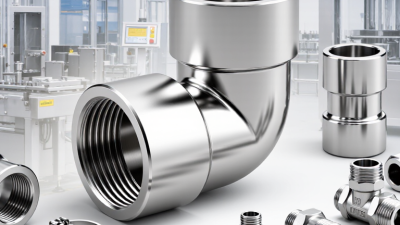
Choosing sanitary fittings requires more than selecting polished stainless steel. Material grade, surface condition, and cleaning performance must work together. In food, beverage, and pharmaceutical installations, 304 stainless steel often suits mild environments. However, 316L usually performs better where chlorides, salts, or aggressive cleaning chemicals are present. The extra alloying elements improve corrosion resistance, but they do not prevent poor fabrication.

Grade matters.

A fitting can carry a suitable grade and still fail hygienic expectations. Check the internal surface finish, weld quality, and connection design. Smooth, crevice-free surfaces reduce residue and microbial retention. Butt welds should be fully penetrated and properly finished. Rough grinding marks can trap product, even when the fitting looks bright from the outside. This detail is easy to miss during purchasing.

Elastomer seals also deserve comparison. EPDM, silicone, and fluoropolymer materials differ in temperature resistance, chemical compatibility, and compression behavior. Confirm the seal material against cleaning temperatures and process fluids. A mismatched seal may swell, crack, or release particles. That risk is often underestimated. I have seen projects focus heavily on stainless grades while treating gaskets as minor accessories. That approach needs reconsideration. Review certificates, inspection records, and hygienic design requirements before approval. Also verify dimensions on site, because drawings and actual pipe alignment do not always agree.

Select Suitable Fitting Types, Sizes, and Connection Methods

Choosing stainless sanitary fittings starts with the process, not the catalogue. Identify the fluid, temperature, pressure, and cleaning routine. A dairy line may need smooth elbows, hygienic tees, and minimal dead space. A pharmaceutical process usually demands tighter surface control and documented material grades. Food, beverage, and chemical systems can look similar, but their sanitation risks differ.

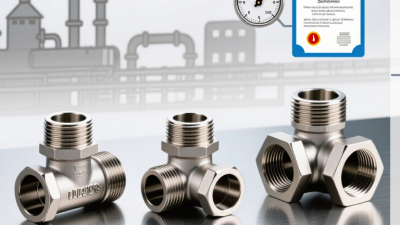
Select fitting sizes according to flow requirements and pipe dimensions. An undersized fitting can create pressure loss and difficult cleaning. An oversized connection may increase cost and hold stagnant product. Tri-clamp connections allow faster maintenance, while welded joints can provide a continuous, clean internal surface. Threaded connections may suit low-risk utility lines, but they can trap residue if poorly designed. I have seen projects focus on outside diameter and overlook gasket compatibility. That mistake becomes expensive during commissioning.

Tips: Confirm the actual tube standard before ordering. Check every gasket against temperature and cleaning chemicals. Inspect welds for discoloration, pits, and rough transitions. Request material certificates and surface-finish records when traceability matters. Keep fittings aligned during installation; forced connections can stress seals and shorten service life. Do not assume a polished surface is automatically hygienic. Geometry, drainage, inspection access, and cleaning validation matter too. A small fitting detail can affect an entire production cycle.

How to Choose Stainless Sanitary Fittings for Your Project? - Select Suitable Fitting Types, Sizes, and Connection Methods

Fitting Type Typical Function Common Size Range Recommended Connection Method Best-Suited Applications Key Selection Considerations Hygienic Design Notes
Tri-Clamp Ferrule and Clamp Creates a removable connection between sanitary tubes, valves, pumps, and process equipment. ½–6 in DN15–DN150 Food and beverage lines, dairy processing, brewing, cosmetics, biotechnology, and pharmaceutical systems. Match the ferrule outside diameter, clamp size, gasket material, and pressure rating. Confirm that all components use the same sanitary dimensional standard. Fast to disassemble and easy to inspect. Select a smooth internal bore and avoid crevices around the gasket seat.
Sanitary Elbow Changes the direction of flow, most commonly by 45° or 90°. ½–6 in DN15–DN150 Welded, tri-clamp, threaded, or flanged, depending on the adjoining equipment. Process piping layouts where equipment must be bypassed or flow direction must change. Use a long-radius elbow where lower pressure loss and easier cleaning are important. Verify the tube diameter and bend angle. Internal radii should be smooth and free from sharp transitions that can retain product or cleaning solution.
Sanitary Tee Branches a process line or combines two flow paths. ½–6 in DN15–DN150 Tri-clamp, orbital weld, butt weld, or flange connection. Product distribution, return lines, sampling branches, and connections to instruments or vessels. Choose equal or reducing outlets according to the process flow rate. Check that the branch size does not create excessive velocity or dead space. A sanitary tee with a gradual internal transition is preferable to a sharp, difficult-to-clean branch connection.
Reducer Connects tubes or fittings with different diameters. ½–6 in DN15–DN150 Concentric or eccentric welded, tri-clamp, or flanged configuration. Transitions between process lines, pumps, tanks, filters, and heat exchangers. Use a concentric reducer for most vertical or general-purpose lines. Consider an eccentric reducer for horizontal pump suction lines when air or liquid pockets must be minimized. Select a design with a continuous, polished internal transition and no abrupt ledges.
Sanitary Union Allows two sections of pipe or equipment to be joined and separated without rotating the complete assembly. ½–4 in DN15–DN100 Threaded sanitary union, tri-clamp union, or tube union with a hygienic gasket. Equipment connections, removable skids, maintenance points, and frequently serviced sections. Confirm nut, ferrule, gasket, and tube dimensions. Select a robust union where repeated assembly and disassembly are expected. Use a gasket that is compatible with the product, cleaning chemicals, and operating temperature.
Sanitary Sight Glass Provides visual confirmation of product flow, color, clarity, or the presence of bubbles. ½–4 in DN15–DN100 Tri-clamp or flanged connection, depending on the line design. Liquid transfer lines, beverage processing, filtration outlets, and tank discharge lines. Check viewing diameter, allowable pressure and temperature, glass type, seal material, and cleaning procedure. The viewing section should have smooth product-contact surfaces and seals that do not obstruct the flow path.
Sanitary Sampling Valve Provides controlled removal of a representative process sample. ½–2 in DN15–DN50 Welded, tri-clamp, or tank-mounted hygienic connection. Quality control, laboratory sampling, fermentation systems, and validated process lines. Select the valve style, outlet configuration, sterilization method, and actuation type according to the sampling procedure. Choose a design that drains completely and minimizes dead legs around the valve seat and outlet.
Sanitary Butterfly Valve Provides economical on/off isolation with a compact quarter-turn design. 1–8 in DN25–DN200 Tri-clamp, welded, or flanged connection; manual or automated actuation. Low- to medium-pressure liquid lines, tank outlets, utility isolation, and product transfer systems. Verify pressure, temperature, actuator torque, seat material, flow direction, and required fail position. Suitable for many hygienic liquid services, but the disc and seat must be compatible with the product and cleaning cycle.
Sanitary Check Valve Prevents reverse flow in a process line. ½–4 in DN15–DN100 Tri-clamp, welded, or threaded hygienic connection. Pump discharge lines, dosing systems, return lines, and protection of sensitive equipment. Check cracking pressure, allowable flow direction, pressure drop, orientation, and compatibility with CIP or SIP procedures. Install in an orientation that supports complete drainage and prevents product from remaining behind the closure element.
Welded Tube Fitting Creates a permanent, high-integrity connection between sanitary tubes or equipment. ½–12 in DN15–DN300 Fixed process lines, pharmaceutical utilities, high-purity water, and systems requiring minimal leak points. Confirm tube wall thickness, welding procedure, purge-gas requirements, inspection method, and post-weld passivation. Internal weld quality is critical. A smooth, fully penetrated, properly finished weld reduces contamination and corrosion risk.
Threaded Adapter Connects sanitary tubing to instruments, utilities, or equipment with a threaded port. ½–2 in DN15–DN50 Sanitary tube connection on one side and compatible male or female thread on the other. Pressure gauges, sensors, utility interfaces, low-frequency maintenance points, and equipment transitions. Identify the exact thread standard, thread gender, sealing method, pressure rating, and material compatibility before ordering. Use threaded connections sparingly in product-contact areas because threads can create cleaning and retention challenges.
Sanitary Flange Adapter Connects sanitary tubing to larger equipment, pumps, tanks, or process components with flanged nozzles. 1–12 in DN25–DN300 Sanitary clamp flange, bolted flange, or a hygienic transition flange. Tank connections, heat exchangers, large pumps, filtration housings, and process skids. Match flange outside diameter, bolt pattern, gasket dimensions, facing type, and pressure class. Use flush-facing designs and correctly compressed gaskets to reduce crevices and product entrapment.
Project Selection Checklist: Confirm the required tube size and dimensional standard; choose a corrosion-resistant stainless steel grade suitable for the product and cleaning chemicals; verify pressure and temperature limits; select a compatible gasket or elastomer; specify the connection method; and ensure that the fitting design supports drainage, inspection, cleaning, and maintenance.

Evaluate Surface Finish, Standards, and Cleaning Requirements

How to Choose Stainless Sanitary Fittings for Your Project?

A sanitary fitting should match the product, cleaning method, and operating environment. Surface finish is more than a polished appearance. Measure roughness using Ra values, usually in micrometres. A common hygienic target is Ra 0.8 μm, while sensitive processes may require 0.4 μm or lower. Confirm whether the value applies to internal surfaces, welds, or both. Hidden weld discoloration can become a cleaning problem.

Ra 0.8 μm
0.4 μm or lower

Standards help define acceptable design, but they do not replace verification. ASME BPE supports bioprocess applications, while 3-A requirements often guide dairy and food equipment. EHEDG guidance is also useful for hygienic design. Check certificates, material records, surface-finish reports, and dimensional drawings. Do not accept “sanitary grade” as sufficient evidence. It is too vague. Fittings should limit dead legs, sharp transitions, exposed threads, and crevices where residue can remain.

Cleaning requirements

Cleaning requirements should shape the selection from the beginning. For CIP systems, confirm compatibility with caustic cleaners, acids, temperature, flow velocity, and repeated cycles. SIP service adds steam exposure and thermal movement. Gaskets need equal attention; a fitting may be excellent, but an unsuitable seal can swell or shed particles. In equipment reviews, I have seen teams choose a smoother finish but overlook poor drainage. That mistake is easy to repeat. Request cleaning validation data when possible, and inspect sample fittings under realistic conditions before approval.

Verify Supplier Quality, Compatibility, and Total Project Cost

Choosing stainless sanitary fittings requires more than checking size and price. Verify the supplier’s material documentation, production controls, and inspection records. Request heat numbers, surface-finish data, and dimensional reports for critical components. A reliable supplier should explain how fittings are cleaned, packed, and protected before shipment.

Compatibility deserves equal attention. Confirm tube standards, connection types, gasket materials, pressure ratings, and operating temperatures. Consider cleaning chemicals and repeated CIP or SIP cycles. A fitting may fit mechanically but still fail hygienically. That mistake can create leakage, contamination risks, and expensive production delays. I have seen projects overlook gasket compatibility because the metal parts looked correct.

Tips: Ask for a sample before placing a large order. Measure wall thickness and connection accuracy. Check weld smoothness under bright light. Confirm traceability from raw material to final inspection. Keep every certificate with the project records.

Total project cost includes more than the quoted unit price. Add freight, customs handling, installation labor, spare parts, testing, and possible downtime. Cheap fittings can require extra polishing or rework. That weakens the original saving. A higher initial price may be reasonable when documentation, consistency, and delivery reliability reduce site problems. Still, supplier claims should be tested, not accepted automatically. Request references from comparable sanitary applications, but review them critically. Your process conditions may differ.