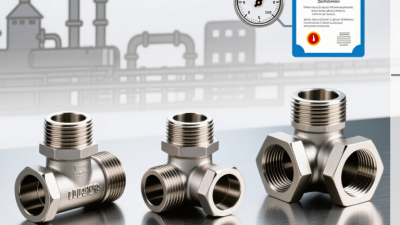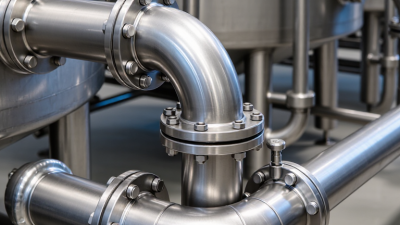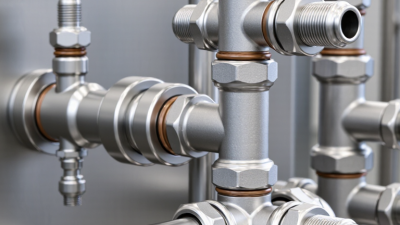
Choosing China’s best stainless sanitary fittings suppliers requires more than comparing prices and polished catalogs. It demands practical evaluation of materials, manufacturing controls, certifications, and service reliability. In food, beverage, pharmaceutical, and cosmetic facilities, a small fitting can affect hygiene, cleaning time, and production safety.
Experienced buyers inspect details that product pages often overlook. These include 316L or 304 stainless steel grades, internal surface finishes, weld quality, gasket materials, and dimensional accuracy. A hygienic elbow should have smooth internal transitions, not sharp corners that trap residue. Tri-clamp connections must fit securely and remain easy to dismantle. Supplier experience becomes visible here.
Reliable manufacturers usually provide material certificates, inspection records, pressure information, and traceable production details. Factory photographs help, but independent verification is stronger. Samples can reveal polishing marks, uneven threads, or poor packaging before a large order is placed. Ask difficult questions.
This guide examines how to identify dependable stainless sanitary fittings suppliers in China. It considers production capability, quality management, customization, export experience, communication, and after-sales support. Certifications matter, but they do not replace consistent inspection. A supplier may present attractive documents while offering weak process control. That possibility deserves attention.
No supplier is perfect. Some factories excel at custom fabrication but struggle with delivery schedules. Others offer fast production yet limited technical guidance. Careful comparison, sample testing, and clear specifications can reduce these risks. The strongest purchasing decision balances engineering evidence with real communication, not promotional language alone.
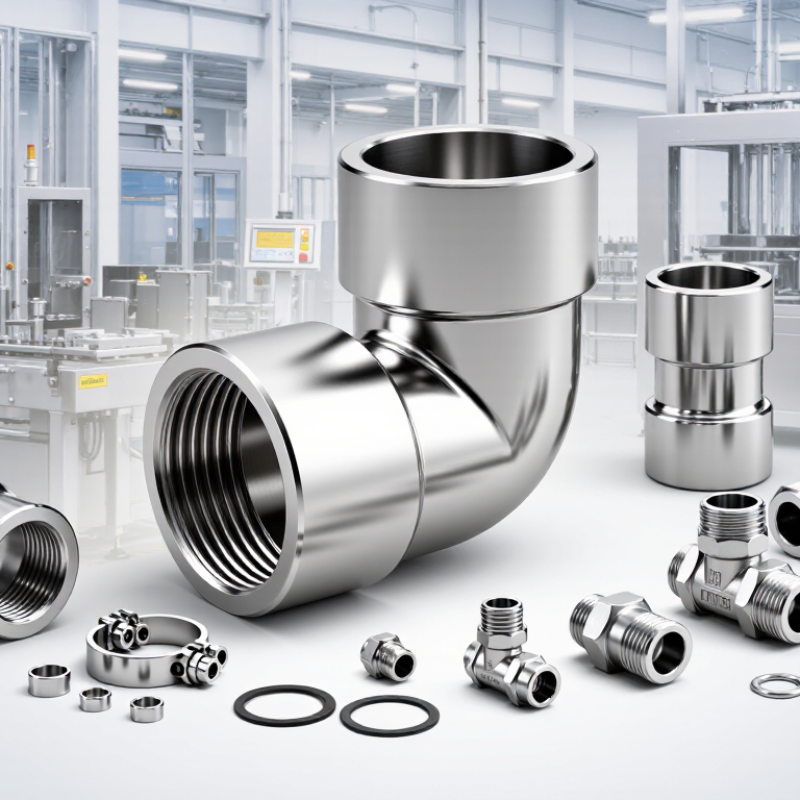
Stainless sanitary fittings are hygienic connectors used in food, beverage, dairy, pharmaceutical, and other clean processing systems. They join pipes through elbows, tees, reducers, clamps, unions, and welded ends. Their main task is simple: move liquid safely while reducing places where residue can hide.
The material is commonly 304 stainless steel, while 316L suits more corrosive fluids. A smooth internal surface supports effective cleaning. However, a bright finish does not always mean sanitary quality. Crevices, rough welds, poor alignment, and damaged seals can still collect product. Small details matter.
During supplier evaluation, request material certificates, dimensional drawings, surface-finish information, and test records. Ask how fittings are polished, cleaned, capped, and packed. A dependable supplier should also explain tolerances and provide traceability for each batch. In real installations, an inexpensive fitting may create expensive cleaning problems later. I have seen specifications focus heavily on appearance, while ignoring gasket compatibility and drainage. That oversight deserves more attention. A fitting should drain properly, fit without force, and remain stable through repeated cleaning cycles.
Why Choose Chinese Stainless Sanitary Fittings Suppliers?
Chinese suppliers combine broad production capacity with specialized stainless-steel processing. World Stainless reported China produced about 26.6 million tonnes of crude stainless steel in 2023. That scale supports stable access to 304 and 316L materials. It also enables competitive pricing for valves, clamps, elbows, and hygienic tubing.
Technical capability matters more than low quotations. Experienced factories can control orbital welding, internal polishing, and surface roughness. They should provide heat numbers, material certificates, dimensional records, and pressure-test results. ISO’s 2022 Survey recorded over one million ISO 9001 certificates in China. Certification alone proves little, however. Buyers still need supplier audits, sample testing, and clear acceptance standards.
Chinese sanitary fitting suppliers can also shorten development cycles. Many maintain machining, polishing, assembly, and inspection within one facility. This reduces communication gaps and supports custom connections for food, beverage, pharmaceutical, and clean-water systems. The UN Comtrade database shows China remains a major global exporter of stainless-steel products. Still, quality varies widely. A polished fitting can hide weak weld penetration or poor traceability. A serious supplier welcomes video inspections, batch documentation, and independent testing. That discipline is often more valuable than the lowest price.
Choosing China’s best stainless sanitary fittings supplier requires more than comparing prices or polished product photos. Manufacturing quality starts with traceability. Ask whether the supplier identifies each heat number, material grade, and production batch. For 304 or 316L fittings, request mill certificates and independent chemical verification. ASTM A967 offers recognized passivation testing methods, while EN 10204 3.1 certificates help connect material data with the delivered batch. A certificate alone is not proof. Records can be incomplete.
Evaluate the factory against practical manufacturing controls. Check orbital welding procedures, internal surface finish, dimensional inspection, and cleaning validation. Hygienic designs commonly target an internal roughness around Ra 0.8 μm or lower, but the correct limit depends on the application. Confirm how the supplier measures it, not merely what the quotation promises. The ISO Survey 2023 reported more than 1.2 million ISO 9001 certificates worldwide, showing that certification is widespread. It does not guarantee excellent sanitary fittings. A supplier can pass an audit and still ship one poor batch.
Tips: Request a recent inspection report, calibration records, weld samples, and photographs from the actual production line. Compare sample results with your drawing. Ask for a small pilot order before signing a long contract. Inspect the ferrules, gasket seats, and weld interiors yourself. Pay attention to scratches. Some suppliers may resist full traceability requests; that hesitation deserves careful review. My own practical lesson is simple: clear evidence beats confident sales language, although even a careful evaluation cannot remove every manufacturing risk.
Material verification is a key step when evaluating sanitary fitting suppliers. This chart shows the midpoint of the standard chemical composition ranges for commonly specified stainless steel grades 1.4301 (304) and 1.4404 (316L), expressed as weight percentage. The 316L grade contains molybdenum, which improves resistance to localized corrosion in demanding hygienic and chemical-processing environments.
Reference: EN 10088-1 nominal composition ranges. Actual mill certificates should be checked through an EN 10204 3.1 inspection certificate or an equivalent material traceability document.
China Best Stainless Sanitary Fittings Suppliers?
Which Industries Use Stainless Sanitary Fittings?
Stainless sanitary fittings serve industries where cleanliness, traceability, and controlled flow matter. Food and beverage plants use them for milk, juice, sauces, beer, and liquid ingredients. Their smooth surfaces reduce places where residue can collect. During CIP cleaning, properly designed fittings support reliable circulation and drainage. Dairy processing needs extra care because protein deposits can remain inside poorly aligned joints. Small details matter here.
Pharmaceutical and biotechnology facilities use sanitary fittings in purified water, buffer, and process-fluid systems. Cosmetics manufacturers also depend on them for creams, shampoos, and liquid formulations. These industries usually require documented materials, consistent weld quality, and suitable surface finishes. A polished fitting alone does not guarantee hygienic performance. Dead legs, poor gaskets, or weak installation practices can still create contamination risks.
Water treatment, nutrition production, and specialty chemical plants may use stainless sanitary fittings when product purity is important. Engineers commonly evaluate pressure, temperature, cleaning chemicals, connection standards, and maintenance access before choosing components. Suppliers in China can support custom dimensions and export documentation, but buyers should verify certificates and inspection records carefully. In practice, the cheapest option may create higher maintenance costs later. That deserves reflection.
| Industry | Typical Applications | Common Fitting Types | Preferred Stainless Steel | Key Hygienic Requirements | Supplier Selection Priorities |
|---|---|---|---|---|---|
| Food and Beverage Processing | Liquid food transfer, beverage filling, dairy processing, mixing, storage, and clean-in-place systems. | Sanitary elbows, tees, reducers, clamps, ferrules, unions, sight glasses, and hygienic valves. | 304 or 316L stainless steel, depending on product chemistry and cleaning conditions. | Smooth internal surfaces, cleanable geometry, corrosion resistance, and minimal dead legs. | Dimensional consistency, traceable materials, reliable welding, and documented surface finish. |
| Dairy and Milk Processing | Raw milk handling, pasteurization, homogenization, cream separation, yogurt production, and filling. | Clamp fittings, hygienic bends, tank outlets, sampling valves, butterfly valves, and non-return valves. | 316L is commonly selected for demanding cleaning cycles; 304 is used in suitable general-service areas. | Resistance to frequent hot-water, alkaline, and acidic cleaning; hygienic seals and drainable layouts. | Compatibility with cleaning chemicals, hygienic certification, low surface roughness, and spare-part availability. |
| Pharmaceutical Manufacturing | Purified water, process fluids, active ingredient production, sterile transfer, and formulation systems. | Orbital-weld fittings, hygienic clamps, diaphragm valves, sterile connectors, tees, reducers, and spray-device connections. | 316L stainless steel is widely used for product-contact and high-purity systems. | High-purity surface finish, low particle retention, drainability, passivation, and documented material traceability. | Weld quality, inspection records, surface-finish reports, elastomer compatibility, and validation documentation. |
| Biotechnology and Life Sciences | Cell culture, fermentation, buffer preparation, media transfer, and single-use system interfaces. | Aseptic connectors, hygienic clamps, diaphragm valves, sample valves, manifolds, and tank fittings. | 316L stainless steel for reusable product-contact equipment and sterilizable piping. | Sterilization compatibility, aseptic design, cleanability, low extractables, and controlled surface condition. | Process qualification support, batch traceability, dimensional inspection, and suitable gasket materials. |
| Cosmetics and Personal Care | Creams, lotions, shampoos, liquid soaps, fragrances, emulsions, and filling operations. | Tri-clamp fittings, sanitary elbows, transfer valves, tank fittings, spray-ball connections, and reducers. | 304 stainless steel for many general applications; 316L for corrosive or high-purity formulations. | Non-contaminating materials, easy cleaning, resistance to fragrances and chemicals, and attractive external finish. | Finish consistency, chemical compatibility, custom dimensions, and dependable sealing performance. |
| Brewing and Distilling | Water treatment, wort transfer, fermentation, maturation, filtration, and spirit transfer. | Sanitary elbows, tees, clamps, butterfly valves, sample valves, sight glasses, and tank outlets. | 304 is common; 316L may be preferred where chloride exposure or aggressive cleaning is significant. | Low product retention, resistance to acidic beverages, clean-in-place capability, and secure connections. | Pressure rating, weld quality, seal selection, compatibility with cleaning agents, and accurate dimensions. |
| Water Treatment and Purified Water | Reverse osmosis, ultrafiltration, purified-water distribution, ozone systems, and process-water circulation. | Pipe couplings, unions, tees, reducers, hygienic valves, sample points, and instrument connections. | 304 or 316L, selected according to water chemistry, chloride level, and sanitation method. | Corrosion resistance, cleanable surfaces, leak prevention, drainability, and compatibility with ozone or sanitizers. | Material certificates, pressure testing, surface finish, correct tube standards, and installation support. |
| Chemical and Specialty Chemical Processing | Chemical transfer, blending, dosing, filtration, storage, and controlled fluid handling. | Heavy-duty unions, elbows, tees, reducers, lined options, high-integrity valves, and instrument fittings. | 316L or other corrosion-resistant alloys may be required; material choice depends on the chemical medium. | Chemical compatibility, pressure integrity, correct gasket selection, and resistance to pitting or stress corrosion. | Chemical-resistance data, pressure ratings, welding procedures, inspection records, and engineering support. |
| Industrial Kitchens and Foodservice | Hygienic water lines, beverage dispensing, cooking equipment, cleaning systems, and drainage connections. | Threaded or clamped unions, elbows, tees, flexible-hose adapters, valves, and quick-disconnect fittings. | 304 stainless steel is widely used; 316L is suitable for salt-rich or highly corrosive environments. | Easy sanitation, impact resistance, corrosion resistance, safe sealing materials, and simple maintenance. | Fast availability, standard dimensions, installation convenience, durability, and compliance with local requirements. |
| Semiconductor and High-Purity Manufacturing | Ultra-pure water, specialty gas distribution, chemical delivery, and contamination-controlled process systems. | High-purity welded fittings, orbital-weld components, VCR-style connections, diaphragm valves, and electropolished assemblies. | High-purity 316L stainless steel with controlled metallurgy and surface treatment. | Very low particle generation, controlled roughness, electropolishing, leak tightness, and contamination control. | Cleanroom packaging, helium leak testing where required, weld documentation, traceability, and strict dimensional control. |
Selecting a reliable Chinese supplier of stainless sanitary fittings requires more than comparing prices. Start with your process conditions: product type, media, temperature, pressure, connection standard, and required surface finish. A fitting for a dairy line may need a smoother internal wall than one used for general water service. Ask for drawings, tolerances, welding procedures, and material grades before requesting a final quotation. Small details matter.
Request heat-number traceability and material certificates for each production lot. Confirm whether the supplier can provide dimensional inspection, pressure testing, and surface-roughness records. For hygienic applications, review cleaning requirements and the standards accepted in your destination market. An ISO certificate helps, but it does not replace a factory audit. Check the actual workshop: welding areas, polishing equipment, storage racks, and calibration labels. Photos can hide too much.
Order samples made through the same process used for mass production. Measure wall thickness, gasket seats, alignment, and visible scratches with your own inspection plan. Discuss lead times, packaging, replacement procedures, and communication during nonconformities. Ask for references from projects with similar sanitary demands, not only large trading volumes. A low quote may exclude testing or careful packing. That is where budgets become uncomfortable. No checklist is perfect; review supplier performance after delivery and record what you would change next time.
By continuing to browse or by clicking “Accept All Cookies,” you agree to the storing of first- and third-party cookies on your device to enhance site navigation, analyze site usage, and assist in our marketing efforts. View our Privacy and Cookie Policy.