7 Tips for Choosing Sanitary Connectors

Sanitary connectors may be small, but their fit can affect cleaning, maintenance, and production uptime. Grand View Research estimated the global food processing equipment market at USD 52.6 billion in 2022, with projected growth through 2030. That broad market figure does not measure connector demand. It does, however, reflect the scale of equipment environments where hygienic design matters.

A connector should suit the product, process conditions, and cleaning method—not just the pipe size. Check connection dimensions, surface finish, seal material, pressure and temperature ratings, and compatibility with cleaning chemicals. A clamp that closes easily on a workbench may still be awkward to inspect inside a crowded line. Small details matter. The EHEDG hygienic design guidance and relevant 3-A Sanitary Standards offer useful reference points, while ISO 2852 specifies dimensions for certain stainless-steel clamp couplings used in food-industry applications. Confirm the applicable scope before relying on any standard.

This guide presents seven practical tips for choosing sanitary connectors, from verifying material compatibility to checking supplier documentation and replacement-part availability. Ask how the connection will be cleaned, opened, and inspected during routine maintenance. Do not assume that a familiar fitting is automatically the right one. Even experienced teams can miss a seal mismatch when specifications are scattered across drawings and purchase records. There is no universal connector choice; the best option depends on the actual line and its operating conditions.
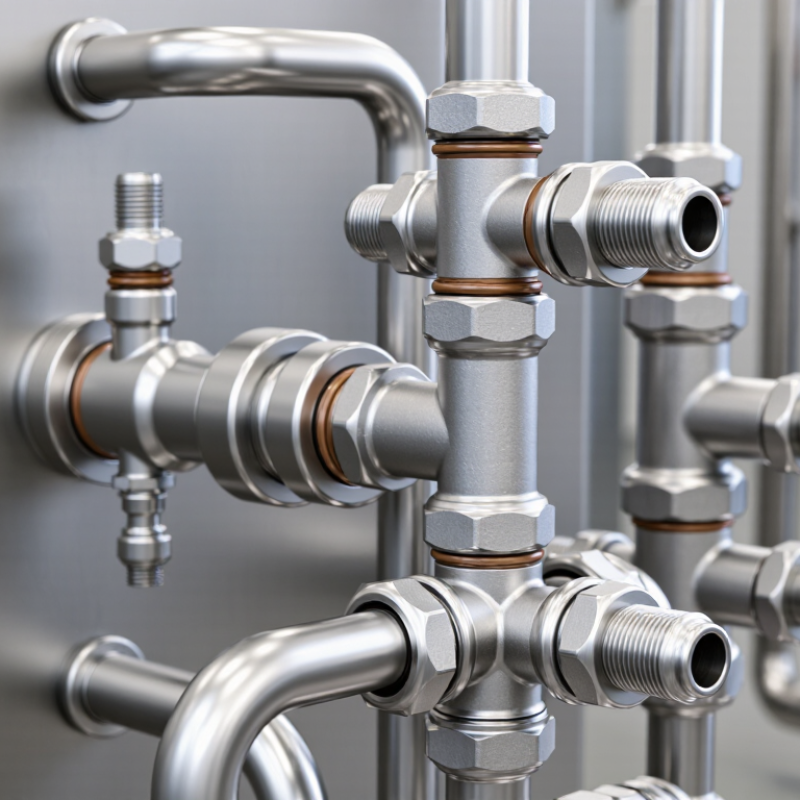
7 Tips for Choosing Sanitary Connectors

Define Process and Cleaning Requirements Under FDA 21 CFR 117.40

7 Tips for Choosing Sanitary Connectors

Define process and cleaning requirements before comparing connector dimensions. Under FDA 21 CFR 117.40, food-processing equipment must be adequately cleanable and maintained to prevent contamination. The rule does not approve individual connector designs. Your facility must assess whether each connection suits its product, process, and sanitation method. Is the line exposed to acidic ingredients, salt, heat, or frequent disassembly? Record those conditions. A connector that works on a cool water line may fail near a hot, sticky product.

Specify the cleaning method, temperature, chemicals, flow, and inspection frequency. Then check connector surfaces, gasket materials, welds, and product-contact crevices against those conditions. FDA guidance favors equipment that can be cleaned and maintained; practical details matter, too. A narrow gap behind a gasket can trap residue. Small detail.

CDC researchers estimated 48 million foodborne illnesses annually in the United States, in a 2011 Emerging Infectious Diseases study by Scallan and colleagues. That estimate is not connector-specific, but it underscores why sanitation controls deserve careful design. Ask suppliers for material and cleaning-compatibility documentation, and verify access during a line walk. I would still test the proposed setup under actual cleaning conditions; a tidy drawing cannot reveal every residue trap.

Match Connector Ends to ASME BPE or ISO 2852 Dimensions

7 Tips for Choosing Sanitary Connectors

Match connector ends by checking the actual tube dimensions, not just the nominal size. ASME BPE and ISO 2852 use defined dimensional tables, and their end profiles are not automatically interchangeable. Compare tube outside diameter, ferrule geometry, clamp width, and gasket seating surface against the standard used by your equipment. Small differences matter. A joint may clamp together yet still leave uneven gasket compression or a crevice that traps residue.

Tip: Identify the governing standard before ordering. Record the tube standard and measured outside diameter, then verify both connector ends against the relevant ASME BPE or ISO 2852 tables. Calipers help, but measure clean, undamaged tube ends at several points. This catches ovality and wear. This is where teams sometimes rush; the nominal label can look right while the sealing face does not.

Tip: Check the full assembly, not only the ferrule. Confirm that clamp, gasket, and connector dimensions suit the same standard and service conditions. Review the supplier’s dimensional drawings against the published standard tables, and keep that check with purchasing records. If a legacy line mixes standards, pause and verify compatibility rather than forcing parts to fit. It takes longer. It is usually cheaper than a leak, repeated cleaning, or a difficult inspection.

Specify 316L Stainless Steel and Verify Material Traceability

7 Tips for Choosing Sanitary Connectors

Specify 316L Stainless Steel and Verify Material Traceability

316L is a practical choice for sanitary connectors exposed to moisture, cleaning chemicals, and repeated washdowns. ASTM A240/A240M limits carbon in 316L to 0.03% maximum, helping reduce the risk of sensitization during welding. For fittings, check the applicable material specification and product form; a grade name alone is not enough. Small details matter.

World Stainless reported 58.4 million tonnes of global stainless steel production in 2023. That scale makes clear why buyers should verify each component, not assume every shipment is identical.

Request a material test report that matches the connector’s heat number and records its chemical composition. Check that the report, part marking, and purchase documents agree. A handheld X-ray fluorescence test can screen alloy content, but it does not reliably measure carbon; use suitable laboratory analysis when carbon verification is needed. Paperwork can be messy. If a heat number is missing or unreadable, pause acceptance and ask the supplier to reconcile the records. A polished surface does not prove the alloy inside.

Check Product-Contact Finish Against ASME BPE SF1: Ra ≤0.51 µm

7 Tips for Choosing Sanitary Connectors

Check the product-contact finish against the specified ASME BPE SF1 requirement: Ra ≤0.51 µm. Ra describes average surface roughness, not every peak or scratch. Ask for documentation that identifies the measured surface, the result, and the inspection method. A bare “SF1” label is less useful without traceable details.

Confirm that measurements apply to the wetted surfaces, including the bore and areas near welds. Surface readings can vary with location and instrument setup, so consistent procedures matter. Check that the profilometer is suitable for the surface and maintained or calibrated as required. Small details matter. A smooth-looking connector is not proof of compliance.

Also review the finish requirements for the connector’s intended process and the applicable ASME BPE edition. Ra alone does not describe cleanliness, material condition, or how well a joint will drain. It is tempting to trust one number; that shortcut deserves a second look. Request clear inspection records, and clarify any exceptions before installation. A verified finish supports sound selection, but it is only one part of a sanitary design.

7 Tips for Choosing Sanitary Connectors - Check Product-Contact Finish Against ASME BPE SF1: Ra ≤0.51 µm
# Selection tip What to check Practical acceptance check Verification record
1 Confirm the product-contact finish Identify every surface that contacts the process fluid and confirm the required finish designation. For SF1, check the stated maximum of Ra ≤0.51 µm (approximately 20 µin). The specified product-contact surfaces meet the required Ra limit. Do not assume a finish claim covers non-contact surfaces or every component in an assembly. Request finish documentation identifying the measured surface, acceptance limit, and measurement method.
2 Match the alloy to the process Check the connector’s specified material grade against the fluid, cleaning agents, temperature, and operating conditions. 316L stainless steel is commonly used for sanitary process components, but suitability depends on the application. Confirm the material is compatible with the full process and cleaning cycle; consider corrosion risks such as chloride exposure where relevant. Review the material specification and, where required, material test documentation.
3 Select a compatible gasket or seal Check seal material, size, and design against process media, temperature, pressure, and cleaning or sterilization conditions. Common elastomer choices include EPDM and FKM; PTFE is also used in some seal designs. Use compatibility data for the actual conditions. No single seal material is suitable for every fluid or operating cycle. Record the seal material, dimensions, and applicable temperature and pressure limits.
4 Verify connection style and dimensions Match the connector type and nominal size to the mating equipment and piping. Sanitary systems may use clamp, weld, or other connection designs, depending on the installation. Check mating dimensions, end configuration, alignment, and any applicable system or project dimensional specification before ordering. Compare the connector drawing and dimensions with the mating-part drawing.
5 Look for hygienic, cleanable geometry Inspect the assembled connection for crevices, exposed threads in the product zone, trapped-fluid areas, and poorly aligned transitions. Confirm the installed design supports the intended cleaning method and avoids unintended product-retention locations. Review assembly drawings and assess the actual installed configuration.
6 Check pressure and temperature limits Verify the allowable operating limits for the connector and seal under the intended service conditions, including temperature changes during cleaning or sterilization. Ensure the complete connection assembly—not just the metal part—is suitable for the specified pressure and temperature range. Check technical data for the component and seal, and document the design conditions.
7 Review traceability and inspection evidence Determine what records are needed for material, product-contact finish, dimensions, and inspection in the intended application. Check that documents correspond to the supplied part and clearly identify the applicable specifications and inspection scope. Retain the required certificates, inspection reports, and product identification records.

Note: Confirm the applicable ASME BPE edition, project requirements, and measurement procedure for the specific application. A surface-roughness value alone does not establish overall hygienic suitability.

Confirm Seal Compatibility, Pressure Ratings, and CIP/SIP Limits

A sanitary connector can look correct on a drawing and still leak once the line heats up. Check the seal material against every product, cleaning chemical, and operating temperature it will contact. A gasket that tolerates a mild rinse may swell in an alkaline wash or harden after repeated steam cycles. Ask for documented compatibility data, not a general “food-grade” claim. Verify the seal’s temperature range includes normal production and short cleaning peaks.

Pressure ratings deserve the same careful reading. Compare the connector’s rating with the system’s maximum pressure, including pump starts, blocked outlets, and pressure surges. Do not rely only on the normal gauge reading. Small spikes matter. Ratings can vary by temperature, gasket type, size, and assembly method. Confirm the exact configuration in technical documents. A clamp tightened unevenly can distort the seal, an easy detail to miss during a rushed installation.

Check CIP and SIP limits separately. CIP exposes the joint to moving fluid, detergents, and repeated temperature changes; SIP adds hot saturated steam and thermal expansion. Confirm allowed temperature, exposure time, cycle count, and whether the connector must be drained or cooled between cycles. Then test the assembled connection under realistic conditions and inspect for flattening, cracks, or residue near the seal. Peak temperature is not the whole story; cycle duration matters too. A checklist still cannot replace a real cycle test.

7 Tips for Choosing Sanitary Connectors

Confirm seal compatibility, pressure ratings, and CIP/SIP limits.

Typical upper continuous-use temperature (°C)

Illustrative material ranges: EPDM about 150°C, silicone about 200°C, FKM about 200°C, and PTFE about 260°C. Actual limits depend on the specific compound, pressure, chemicals, and exposure duration. Verify the connector and seal manufacturer’s ratings for your CIP/SIP cycle; temperature capability alone does not confirm steam or cleaning-chemical compatibility. Also check the connector’s pressure rating at operating temperature and confirm dimensions, finish, and applicable sanitary requirements.