What Types of Pump Valves Are Available?

Choosing the right pump valves can determine whether a fluid system runs quietly or fails under pressure. A stuck check valve, for example, can send a pressure shock through a pipeline within seconds.

The U.S. Department of Energy reports that pumping systems can represent 25% to 50% of industrial electricity use. This makes valve selection more than a maintenance detail. It affects energy consumption, equipment life, safety, and operating cost. Grand View Research also identifies valves as essential components across water treatment, chemicals, energy, and manufacturing. Demand is broad, but application details still matter.

Igor J. Karassik, a respected pump engineer and author, wrote that “the pump is the heart of the system.” The valve is often its control point. Small, but critical.

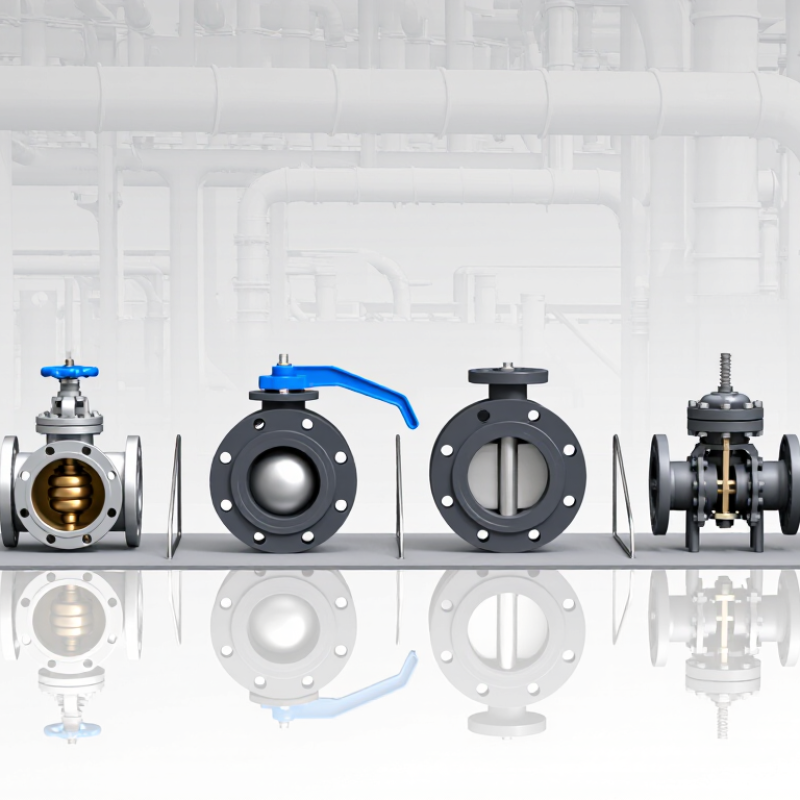
This guide examines the main pump valves available, including gate valves, globe valves, ball valves, butterfly valves, check valves, and pressure-relief valves. Each type behaves differently when exposed to abrasive fluids, high temperatures, corrosive chemicals, or frequent cycling. A butterfly valve may suit a large, low-pressure water line. A globe valve may offer better throttling control. A check valve can prevent reverse flow, but poor sizing may cause damaging water hammer.

These examples are practical, not universal. Real systems are rarely perfect. Engineers must review flow rate, pressure, temperature, material compatibility, maintenance access, and applicable standards before choosing pump valves. Manufacturers’ data sheets help, but they do not replace field judgment.
What Types of Pump Valves Are Available?

Pump Valve Basics: Functions, Designs, and Operating Principles

Pump valves regulate, stop, redirect, or protect fluid inside a pumping system.

Isolation valves, such as gate and butterfly designs, open fully or close tightly. They are poor choices for constant throttling. Globe and control valves adjust flow through a shaped passage. Their pressure drop can be useful, but it also creates heat and energy loss. Check valves respond to fluid movement, closing when reverse flow begins. Relief valves open when pressure exceeds a set value.

The operating principle is simple, yet valve selection is rarely simple. A spring-loaded check valve may close quickly, while a swing check valve needs reverse flow and space to move. A foot valve keeps suction piping primed, but its screen can clog in muddy water. Small details matter. In field maintenance, I have seen vibration blamed on the pump when a poorly supported valve caused turbulence. The U.S. Department of Energy’s Improving Pumping System Performance sourcebook reports that pumping systems can consume 25% to 50% of industrial facility electricity. It also identifies potential energy savings of 20% to 50% through better system design.

Valve materials, pressure ratings, fluid temperature, and solids content must match actual service conditions. The International Energy Agency reports that electric motor systems use roughly half of global electricity, making avoidable pressure loss significant. A larger valve is not automatically better. Oversizing can prevent stable control. Undersizing can restrict flow and accelerate wear. Designers should review pump curves, minimum-flow requirements, shutoff pressure, and maintenance access. The neat rule is imperfect: real systems change with season, contamination, and operator habits. That uncertainty deserves measurement, not assumption.

Common Pump Valve Types and Their Key Features

What Types of Pump Valves Are Available?

Common pump valve types serve different hydraulic duties. Isolation valves, such as gate and butterfly valves, stop flow during maintenance. Gate valves create low resistance when fully open. Butterfly valves need less space and often suit large pipelines. Check valves prevent reverse flow after the pump stops. This protects impellers, shafts, and seals from sudden backspin. A poorly selected check valve may slam loudly. That detail is easy to miss.

Globe and control valves regulate flow by adding controlled resistance. They work well where operators need stable pressure or precise adjustment. Ball valves offer quick shutoff, but they are less suitable for continuous throttling. Diaphragm valves handle corrosive or contaminated fluids with reduced leakage risk.

Pressure-relief valves protect equipment when discharge pressure rises unexpectedly. The U.S. Department of Energy reports that pumping systems can consume 20–25% of industrial facility electricity. Valve pressure loss therefore deserves serious attention, not casual specification.

Hydraulic Institute guidance also emphasizes checking flow conditions, closure speed, and system transients before selecting a check valve. In practice, the “best” valve depends on fluid viscosity, temperature, pipe size, maintenance access, and pump operating range. One assumption should be questioned: a cheaper valve rarely remains cheaper after repeated vibration, leakage, or shutdowns.

Valve Selection by Pump System, Fluid, and Application

What Types of Pump Valves Are Available?

Valve selection should begin with the pump system, not the valve catalog. Centrifugal pumps often need check valves to prevent reverse flow during shutdown. Suction lines may require foot valves, especially when priming is difficult. Isolation valves support maintenance, while control valves regulate flow or discharge pressure. The U.S. Department of Energy reports that pumping systems can consume 25% to 50% of industrial facility electricity. Poor valve sizing can increase friction losses and operating costs. Small details matter.

Fluid properties change the decision. Clean water may suit butterfly or gate valves, but abrasive slurry needs hardened flow paths and fewer internal restrictions. Corrosive chemicals require compatible wetted materials, verified against concentration and temperature data. Diaphragm or pinch valves can handle some viscous or contaminated fluids. For high-pressure service, pressure ratings must match the complete operating range, including surge conditions. Hydraulic Institute guidance recommends evaluating the full system curve, not only the pump’s rated point.

Application conditions also deserve practical review. A wastewater lift station may need reliable non-slam check valves and accessible isolation points. A dosing skid needs accurate control and leak resistance. In field work, I have seen valves selected correctly on paper but installed backward or without enough clearance. That is an avoidable failure. Valve choice should be checked against flow rate, head, temperature, pressure, maintenance access, and applicable testing standards. I still recheck the assumptions. Data can be incomplete.

Installation Requirements and Compatibility Considerations

What Types of Pump Valves Are Available?

Valve selection starts with installation conditions, not the valve label. Isolation valves support maintenance, check valves limit reverse flow, and control valves regulate pressure or discharge. Each valve needs a clear flow direction, accessible handwheel, and enough clearance for inspection. A valve installed too close to a pump inlet can disturb flow and increase turbulence.

Compatibility depends on fluid chemistry, temperature, pressure, pipe material, and connection standards. Confirm flange ratings against ASME B16.5 or the applicable regional standard. Threaded connections need matching dimensions and suitable sealing materials. For corrosive liquids, stainless steel, lined bodies, or engineered plastics may be appropriate. Elastomers deserve special attention. They can swell, crack, or lose flexibility without obvious warning.

Small details matter. A check valve installed vertically may perform differently from one installed horizontally. Support heavy valves independently, and prevent pipe strain from reaching the pump casing. The U.S. Department of Energy’s Pumping Systems Sourcebook reports potential energy savings of 20–50% through optimized pumping systems. Excessive valve pressure loss can reduce those gains. Hydraulic Institute guidance also stresses system-level evaluation, including flow, friction, and operating range. Field commissioning often reveals simple mistakes, such as reversed arrows or inaccessible drain plugs. Not every selection will be perfect. Recheck the assumptions before startup.

What Types of Pump Valves Are Available?

Installation and compatibility indicators for common pump valve types. A value of 1 indicates that the characteristic is generally applicable; 0 indicates that it is normally not recommended or requires special conditions.

Gate and ball valves are commonly used for isolation, globe and butterfly valves are more suitable for flow regulation, and check valves must be installed according to the marked flow direction.

Maintenance, Troubleshooting, and Replacement Guidelines

What Types of Pump Valves Are Available?

Pump systems commonly use check, relief, control, foot, ball, and diaphragm valves. Each type handles a different operating risk. Check valves prevent reverse flow when the pump stops. Relief valves protect piping from excessive pressure. Control valves regulate flow, while foot valves help maintain suction during startup.

Maintenance, Troubleshooting, and Replacement Guidelines

Inspect valves during scheduled pump maintenance, especially in systems handling abrasive or corrosive liquids. Look for leakage around threaded joints, cracked seats, unusual vibration, and pressure changes. A stuck check valve may cause water hammer or repeated pump cycling. A blocked foot valve can produce weak suction and noisy operation. Isolate pressure safely before opening any valve. Confirm the fluid, temperature, pressure rating, and connection size before replacement.

A common mistake is replacing a valve without checking the original failure. The new part may fail again if debris, cavitation, or incorrect alignment remains. I have found that a small piece of seal material can keep a valve slightly open. That detail is easy to miss. Test the repaired system slowly and record pressure readings at startup and normal flow.

Tips: Flush the line before installation. Keep spare seals dry and labeled. Do not force a stiff handle. Mark the flow direction on the pipe. If readings remain unstable, inspect the pump and suction line together. A valve rarely works alone.

What Types of Pump Valves Are Available? - Maintenance, Troubleshooting, and Replacement Guidelines
Valve Type Primary Function Typical Pump-System Location Main Advantages Common Failure Symptoms Routine Maintenance Replacement Considerations Typical Maintenance Priority
Check Valve Allows flow in one direction and prevents reverse flow when the pump stops. Discharge piping, near the pump outlet, or in vertical risers. Protects the pump from reverse rotation, reduces backflow, and helps maintain system pressure. Water hammer, reverse flow, pressure loss, noisy operation, or a pump that rotates backward after shutdown. Inspect for debris, worn hinges, damaged discs, and restricted movement. Verify that the valve closes fully. Match the valve size, pressure rating, flow direction, connection type, and fluid compatibility. Select a low-cracking-pressure design when required. High
Foot Valve Maintains pump prime by preventing liquid from draining back through the suction line. At the end of a suction pipe inside a tank, well, or reservoir. Supports reliable priming and usually includes a strainer to keep large debris out of the pump. Loss of prime, extended startup time, air entering the suction line, or reduced inlet flow. Clean the strainer, inspect the sealing surface, check the hinge or spring, and test for backflow leakage. Confirm adequate submerged depth, correct suction-line diameter, compatible materials, and sufficient flow area to limit inlet restriction. High
Gate Valve Provides full-flow isolation by raising or lowering a gate across the pipeline. On suction or discharge piping where infrequent isolation is needed. Low pressure drop when fully open and suitable for isolation service. Stiff operation, incomplete shutoff, stem leakage, or reduced flow caused by a partially closed gate. Operate periodically, inspect the stem and packing, and check that the gate reaches the fully open or closed position. Do not use as a throttling valve. Match pressure class, end connections, bore size, and fluid temperature. Medium
Ball Valve Provides quick shutoff using a rotating ball with a drilled passage. Isolation points on pump suction, discharge, bypass, and utility lines. Fast operation, compact design, reliable shutoff, and relatively low flow resistance when open. Handle movement without flow change, leakage through the seat, difficult operation, or external stem leakage. Cycle the valve when permitted, inspect the stem seal, and remove deposits that may prevent full closure. Choose a full-port design where low pressure loss is important. Verify seat material, pressure rating, temperature range, and actuator requirements. Medium
Butterfly Valve Controls or isolates flow with a disc rotating around a central or offset shaft. Large-diameter suction, discharge, cooling-water, and process piping. Lightweight construction, compact installation, quick quarter-turn operation, and economical large-pipe service. Disc interference, seat leakage, excessive torque, vibration, or restricted flow when the disc is not correctly positioned. Inspect the disc and seat, verify shaft alignment, check actuator travel, and remove buildup from the sealing area. Confirm that the disc material is compatible with the fluid and that the valve can withstand the available pressure and temperature. Medium
Globe Valve Regulates flow by moving a plug toward or away from a stationary seat. Discharge-side control lines, bypass circuits, and applications requiring frequent throttling. Good control resolution and predictable throttling characteristics. Excessive pressure drop, noisy flow, seat erosion, packing leakage, or inability to regulate flow smoothly. Inspect the plug, seat, stem, and packing. Check for cavitation, vibration, and operation beyond the recommended travel range. Use a properly sized valve; an oversized valve may operate near its seat and provide unstable control. Verify trim compatibility with the fluid. High
Pressure-Relief Valve Automatically releases excess pressure to protect piping, equipment, and the pump system. Discharge headers, closed systems, pressure vessels, or pump bypass arrangements. Provides automatic overpressure protection without requiring operator action. Frequent lifting, leakage after opening, failure to open at the set pressure, or unstable pressure cycling. Test according to the system risk and applicable requirements. Keep the inlet and discharge paths clear and inspect for corrosion or deposits. Set pressure must remain within the protected equipment limits. Confirm capacity, discharge routing, fluid compatibility, and local code requirements. High
Pressure-Reducing Valve Reduces a higher upstream pressure to a controlled lower downstream pressure. Discharge branches, process-water lines, and pump systems serving lower-pressure equipment. Maintains a more consistent downstream pressure and protects sensitive components. Downstream pressure drift, chatter, low flow, excessive pressure loss, or inability to maintain the setpoint. Clean the strainer, inspect the diaphragm or piston, verify sensing passages, and confirm the downstream pressure setting. Size for the actual flow range rather than maximum pipe size alone. Check inlet pressure, outlet setpoint, temperature, and fluid cleanliness. High
Air-Release Valve Removes accumulated air from pressurized liquid piping during operation. High points in discharge piping, long pipelines, and elevated sections of pump systems. Reduces air pockets, improves hydraulic performance, and helps limit flow interruption and corrosion risk. Continuous air leakage, liquid discharge from the vent, trapped air, flow reduction, or repeated valve clogging. Inspect the float, vent mechanism, isolation arrangement, and internal screen. Remove sediment and verify the outlet is safely routed. Match the valve capacity to the expected air volume and operating pressure. Install at a true pipeline high point with suitable maintenance access. Medium
Control Valve Adjusts flow, pressure, level, or another process variable through manual or automatic actuation. Discharge control loops, bypass lines, dosing systems, and process branches. Enables precise process control and can respond automatically to changing operating conditions. Hunting, slow response, incorrect position feedback, excessive noise, cavitation, or failure to reach the commanded position. Check actuator travel, position feedback, instrument signals, packing, trim wear, and calibration. Inspect for vibration and abnormal differential pressure. Review the required flow coefficient, shutoff pressure, rangeability, actuator force, fail position, and cavitation or flashing risk. High
Suction Isolation Valve Isolates the pump from the suction source during maintenance or equipment removal. Immediately upstream of the pump inlet, where permitted by the system design. Allows safer pump servicing and helps separate equipment from the rest of the piping system. Restricted inlet flow, leakage when closed, excessive suction pressure loss, or inability to operate during an emergency. Keep fully open during normal pumping unless the system design specifically permits otherwise. Inspect operation, seals, and any lockout provisions. Select a full-bore or low-loss valve where possible. Verify that the valve does not create harmful suction restriction or increase cavitation risk. High
Drain Valve Allows liquid to be removed from the pump casing, piping, or low points for maintenance and winterization. At pump casings, low points, manifolds, and equipment drain connections. Supports safe draining, inspection, flushing, and protection against freezing or trapped pressure. Blocked drainage, leaking closure, seized handle, or unexpected liquid release during servicing. Operate periodically when safe, inspect the plug or ball and seal, and confirm that the drain outlet is directed to a suitable location. Use a valve rated for the fluid and pressure. Provide adequate access, isolation, and discharge containment before replacement. Medium