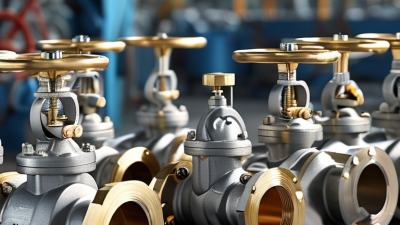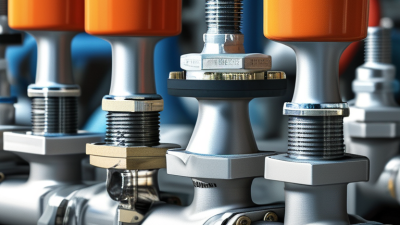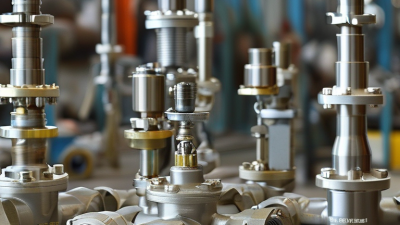
Choosing the best sanitary diaphragm valve in 2026 starts with the process, not the product label. A valve may look polished on a specification sheet yet perform poorly in a real installation. Consider the fluid, operating temperature, pressure, cleaning method, and required flow. Then inspect the details: diaphragm material, body finish, connection type, and access for maintenance.
Small details matter. A cramped valve cluster can make inspection awkward. A diaphragm that suits one product may not suit another. The right sanitary diaphragm valve should support reliable shutoff and effective cleaning while fitting the line’s operating conditions. No single model is best for every application. That is the practical point.
The supplied material does not identify a verifiable industry expert or provide a sourced quotation. Rather than invent an expert or attribute fabricated words, this introduction avoids a false endorsement. The guide can compare valve designs, materials, cleanability, certifications, and service considerations, while distinguishing documented specifications from general advice. Check manufacturer data against your actual process. Ask suppliers about compatible elastomers, replacement intervals, and cleaning limitations. Then compare total ownership needs, not just purchase price. A careful choice protects product quality and reduces avoidable downtime. The best choice is the one your team can validate, clean, inspect, and maintain consistently.
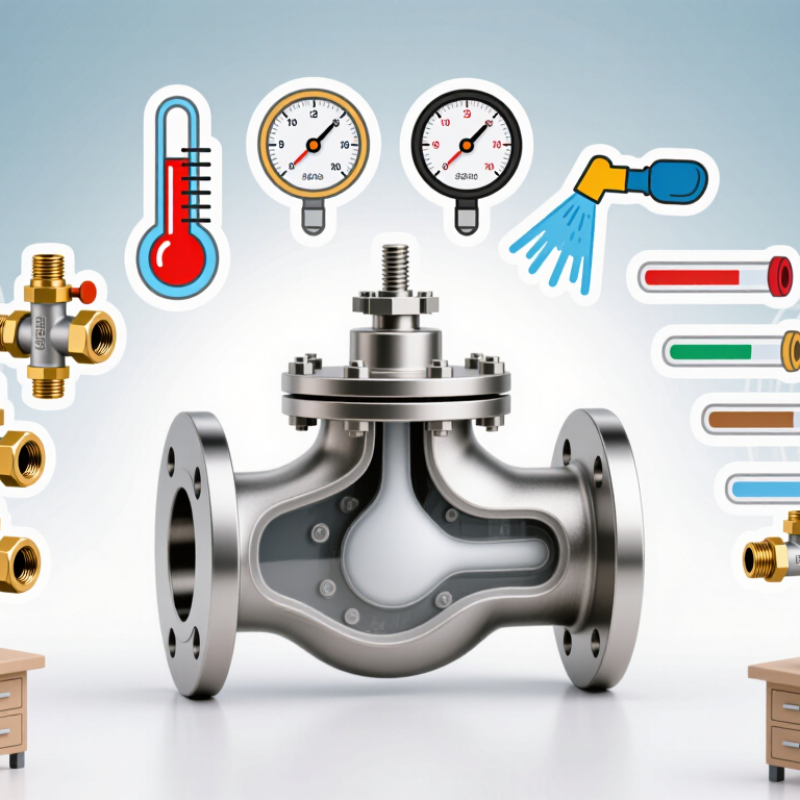
“Best” depends on the process, not the catalog. Start with the actual pressure range, product temperature, and required flow. A valve that handles a viscous product may restrict flow in a low-viscosity rinse.
Check the diaphragm’s material compatibility, pressure rating, and temperature limits together. Then review seat geometry and drainability. Small hold-up pockets can retain product after a cycle. They matter.
CIP and SIP need separate checks. Confirm that cleaning solution reaches all product-contact surfaces at the site’s validated flow and temperature. During SIP, verify the valve’s full assembly can tolerate the specified steam cycle, including repeated heating and cooling.
The CDC’s 2008 Guideline for Disinfection and Sterilization lists 121°C for 30 minutes for gravity-displacement sterilization of wrapped instruments. That is useful context, not a universal valve-cycle specification. Process equipment needs its own validated cycle.
For a practical comparison, document the operating envelope and test the candidate valve under representative conditions. Record pressure drop, leakage, drainability, and diaphragm condition after repeated cycles. ASME BPE and EHEDG hygienic-design guidance can inform design reviews, but neither replaces application-specific verification. I would be wary of choosing from a single maximum-temperature figure. It is an easy shortcut, and sometimes the wrong one.
For a sanitary diaphragm valve, the wetted surface deserves more scrutiny than a polished exterior. ASME BPE-2022 specifies an SF1 surface finish with a maximum Ra of 0.51 μm, or 20 μin. This is a measurable benchmark, not proof that every valve is easy to clean. Ask for the inspection method and a surface-finish record tied to the wetted components. Check the diaphragm contact area, body cavity, and outlet transitions; small crevices can matter more than a bright surface. Not enough, alone.
316L is a practical choice for many hygienic process environments, but alloy grade and finish solve different problems. ASTM A240/A240M lists 316L composition ranges of 16–18% chromium, 10–14% nickel, and 2–3% molybdenum. Those figures help verify material identity; they do not guarantee corrosion resistance under every cleaning cycle. Request material traceability, weld-finish details, and Ra readings from representative wetted areas. Look closely at gasket edges, too. They are easy to overlook. I would also treat a single Ra value cautiously: it averages surface texture and may miss a scratch or local defect. That’s the imperfect part of a simple specification.
Check wetted surfaces: 316L stainless steel and ASME BPE SF1 Ra ≤ 0.51 μm.
This chart shows maximum Ra limits associated with ASME BPE surface-finish designations; it does not compare valve products or measured samples. SF1 permits Ra up to 0.51 μm. Confirm the material, finish designation, and inspection documentation for the wetted surfaces against the applicable project requirements.
Which Is the Best Sanitary Diaphragm Valve in 2026?
For a sanitary diaphragm valve, compliance starts with the wetted diaphragm, not the valve nameplate. Ask whether the exact elastomer compound meets FDA 21 CFR 177.2600 for its intended repeated-use conditions. Then request evidence for USP Class VI testing. These are different checks. The FDA regulation addresses rubber articles intended for repeated use in food contact, while USP Class VI evaluates biological reactivity under defined test conditions. Neither statement alone proves suitability for every process.
Request current, traceable documentation that identifies the diaphragm material and compound. Check that the documents match the product configuration and, where available, the supplied lot. A generic statement saying “FDA compliant” may not identify the tested formulation. Details matter. Confirm the applicable test conditions, temperature limits, and any restrictions on cleaning or sterilization. A test result is useful only when it fits the actual service.
Compare the paperwork with operating reality: product chemistry, cycle frequency, temperature, and cleaning method. Ask how often diaphragms are replaced and how wear is inspected. A material may meet stated criteria yet perform poorly in a specific process. That gap is easy to overlook. I would not treat Class VI evidence as a substitute for process validation or routine inspection. Good documentation narrows uncertainty; it does not remove it.
There is no universal “best” sanitary diaphragm valve. Compare the wetted materials and supporting documentation against the process, cleaning conditions, and applicable requirements. The checks below are intended for buyer evaluation, not as a product certification.
| Evaluation area | What to verify | Useful evidence | How to assess it | Why it matters |
|---|---|---|---|---|
| FDA 21 CFR 177.2600 | Whether the diaphragm’s rubber formulation is suitable for the intended repeated-use food-contact conditions covered by the regulation. | A current, material-specific compliance statement identifying the diaphragm material and the applicable conditions of use; supporting extraction-test information where relevant. | Check that the statement applies to the exact diaphragm formulation and intended use. Do not treat a generic “FDA compliant” claim as proof that every component or application complies. | The regulation addresses rubber articles intended for repeated use and includes conditions and extraction requirements. It is not a blanket approval of a complete valve. |
| USP Class VI | Whether the claimed Class VI status applies to the exact elastomer formulation and whether testing was performed under the relevant USP biological reactivity provisions. | A test report or traceable declaration naming the material, test basis, and tested formulation or grade. | Confirm the scope and identity of the tested material. USP Class VI is a biological reactivity classification; it does not by itself establish FDA food-contact compliance, sterility, or suitability for every process. | Different compliance claims address different questions. One should not be used as a substitute for the other. |
| Diaphragm material identity | The elastomer or composite construction, including any product-contact facing, backing, or reinforcement relevant to the design. | Material specification, construction description, and lot or batch traceability documents. | Match the documents to the actual valve configuration and replacement diaphragm part. Verify that changes to formulation or construction are controlled. | Compliance and chemical compatibility depend on the actual material formulation and construction, not just a generic material-family name. |
| Process compatibility | Compatibility with the product, concentration, temperature, exposure time, and operating cycle. | Material compatibility data and written confirmation covering the specified process conditions. | Evaluate the complete operating range, including intermittent exposure and foreseeable process excursions. Seek application-specific review when conditions are not covered by available data. | A material may perform differently across formulations and conditions; regulatory documentation alone does not establish compatibility with a particular process fluid. |
| Cleaning and sterilization | Compatibility with the actual cleaning agents and validated cleaning or sterilization cycles, such as CIP or SIP where used. | Supplier limits for temperature, chemical exposure, and cycle conditions, plus applicable validation or durability data. | Compare the documented limits with the site’s actual cycle parameters. Confirm expected service life and inspection or replacement guidance for the diaphragm. | Repeated heat and chemical exposure can affect sealing and diaphragm performance over time. |
| Sanitary design and drainability | Whether the valve configuration supports the installation’s hygienic design and cleaning requirements. | Dimensioned drawings, installation orientation guidance, surface-finish information where specified, and cleaning instructions. | Assess the installed assembly, including orientation, connections, and dead-leg considerations, against the applicable site design criteria. | Hygienic performance depends on the installed system, not the valve body alone. |
| Traceability and change control | Identification of the supplied diaphragm and controls for changes to materials, manufacturing, or specifications. | Lot identification, certificates or declarations linked to the supplied part, and documented change-notification practices. | Confirm that records can be linked to the installed valve and that material or process changes are communicated and reviewed. | Traceable records help maintain evidence that the installed component matches the approved specification. |
| Selection outcome | Whether the valve and diaphragm meet all documented process, hygienic-design, and compliance requirements. | A completed review of material documentation, operating limits, installation requirements, and site qualification criteria. | Select the option with evidence that matches the exact application; do not rank products on a compliance label alone. | The best choice is application-specific. A claim of FDA 21 CFR 177.2600 compliance or USP Class VI status alone is not enough to establish overall suitability. |
Buyer note: Request documentation for the exact wetted diaphragm material and valve configuration. Confirm regulatory interpretation and suitability with qualified quality, regulatory, or engineering personnel for the intended application.
In hygienic process lines, the best sanitary diaphragm valve is one that drains and cleans reliably in its installed position. Look at the body cavity, diaphragm contour, and outlet angle, not just nominal size. A low point helps. Yet even a smooth-looking valve can retain a thin film if the piping slopes poorly. That detail is easy to miss.
For cleanability, inspect wetted surfaces, diaphragm-to-weir contact, and potential product pockets. A compact weir can support shutoff, while a carefully shaped chamber may limit retained liquid. During a wash cycle, spray coverage and flow direction matter as much as surface finish. Ask for hygienic design data and check that test conditions reflect your process. Paper is not proof.
Leak control depends on diaphragm material, pressure, temperature, cycling, and correct assembly. A leak-detection feature may help reveal diaphragm failure before product escapes the valve body. Still, no design removes inspection needs; elastomers age, and installation errors happen. Compare drainability tests, cleaning evidence, and service intervals under conditions close to yours. Published results may not match a real line with dead legs or uneven support, so verify performance in context.
A strong sanitary diaphragm valve should earn its place through comparable Cv data, tested service life, and clear operating limits. Under IEC 60534-2-1, Cv represents water flow in US gallons per minute at 60°F with a 1 psi pressure drop. Compare values at your actual pressure and valve opening; a single maximum Cv can mislead. A larger number is not automatically better.
Service life needs context. Ask for cycle-test results, test temperature, pressure, diaphragm material, and failure criteria. ASME BPE-2022 provides hygienic design guidance, but it does not establish one universal cycle-life figure for every process. Treat undocumented lifetime claims cautiously. Record the maximum pressure and temperature, vacuum rating, and cleaning conditions. Then check those limits against the real production cycle. It is easy to overlook a brief hot rinse.
Tips: Request the test method and raw cycle count, not just “long life.” Compare like with like. If conditions differ, the ranking is only a rough guide.
By continuing to browse or by clicking “Accept All Cookies,” you agree to the storing of first- and third-party cookies on your device to enhance site navigation, analyze site usage, and assist in our marketing efforts. View our Privacy and Cookie Policy.