
Why Is Outdoor Lighting Important for Global Buyers?
Outdoor Lighting has become a practical investment for global buyers, not merely a decorative feature. It shapes safety, visibility, brand image, and the experience of public spaces after sunset. A well-lit entrance can guide visitors through rain, uneven paving, and crowded pathways. Poorly selected fixtures may create glare, dark zones, or unnecessary maintenance costs.
Lighting designer Randall Whitehead expresses this clearly: “Good lighting is not about how much light you have, but how you use it.” His observation remains valuable for international buyers comparing products, suppliers, and installation conditions. Outdoor Lighting must respond to different climates, building materials, energy expectations, and local safety requirements. Coastal buyers may need corrosion-resistant housings. Cold regions may require reliable performance at low temperatures. Solar projects may depend on battery capacity and several cloudy days.
The strongest purchasing decisions combine technical evidence with real project experience. Buyers should examine photometric data, ingress protection ratings, lumen maintenance, warranty terms, and replacement access. Supplier testing records also matter. So does transparent communication.
No specification is perfect.
A product that performs well in a showroom may behave differently beside a windy shoreline or a dusty warehouse. This is where professional consultation becomes important. Experienced lighting specialists can assess mounting height, beam angle, color temperature, controls, and pedestrian movement. They can also identify risks that product brochures often overlook. Global buyers should remain practical and skeptical. Lower prices may appear attractive, but weak components can increase service visits, energy use, and project disruption. Reliable Outdoor Lighting supports safer places, clearer decisions, and stronger long-term value.
The Core Functions of Outdoor Lighting in Public and Private Spaces
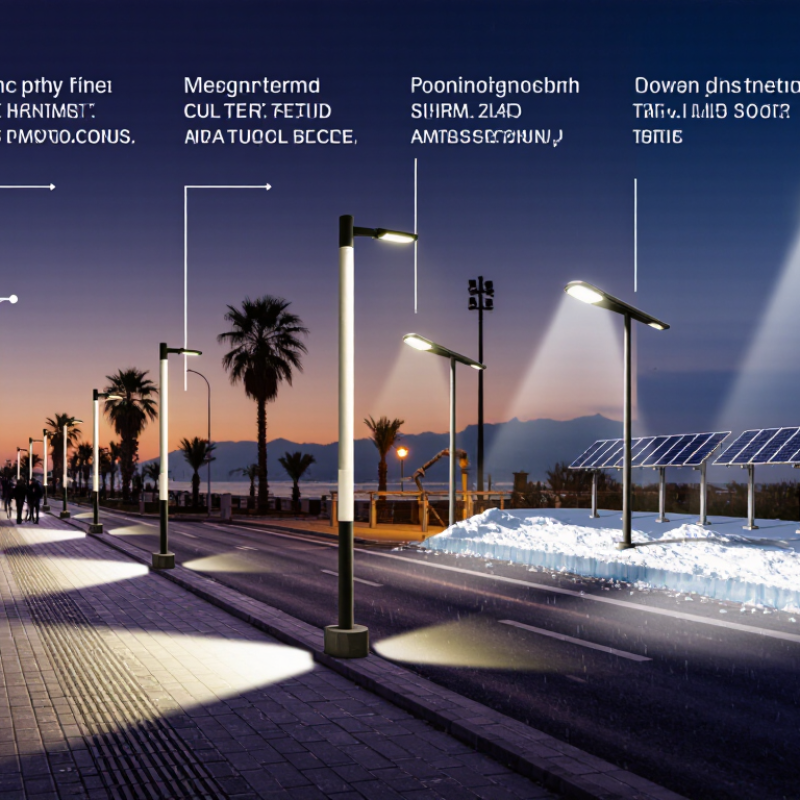
Outdoor lighting helps people read the spaces they share. At a bus stop, a clear pool of light can reveal the curb, a waiting passenger, and approaching traffic. In parks and residential streets, well-directed fixtures support walking, wayfinding, and visibility around entrances. The need is practical, not merely decorative. The U.S. National Highway Traffic Safety Administration reported that 49% of traffic fatalities in 2022 occurred at night, despite nighttime travel accounting for a smaller share of road use. Lighting cannot prevent every collision, but it can help people notice hazards sooner.
For public agencies and private property owners, lighting also supports security and daily operations. Even illumination can help staff monitor pathways and help visitors identify steps, signs, and building entrances. In loading areas, yards, and parking lots, dependable light makes routine tasks easier after sunset. Energy matters, too. The U.S. Department of Energy’s 2017 outdoor lighting report examined LED street-lighting upgrades and found substantial energy-saving potential compared with conventional technologies. Yet brighter is not always better. Glare can obscure detail, and poorly aimed fixtures can send light into nearby homes or the night sky. The right design depends on the task, the site, and the people using it. It is easy to overlook maintenance; a failed fixture can leave a once-safe path unevenly lit.
Why Is Outdoor Lighting Important for Global Buyers? — The Core Functions of Outdoor Lighting in Public and Private Spaces
| Core Function | Public-Space Applications | Private-Space Applications | What Buyers Can Evaluate | Key Design Consideration |
|---|---|---|---|---|
| Visibility and navigation | Illuminates streets, sidewalks, transit areas, parks, and public building entrances to help people see routes and obstacles. | Lights driveways, paths, steps, entrances, and gardens for easier movement after dark. | Light distribution, uniformity, mounting height, and whether key routes are clearly visible. | Plan for the task and area; avoid excessive brightness and sharp contrasts that can make vision less comfortable. |
| Safety and hazard awareness | Helps make crossings, stairs, changes in pavement, and other potential hazards more visible. | Can make steps, gates, pool surroundings, and changes in level easier to identify. | Coverage of walking surfaces, glare, shadows, and compatibility with local safety requirements. | Lighting supports visibility but does not replace safe infrastructure, clear sightlines, or appropriate security measures. |
| Security and visibility of surroundings | Supports visibility around building perimeters, parking areas, service entrances, and other monitored locations. | Provides visibility near entrances, garages, yards, and access points. | Whether the lighting works with cameras, sightlines, controls, and the intended operating schedule. | Avoid directing light into windows or creating glare that can reduce visibility for pedestrians, drivers, or cameras. |
| Access and wayfinding | Helps distinguish entrances, pathways, public amenities, and circulation routes in campuses and civic spaces. | Helps visitors identify house entrances, house numbers, gates, and paths. | Visibility of signs and entrances, consistency across the site, and accessibility of routes. | Use lighting to support clear, intuitive routes without relying on brightness alone for wayfinding. |
| Comfort and outdoor use | Enables parks, plazas, and pedestrian areas to remain usable during evening hours when lighting is appropriate to the activity. | Supports evening use of patios, balconies, gardens, and outdoor dining areas. | Light color, dimming options, glare control, and the ability to set different scenes or schedules. | Match the light level and color appearance to the space and its users; provide controls where flexibility is useful. |
| Energy management | LED luminaires and suitable controls can reduce electricity use compared with less efficient lighting systems. | Timers, photocells, dimmers, and occupancy sensors can limit unnecessary operation where appropriate. | Rated power, expected operating hours, control compatibility, maintenance needs, and life-cycle costs. | Compare products under the same operating assumptions; actual energy savings depend on the existing system and use pattern. |
| Weather and environmental resilience | Outdoor fixtures must suit exposure to rain, dust, temperature changes, and, where relevant, coastal conditions. | Fixtures need to withstand the exposure conditions at entrances, gardens, garages, and other outdoor locations. | Ingress protection rating, operating temperature range, materials, corrosion resistance, and service access. | Select ratings and materials for the installation environment; outdoor suitability does not mean every fixture suits every climate. |
| Responsible light use | Well-directed lighting can support visibility while limiting spill into nearby homes and natural areas. | Shielded, downward-directed fixtures can reduce unwanted light beyond the property. | Shielding, aiming, dimming or scheduling options, and light distribution beyond the target area. | Use only the light needed, direct it where it is useful, and consider local dark-sky and environmental guidance. |
Buyer note: Required light levels, product ratings, and installation rules vary by application and location. Check applicable local codes and project specifications before selection.