
Why Choose a Uav Station for Automated Drone Operations?
Automated drone work is moving beyond occasional flights. It now supports inspections, mapping, security monitoring, agriculture, and emergency response. A UAV Station gives these operations a fixed base, charging system, weather protection, and remote communication. Imagine a drone returning after a coastal inspection, landing precisely, and charging without an operator standing nearby. That consistency saves time and reduces repetitive manual work.
Miriam McNabb, a long-time drone-industry analyst and editor, captures the practical principle clearly: “Automation should remove repetitive risk, not remove human responsibility.” Her observation matters. A UAV Station can schedule missions, monitor battery levels, and send alerts when conditions change. It can also preserve flight records, maintenance notes, and operational data. These details support safer decisions and stronger accountability.
The technology is not magic.
Cloud cover can weaken planning. Salt air may damage exposed components. A blocked communication link can stop a mission unexpectedly. Operators still need training, maintenance routines, and careful site assessments. I have seen product discussions focus heavily on launch speed while giving too little attention to recovery procedures. That is a weakness worth admitting. The best system is not simply the fastest one. It is the system that performs reliably, explains its status, and fails safely.
This introduction examines why organizations choose a UAV Station for automated drone operations. It considers efficiency, safety, data quality, maintenance, and long-term operating value. The goal is practical understanding, not exaggerated promises.
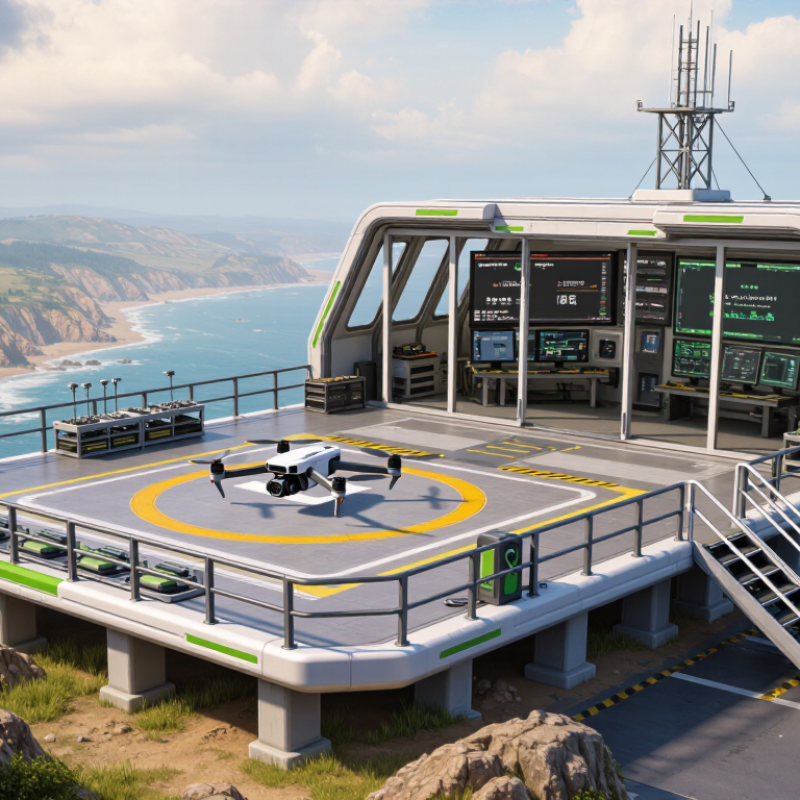
A UAV station is a sheltered, automated base for unmanned aircraft operations. It typically combines a landing platform, battery charging, weather sensing, communications, and mission software. The aircraft returns to the station, lands on marked guides, and begins recharging without manual handling.
This matters as commercial drone use expands. Drone Industry Insights’ Global Drone Market Report 2024 estimates the global drone market could grow from about $30 billion in 2023 to more than $55 billion by 2030. A UAV station helps operators manage repeated flights with fewer interruptions. It can schedule missions, monitor battery temperature, check wind conditions, and send alerts when equipment needs inspection. Small details matter. A wet landing pad can delay the next flight.
The station does not remove operational responsibility. Operators still need trained personnel, approved flight areas, maintenance records, and privacy controls. The FAA’s 2024 Aerospace Forecast describes continued growth in commercial small unmanned aircraft activity, increasing pressure on reliable procedures and airspace coordination. Yet automation is not perfect. Poor cellular coverage, dust, ice, or a weak positioning signal may stop a mission. That failure is useful feedback. Operators should test manual recovery, review every flight log, and avoid assuming that “automated” means “unattended.”
An automated UAV station combines several systems that turn a drone into a repeatable field tool. The landing platform guides precise touchdown, even when wind shifts slightly. Mechanical locks secure the aircraft before servicing begins. Weather matters. Rain sensors, temperature monitors, and wind gauges can pause operations when conditions become unsafe.
Inside the station, an automated charging module restores battery power between missions. Thermal controls help prevent excessive heat during charging. A sealed enclosure protects batteries, electronics, and navigation equipment from dust and moisture. A communications unit transfers flight plans, status data, and maintenance alerts through an approved network. An onboard computer checks battery levels, positioning signals, camera health, and system errors before launch.
In practical deployments, reliable automation depends on small details. A misaligned landing marker can delay recovery. A dirty sensor can produce false warnings. Maintenance teams should inspect connectors, clean contact points, and review event logs regularly. The station can also report battery wear and recommend service before performance drops. It still needs care. No station is perfectly autonomous, especially during unstable weather or weak communication. Operators should define clear intervention procedures and test them under realistic conditions. This combination of physical protection, intelligent monitoring, and human oversight makes automated drone operations more consistent and easier to manage.
| System Component | Primary Function | Typical Technical Characteristics | Automation Contribution | Operational Benefit |
|---|---|---|---|---|
| Protective Enclosure | Shields the aircraft and internal equipment from weather, dust, and unauthorized access. | Weather-resistant housing, drainage paths, access doors, ventilation, and environmental seals. | Enables the drone to remain deployed at a fixed site between missions. | Reduces setup time and protects assets during unattended operation. |
| Automated Landing and Positioning System | Guides the UAV to a repeatable landing position and aligns it with charging contacts. | Precision landing support, visual markers or sensors, landing guides, and alignment checks. | Supports autonomous takeoff, landing, and post-flight positioning. | Improves landing consistency and minimizes manual intervention. |
| Battery Charging Module | Recharges the UAV battery after landing and monitors the charging process. | Controlled charging, battery temperature monitoring, state-of-charge tracking, and electrical protection. | Allows the UAV to prepare for the next scheduled or event-triggered mission. | Increases mission availability without requiring on-site battery replacement. |
| Environmental Monitoring Sensors | Measures local conditions that may affect flight safety and equipment protection. | Common measurements include temperature, humidity, precipitation, wind, and enclosure status. | Triggers mission delays, shelter protection, or operational alerts when conditions exceed configured limits. | Helps prevent flights during unsuitable weather and supports predictive maintenance. |
| Communication and Remote-Control Unit | Maintains data exchange between the UAV, station, control platform, and authorized operators. | May use cellular, wireless, wired, or redundant network links with encrypted communication. | Supports remote mission planning, command transmission, telemetry, and status reporting. | Enables centralized supervision across multiple operating locations. |
| Mission Planning and Scheduling Software | Defines flight routes, inspection points, schedules, geofences, and mission rules. | Supports waypoint missions, recurring schedules, event-based tasks, and permission controls. | Automatically launches approved missions according to time, sensor, or external system triggers. | Standardizes repeatable data collection and reduces operator workload. |
| Navigation and Positioning System | Determines the UAV position, heading, altitude, and route progress. | Typically combines satellite positioning, inertial sensors, altitude sensing, and obstacle-awareness technologies. | Supports autonomous route following, return-to-station behavior, and flight-status verification. | Improves route repeatability and operational safety. |
| Payload Interface | Provides mounting, power, and data connections for mission-specific sensors. | May support visible-light cameras, thermal cameras, multispectral sensors, or other approved payloads. | Permits automated collection of imagery and sensor data during scheduled flights. | Adapts one station to inspection, security, surveying, and environmental monitoring tasks. |
| Data Storage and Processing Layer | Stores flight logs, images, video, telemetry, maintenance records, and system events. | Includes local storage, secure data transfer, time synchronization, and optional cloud or server integration. | Organizes mission outputs and can forward data to analysis or enterprise systems. | Creates traceable records for reporting, comparison, and compliance purposes. |
| Safety and Fail-Safe Controls | Detects abnormal conditions and initiates predefined protective responses. | May include low-battery actions, communication-loss response, geofencing, emergency landing, and access control. | Stops or modifies missions when aircraft, station, network, or environmental risks are detected. | Reduces the likelihood and impact of operational incidents. |
| Power and Backup System | Supplies stable power to the station, charging equipment, communications, and environmental controls. | May include regulated power conversion, surge protection, backup batteries, and remote power-status monitoring. | Maintains essential station functions during short interruptions and reports power anomalies. | Improves system availability and protects stored equipment and mission data. |
Note: Actual capabilities, environmental ratings, flight duration, communication range, and regulatory requirements vary according to the selected UAV, station design, payload, site conditions, and applicable aviation regulations.
A UAV station turns a drone mission into a repeatable, measured workflow. Instead of waiting beside a landing zone, operators schedule flights through a controlled interface. The station checks battery status, weather limits, airspace restrictions, and mission permissions before launch. Then the roof opens, the aircraft lifts, and telemetry begins streaming to the operations team. Small details matter. A clean landing surface can prevent costly interruptions.
After completing its route, the drone follows programmed navigation cues back to the station. Precision positioning helps it approach the landing area, even when wind shifts slightly. Sensors confirm its position before the landing sequence continues. Once secured, the station can connect charging contacts automatically. Charging data records current levels, temperature, and cycle history. These records help technicians identify battery decline before it affects field performance.
The process still needs responsible oversight. Software may misread unusual weather, temporary obstacles, or weak positioning signals. A trained operator should be able to pause, redirect, or cancel the mission. That human checkpoint is not a weakness. It is good engineering. In practical deployments, teams should inspect landing rails, charging contacts, and protective seals regularly. Dust can interfere. Rain can expose design limits. Continuous testing, clear operating procedures, and honest review make autonomous launch, recovery, and charging safer and more dependable.
UAV stations automate the main stages of a recurring mission, including launch, recovery, battery charging, and remote readiness. The comparison below uses representative manufacturer-neutral operating values for a typical multirotor inspection mission.
Representative operational benchmark; actual results vary with aircraft type, weather, mission distance, battery chemistry, and site procedures.
A UAV station turns a drone into a repeatable operational system. It can launch, recover, recharge, and upload mission data with limited human intervention. This matters for routine inspections, mapping, perimeter observation, and infrastructure checks.
The FAA’s Aerospace Forecast FY 2024–2044 projects the commercial small-UAS fleet could approach 858,000 aircraft by 2028. More aircraft will increase scheduling pressure and maintenance demands. A station helps standardize flight paths, battery cycles, weather checks, and evidence collection. Field teams can review dashboards instead of driving to every site. PwC’s Clarity from Above report estimated that drone-powered solutions could create over 127 billion dollars in business value and labor savings. The opportunity is significant.
But automation is not effortless. A station placed beside dust, poor drainage, or weak communications may create new failures. Battery health can also change unexpectedly. It needs inspection. Operators should define safe landing zones, escalation rules, and manual recovery procedures. During a routine roof survey, for example, the station may send a warning when wind rises, pause the mission, and preserve the unfinished route. That small interruption is useful. It exposes a weakness before the same workflow scales across dozens of sites. Reliable operations depend on documented checks, calibrated sensors, and honest review of missed data.
Why Choose a UAV Station for Automated Drone Operations?
Selecting a UAV station requires more than checking flight automation. The site must support reliable operations in real conditions. Examine weather resistance, landing accuracy, battery charging, payload size, and physical security. A coastal inspection site needs corrosion protection and drainage. A remote farm needs stable power and dependable connectivity.
The European Commission’s Drone Strategy 2.0 projects 145,000 new jobs and €14.5 billion in economic activity by 2030. That growth increases demand for repeatable, automated missions. However, automation fails when communication coverage is weak. Check cellular, satellite, and local network options before installation. Also review the station’s operating temperature and wind limits. The FAA’s 2024 Aerospace Forecast expects continued growth in commercial small unmanned aircraft activity. This makes maintenance planning essential, not optional. Spare batteries, inspection access, and software support can determine real uptime. A high purchase price may still be sensible. A cheap station may create expensive downtime.
Tips: Test the complete workflow before deployment. Simulate rain, low battery, signal loss, and an inaccurate landing. Ask for documented uptime data, service intervals, and cybersecurity controls. Do not rely only on a polished demonstration. I would also keep manual intervention available. Fully autonomous systems are useful, but field conditions remain unpredictable. That detail is easy to underestimate.
By continuing to browse or by clicking “Accept All Cookies,” you agree to the storing of first- and third-party cookies on your device to enhance site navigation, analyze site usage, and assist in our marketing efforts. View our Privacy and Cookie Policy.