
Choosing the right spray drying system affects product quality, operating costs, and daily production confidence. Alat Spray Drying systems are designed for manufacturers seeking controlled, repeatable powder production across food, pharmaceutical, chemical, and industrial applications.
Spray drying turns liquid feed into powder within seconds. Feed temperature, atomization, airflow, and outlet moisture must work together. Small details matter. A slight change in feed viscosity can alter particle size, bulk density, and wall deposition. Alat Spray Drying equipment can support careful parameter adjustment, helping operators respond to these production changes with greater control.
Practical design also matters beyond the drying chamber. Hygienic contact surfaces, accessible inspection points, reliable insulation, and straightforward cleaning procedures can reduce avoidable downtime. Experienced engineering teams should consider the full process, including feed preparation, powder collection, exhaust treatment, and packaging. That broader view supports safer and more consistent operation.
No dryer fits every product. This is important. A system selected without pilot testing may create unexpected sticking, uneven moisture, or difficult scale-up. Responsible evaluation should include laboratory trials, material testing, energy assessment, and clear performance expectations. Technical documentation and responsive service also strengthen long-term reliability.
Alat Spray Drying systems may be a strong choice for businesses that value process flexibility and practical engineering support. The best decision still depends on product behavior, production volume, cleaning requirements, and local standards. Careful questions lead to better results.
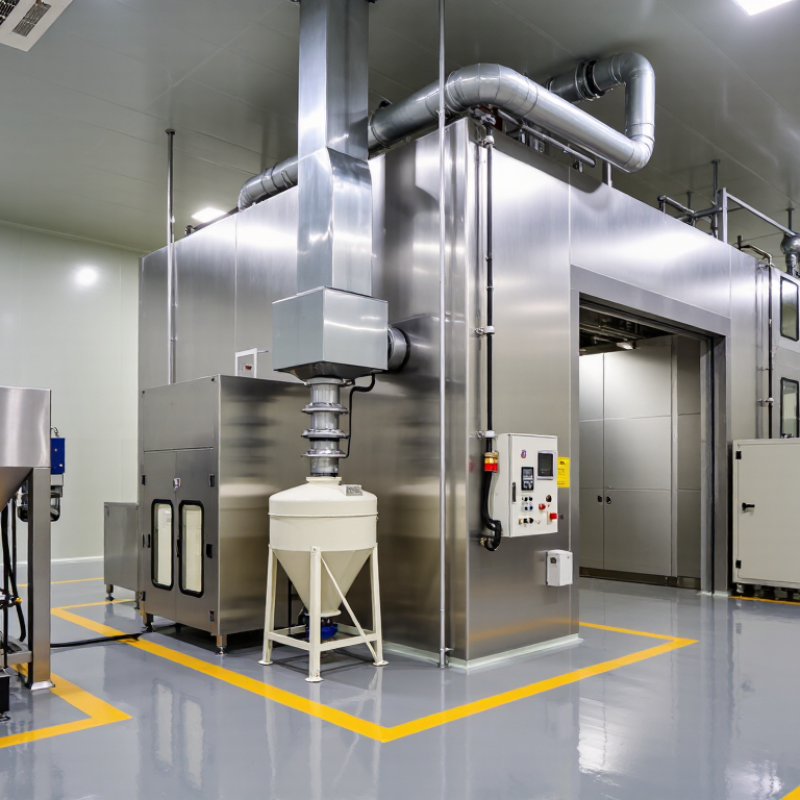
Spray drying systems convert liquid feeds into powders through rapid contact with heated air. A pump sends the feed to an atomizer, creating fine droplets inside a drying chamber. Moisture evaporates within seconds. A cyclone or filter then separates the powder from exhaust air.
These systems handle dairy ingredients, plant extracts, enzymes, ceramics, and many other heat-sensitive materials. Operators adjust inlet temperature, outlet temperature, feed rate, airflow, and atomizer speed. Each setting changes particle size, bulk density, solubility, and residual moisture. Small changes matter. A 2024 MarketsandMarkets report estimates the global spray drying equipment market will grow at about 6% annually through 2028, driven by demand for stable powdered ingredients. Forecasts differ between research firms, however. That uncertainty deserves attention.
In practical trials, a powder may appear dry while retaining moisture inside larger particles. Sticky feed can coat chamber walls. Poor atomization can create uneven particles and unstable flow. The system therefore needs validated controls, hygienic construction, and reliable cleaning access. Food and pharmaceutical operations commonly monitor moisture, microbial quality, outlet temperature, and particle distribution. A 2023 report from Grand View Research identifies food and beverage processing as a major spray drying application segment. The number is useful, but plant performance still depends on the formulation. No report can replace pilot testing. A carefully designed trial reveals whether the powder truly meets handling and storage requirements.
Spray drying systems convert liquid feeds into free-flowing powders by atomizing the feed into a hot drying gas. The particle size range depends strongly on the atomization method and operating conditions.
Spray drying is selected for continuous powder production, rapid moisture removal, controlled particle characteristics, and efficient handling of heat-sensitive materials. The ranges shown are typical industry values; actual results vary with formulation, feed solids, viscosity, gas temperature, and equipment settings.
Spray drying turns a liquid feed into a stable, free-flowing powder within seconds. The process begins when a pump sends the feed through a nozzle or rotary atomizer. This creates small droplets with a large surface area. Hot, filtered air then meets the droplets inside the drying chamber. Moisture evaporates quickly, while solid particles form and fall toward the outlet.
Air temperature alone does not control the result. Feed viscosity, droplet size, airflow, and residence time also matter. Sensors track inlet and outlet temperatures during operation.
Cyclones or filters separate powder from the exhaust air. Operators then inspect particle size, moisture content, flowability, and bulk density.
In practical trials, a small change in feed solids can alter the final powder noticeably. Even a well-designed run can drift. That uncertainty deserves attention.
Tips: Keep the feed uniform before atomization. Check nozzle wear regularly. Record inlet and outlet temperatures for every batch. Avoid changing several settings at once, or the cause of a quality change may remain unclear. A short pilot test can reveal sticking, poor recovery, or excessive moisture before full production. Cleaning also matters. Residue inside the chamber can affect later runs and weaken reliable process control.
Modern spray drying systems turn liquid feeds into stable powders through controlled atomization and hot-air contact. The process begins with a pump, nozzle, or rotary atomizer. Each option creates a different droplet pattern and affects final powder quality. Fine droplets dry quickly, often within seconds. This short residence time can help protect heat-sensitive ingredients. Operators can adjust inlet temperature, airflow, feed rate, and outlet temperature during production. Small details matter. Moisture sensors, pressure gauges, and sampling ports support consistent monitoring. Experienced teams still verify moisture content, bulk density, particle size, and solubility through laboratory testing.
Core technology also includes hygienic design and practical maintenance. Smooth internal surfaces reduce product buildup. Proper seals limit air leakage. Automated cleaning cycles can shorten downtime, although they still require inspection. Airflow control helps maintain stable drying conditions across the chamber. An insulated drying tower improves energy management and protects nearby equipment. Material selection matters when handling acidic or abrasive feeds. No configuration is perfect. A larger chamber may increase capacity but raise cleaning demands. Excess heat can reduce quality. Pilot trials help reveal these trade-offs before full-scale installation. Engineers should compare actual test data, operating costs, cleaning time, and powder performance. Real results depend on feed composition, operator skill, and disciplined process control.
Industrial drying demands consistency, speed, and careful control. In production environments, spray drying converts liquid feeds into powders through atomization and controlled hot-air contact. This process can shorten drying time while supporting stable moisture levels. It also helps protect heat-sensitive materials when inlet and outlet temperatures are managed correctly. From practical experience, particle size often depends on feed viscosity, nozzle selection, and airflow balance.
The key benefits are operational flexibility and repeatable product quality. Operators can adjust airflow, feed rate, atomization pressure, and temperature for different formulations. The resulting powder may offer improved handling, storage, and downstream processing. That matters. A well-designed system can also support enclosed production, automated monitoring, and easier cleaning routines. These features reduce manual exposure and help maintain hygienic conditions. Still, energy use should be reviewed carefully. Poor insulation or unstable feeding can reduce efficiency.
Reliable performance requires more than advanced equipment. Proper commissioning, sensor calibration, preventive maintenance, and operator training all influence results. In practice, outcomes are rarely perfect on the first trial. Some feeds foam, block nozzles, or create sticky deposits on chamber walls. These problems require testing rather than assumptions. Process records can reveal useful patterns, including moisture drift and pressure changes. Choosing a system with adaptable controls and accessible service points can make industrial drying more dependable over time.
Why Choose Spray Drying Systems?
Applications and Selection Considerations
Spray drying converts liquid feeds into stable powders within seconds. It serves dairy, food, nutrition, ceramics, enzymes, and selected pharmaceutical applications. Practical trials often reveal differences that brochures cannot show. Feed viscosity, solids content, heat sensitivity, and target particle size all influence performance. A high-solids emulsion may need stronger atomization control. A fragile protein may require lower outlet temperatures and shorter exposure.
System selection should begin with the product, not the machine. Compare rotary, pressure, and two-fluid atomizers against the feed’s behavior. Check chamber volume, air distribution, powder recovery, cleaning access, and control accuracy. Inlet temperature alone can mislead. Outlet temperature usually gives a better indication of product heat exposure. Pilot testing remains valuable because laboratory results do not always scale perfectly. Wall deposits may appear unexpectedly. That is an important warning, not a minor inconvenience.
Tips: Record feed temperature, viscosity, solids, and moisture before every trial. Ask for particle-size data at several operating points. Inspect powder flow, color, bulk density, and residual moisture. Leave room for adjustment. Real production rarely follows the first test exactly. Evaluate filters, exhaust handling, and hygienic design early. A system that produces excellent powder but cleans slowly may create hidden operating costs. Document each change, even when the result seems disappointing.
| Application | Typical Feed | Main Product Objective | Important Process Variables | Recommended Selection Focus |
|---|---|---|---|---|
| Food and Beverage Powders | Milk, whey, coffee extract, fruit juice, flavor emulsions and plant-based beverages | Free-flowing powder with controlled moisture, bulk density and solubility | Feed solids, inlet and outlet air temperature, atomization method, residence time and powder-wall contact | Hygienic construction, gentle powder discharge, effective fines recovery and easy cleaning access |
| Pharmaceutical and Biopharmaceutical Materials | Active ingredients, excipients, enzymes, proteins and suspension formulations | Consistent particle characteristics, low residual moisture and protection of heat-sensitive materials | Thermal sensitivity, solvent or water system, sterile boundary requirements, containment and residence time | Validated control systems, cleanable design, documented materials of construction and suitable containment strategy |
| Plant Extracts and Nutraceuticals | Herbal extracts, vitamins, minerals, probiotics and functional ingredients | Retention of active compounds, color and flavor while producing a stable powder | Feed viscosity, carrier selection, inlet air temperature, outlet air temperature and oxygen exposure | Low-temperature operating capability, oxygen management, rapid powder separation and moisture control |
| Ceramics and Advanced Materials | Ceramic slurries, pigments, metal oxides and functional particulate suspensions | Controlled granule size, flowability and uniform composition | Suspension solids, slurry rheology, nozzle wear, atomization pressure and desired granule diameter | Abrasion-resistant wetted parts, suitable atomizer selection, stable feed delivery and particle-size control |
| Specialty Chemicals | Detergent ingredients, polymers, dyes, catalysts, resins and inorganic salts | Stable composition, controlled particle morphology and efficient solvent or water removal | Solvent properties, flammability, feed concentration, drying-gas conditions and powder recovery efficiency | Explosion-risk assessment, inert-gas capability where required, corrosion resistance and appropriate exhaust treatment |
| Encapsulation and Microencapsulation | Oils, aromas, flavors, enzymes and sensitive active compounds combined with wall materials | Protection of core material, improved shelf stability and controlled release behavior | Emulsion stability, atomization droplet size, wall-material concentration and outlet temperature | Precise atomization, short thermal exposure, low powder deposition and efficient collection of fine particles |
| Selection Dimension | Practical Data to Review | Why It Matters |
|---|---|---|
| Feed Solids | Measure total solids, dissolved solids or suspended solids before equipment sizing | Higher feed solids generally reduce evaporation duty, but may increase viscosity and atomization difficulty |
| Feed Rheology | Viscosity, shear sensitivity, solids loading and tendency to gel or sediment | Rheology determines pump type, nozzle selection, atomization stability and risk of blockage |
| Thermal Sensitivity | Maximum product temperature, degradation rate and required residual moisture | Outlet air temperature is often a more useful product-protection indicator than inlet temperature alone |
| Particle Size and Morphology | Target median particle size, particle-size distribution, density and flowability | Atomizer type, feed rate and drying-air conditions strongly influence granule structure and powder handling |
| Moisture Target | Final moisture specification, water activity and storage stability requirement | Moisture affects caking, microbial stability, oxidation, solubility and shelf life |
| Gas and Solvent Safety | Solvent type, flash point, lower explosive limit, oxygen concentration and dust explosibility | These data determine ventilation, inerting, pressure-relief and explosion-protection requirements |
| Hygiene and Cleaning | Product-contact materials, clean-in-place needs, allergen control and changeover frequency | A cleanable layout helps reduce contamination risk, downtime and product carryover between batches |
Note: Operating conditions and equipment capacity must be confirmed through feed characterization, laboratory or pilot testing, heat and mass-balance calculations, and applicable safety and regulatory assessments.
By continuing to browse or by clicking “Accept All Cookies,” you agree to the storing of first- and third-party cookies on your device to enhance site navigation, analyze site usage, and assist in our marketing efforts. View our Privacy and Cookie Policy.