
Why Choose a Metal Polishing Machine for Your Business?

Why Choose a Metal Polishing Machine for Your Business?

A Metal Polishing Machine can turn a rough stainless-steel edge into a consistent, reflective surface. It can also reduce repetitive handwork, uneven pressure, and visible polishing marks. These gains matter in automotive parts, architectural hardware, medical equipment, and precision fabrication.

The market supports this shift. Grand View Research reported that the global metal finishing market was valued at approximately USD 112 billion in 2023. Its report projects continued growth through 2030, driven by automotive, aerospace, electronics, and industrial production. Deloitte’s 2023 Smart Manufacturing Survey also found that many manufacturers view digital and automated production as important for future competitiveness. These figures suggest opportunity, but they do not guarantee profitability. A machine can become an expensive steel cabinet if product volumes are too low.

Manufacturing quality expert W. Edwards Deming said, “Quality comes not from inspection, but from the improvement of the production process.” His principle applies directly to polishing. A well-selected Metal Polishing Machine can stabilize finishing pressure, abrasive use, cycle time, and operator results. Picture a workshop at 7:00 a.m.: fewer abrasive dust clouds, clearer work instructions, and ten identical parts leaving the cell. That image is appealing. Yet, it is incomplete. Poor fixturing, unsuitable abrasives, or weak maintenance can still damage the finish. Businesses should compare labor costs, cycle requirements, surface specifications, energy use, training needs, and after-sales support before purchasing. The best choice is not always the fastest machine. It is the machine that repeatedly delivers the required finish without creating new production problems.
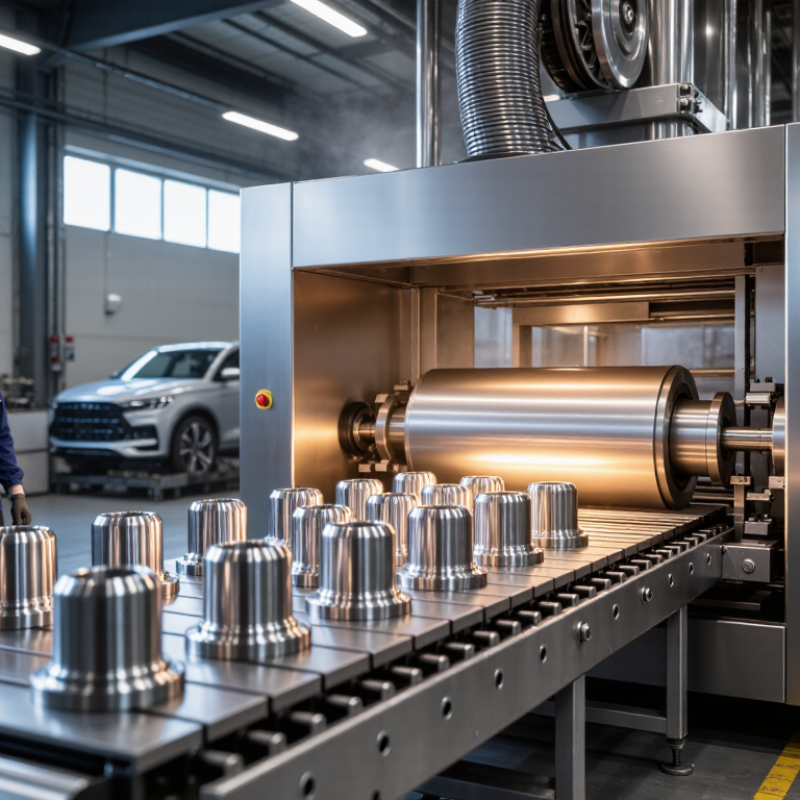
Why Choose a Metal Polishing Machine for Your Business?

What Metal Polishing Machines Do: From Grinding to Ra 0.1–0.8 µm Finishes

A metal polishing machine can take a rough, scratched surface through controlled grinding and finishing stages. Grinding removes weld marks, scale, and excess material. Finer abrasives then reduce visible lines and prepare the surface for polishing. The result is measurable, not merely attractive.

Surface roughness matters.

ISO 21920-2:2021 defines Ra as the arithmetic mean deviation from the mean line. In practical production, Ra 0.8 µm suits many functional metal parts, while Ra 0.1 µm requires tighter process control and cleaner tooling. NIST guidance on surface measurement also stresses consistent sampling and calibration. A polished panel may look perfect. Its readings can disagree.

Modern machines control abrasive pressure, belt speed, contact time, and part movement. This repeatability helps maintain Ra values between 0.1 and 0.8 µm across repeated batches. It also reduces hand-finishing variation. According to the U.S. Department of Energy’s Industrial Assessment Center case studies, manufacturing assessments commonly identify compressed air, motors, and process equipment as major energy users. That makes machine efficiency worth checking before purchase. Operators should record abrasive life, power consumption, cycle time, and Ra readings. The first setup is rarely ideal. Fine dust, heat, or uneven edges may expose weaknesses later. A small test batch is wiser than trusting a brochure.

How Abrasive Belts Operating at 15–35 m/s Improve Polishing Efficiency

Metal polishing machines give workshops better control over surface preparation and finishing. Their value becomes clearer when abrasive belts operate at 15–35 m/s. At this speed, the belt removes scratches quickly while maintaining steady contact with stainless steel, aluminum, and other common metals. Operators can process more parts per hour without relying entirely on heavy hand pressure.

The working speed must match the material and belt grade. A coarse belt at 15 m/s can level weld marks without excessive heat. Finer belts running closer to 35 m/s may create a smoother finish with fewer visible lines. Consistent pressure matters too. Uneven pressure can produce waves, dull patches, or rounded edges. Small adjustments often improve the result more than simply increasing speed.

Heat remains a practical concern. Too much speed or pressure can discolor thin sheet metal and shorten belt life. In real workshop use, I would check the part after several passes, not trust a setting blindly. Belt wear also changes cutting performance. This detail is easy to overlook. A machine with adjustable speed, firm work support, and clear guarding helps operators respond to these changes safely. Surface inspection under bright, angled light can reveal scratches that normal lighting hides, though even this method is not perfect. Density, alloy hardness, and finishing expectations still require testing on sample pieces before regular production.

Which Machine Types Suit Stainless Steel, Aluminum, and Carbon Steel

Why Choose a Metal Polishing Machine for Your Business?

The right machine depends on the metal, surface shape, and required finish. Stainless steel usually benefits from abrasive belt polishing machines. They remove weld marks evenly and create a consistent satin finish on sheets, tubes, and framed parts. For mirror finishing, a rotary polishing machine with progressively finer compounds can reduce visible swirl marks. Heat matters. Excessive pressure may discolor stainless steel or distort thin sections.

Aluminum needs a gentler approach because it is soft and heats quickly. A belt machine with fine abrasive media works well for flat panels and extruded profiles. Rotary polishing machines are useful for curved parts, but operators should use light pressure and controlled speed. Keep it cool. Dedicated dust extraction also helps prevent abrasive residue from embedding into the surface. This detail is often underestimated.

Carbon steel generally requires a heavier-duty belt grinder or abrasive polishing machine. Coarse belts can remove scale, burrs, and weld spatter before finer passes improve the surface. For large components, automated machines improve repeatability and reduce operator fatigue. Yet automation is not always better. Complex corners still need careful manual inspection. I would not promise one machine for every workshop. Material thickness, batch size, finish tolerance, and available maintenance skills can change the decision. A trial on actual workpieces remains more reliable than a catalogue specification.

Why Choose a Metal Polishing Machine for Your Business? - Which Machine Types Suit Stainless Steel, Aluminum, and Carbon Steel

Material Recommended Machine Types Common Polishing Objective Typical Abrasive or Tool Typical Speed Guidance Key Process Considerations Business Advantages
Stainless Steel Belt grinding and polishing machines; wide-belt machines; robotic or automatic polishing cells for repeat production Weld blending, scratch removal, satin finishing, and mirror polishing Aluminum oxide or zirconia belts for grinding; non-woven abrasive wheels; sisal and cotton buffing wheels for final polishing Abrasive belt speed is commonly selected within approximately 15–30 m/s, depending on the operation, abrasive, and machine design Use dedicated abrasives to reduce cross-contamination; control heat to limit discoloration and distortion; preserve a consistent grain direction where required Improves finish consistency, reduces manual labor, and supports repeatable cosmetic quality on cookware, architectural parts, and fabricated components
Aluminum Variable-speed belt machines; disc or wheel polishing machines; vibratory finishing systems for small batch components Deburring, blending, satin finishing, and bright polishing Fine aluminum oxide or silicon carbide abrasives; non-woven wheels; soft cotton or flannel buffs with aluminum-compatible compound Lower to moderate contact pressure and controlled speed are preferred to prevent loading, smearing, and excessive heat Avoid excessive pressure; use clean, sharp abrasives; remove chips frequently because aluminum dust can be combustible under certain conditions Provides fast edge cleanup and uniform appearance while reducing rework on lightweight parts, extrusions, and decorative components
Carbon Steel Heavy-duty belt grinders; centerless grinding machines; disc and abrasive wheel machines for robust stock removal Scale removal, weld leveling, edge preparation, deburring, and functional surface finishing Zirconia or ceramic abrasive belts for high stock removal; aluminum oxide belts for general-purpose finishing; wire brushes for loose scale Moderate to high grinding pressure may be used when supported by suitable guarding, cooling, and machine rigidity Manage sparks and hot swarf; use adequate ventilation and guarding; protect finished surfaces from corrosion after polishing Delivers high material-removal capacity, shortens preparation time, and handles durable fabricated or structural parts efficiently
Small, Intricate, or Mixed-Shape Parts Vibratory bowl or tub systems; centrifugal disc finishing machines; small robotic polishing systems Batch deburring, edge radiusing, light burnishing, and uniform surface refinement Ceramic or plastic media selected according to part hardness, geometry, and desired finish Cycle time is commonly measured in minutes or hours rather than by belt speed; trials are required to establish the correct process window Separate incompatible materials and media; prevent part-to-part impact damage; control media size for holes, slots, and recessed areas Processes multiple parts simultaneously and reduces handling time for repeat batches with similar geometry
High-Volume Repetitive Production Automatic wide-belt lines, through-feed machines, robotic cells, or multi-stage polishing systems Consistent dimensional blending and repeatable decorative or functional finishing Abrasive belts, contact wheels, non-woven wheels, polishing mops, and compound systems matched to the material Operating parameters depend on material, abrasive grit, contact pressure, feed rate, and required surface roughness Use process controls, dust extraction, guarding, and scheduled abrasive replacement; validate results with surface-roughness checks when specifications require it Reduces variation between operators, increases throughput, improves workplace ergonomics, and makes production costs easier to estimate
Selection note: Actual settings should be confirmed through controlled trials because alloy grade, part geometry, starting surface condition, abrasive specification, contact pressure, cooling, and required surface roughness can significantly change the best polishing process.

How ISO 21920 Roughness Standards Guide Quality Inspection and Process Control

Choosing a metal polishing machine is not only about achieving a bright surface. It is about controlling measurable texture during production. ISO 21920 provides a clearer framework for evaluating surface roughness and reporting inspection results consistently.

In practice, operators can measure parameters such as Ra and Rz after polishing. The selected cutoff length, evaluation length, and filtering method must match the surface and process. Small details matter. A roughness tester should be calibrated regularly and checked against suitable reference standards. Measurements should also follow a repeatable direction, because polishing marks can vary across the workpiece.

A reliable process links inspection results with machine settings. If Ra increases, operators may review abrasive condition, pressure, speed, or polishing time. Records help identify gradual tool wear before defects become widespread. This supports more stable production and fewer rejected parts.

Yet ISO 21920 does not remove judgment. A low Ra value may hide waviness, scratches, or inconsistent edges. Visual inspection still has value, especially on curved components. In my experience, teams sometimes trust one reading too much. That is a weakness worth correcting. Multiple measurement points, clear acceptance limits, and trained inspectors create stronger decisions. A suitable polishing machine should make these controls practical, not complicated.

How Automation Reduces Labor Dependence and Supports Consistent Batch Production

Why Choose a Metal Polishing Machine for Your Business?

Automation can reduce dependence on highly skilled manual labor during repetitive polishing work. A machine can follow programmed pressure, speed, and polishing time for each batch. This helps produce more consistent finishes across stainless steel panels, aluminum parts, or custom components. Operators can focus on setup, inspection, and process improvements instead of repeating the same movement for hours. In production environments, fewer variations often mean less rework and more predictable delivery schedules. However, automation does not remove the need for experienced judgment. Incorrect settings can spread defects quickly.

Tips: Record the abrasive type, machine speed, contact pressure, and cycle time for every approved batch. Use sample pieces before full production begins. Check edges, corners, and reflective surfaces under consistent lighting. Small surface marks can remain hidden near the machine and appear later during final inspection.

A reliable process also depends on regular maintenance. Worn polishing media, uneven fixtures, or residue on contact surfaces can affect finish quality. Practical teams usually compare the first and last parts from each batch. This simple check can reveal pressure drift or polishing material wear. The approach is not perfect. Some complex shapes still require manual touch-up, especially around narrow grooves and welded joints. Even so, controlled automation can make daily output steadier while reducing physical strain and dependence on individual technique.