
2026 Top Mouthpiece Adapter Types for Global Buyers
For global buyers, choosing a Mouthpiece Adapter is a small decision with a noticeable effect. A poorly matched taper can leave a visible gap, loosen during a performance, or change how a mouthpiece feels. The right type helps connect instruments and mouthpieces with different shank sizes, receiver shapes, or fitting needs. It should not be selected by appearance alone.
Market context matters. Grand View Research estimated the global musical-instrument market at USD 17.2 billion in 2023 and projected growth through 2030. That broad market figure is not adapter-specific, but it signals a varied, international supply chain. Buyers should compare dimensions, material, finish, and quality-control details—not just price. Ask suppliers for measured drawings and compatibility guidance. A polished photograph proves little.
Fit is personal. So is response. Brass pedagogue Arnold Jacobs’s familiar principle, “Song and Wind,” is a useful reminder: hardware should support the player, not distract from sound or airflow. This guide compares common adapter types for different instrument setups and purchasing needs. It also points out where product descriptions can be vague. One honest limitation: no single adapter suits every instrument, mouthpiece, or player. Measure carefully, confirm the receiver, and test the fit whenever possible.
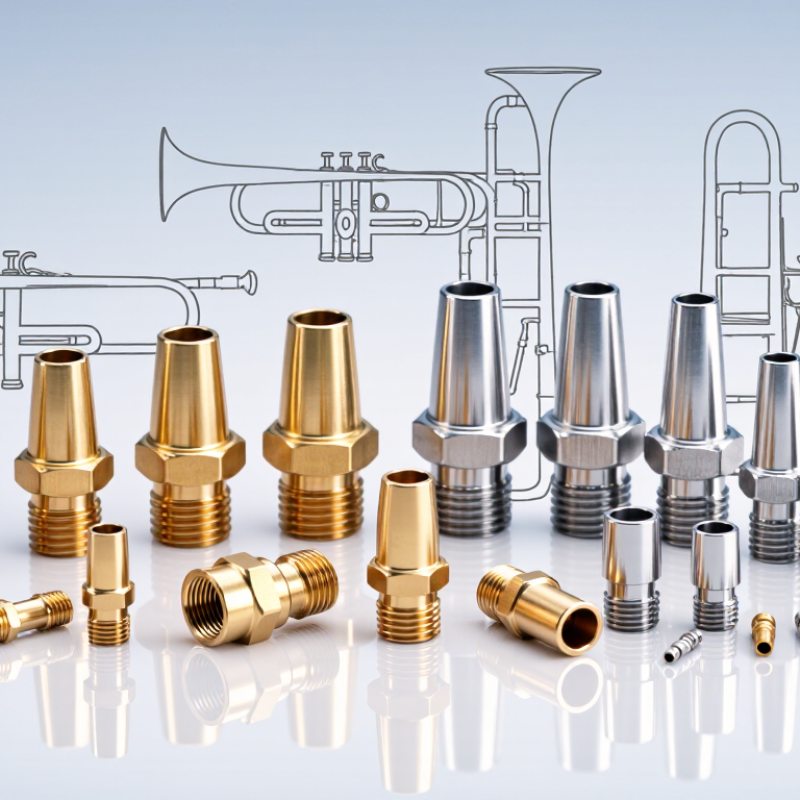
What Mouthpiece Adapters Are and How They Connect Equipment
2026 Top Mouthpiece Adapter Types for Global Buyers
A mouthpiece adapter is a small connector that joins a mouthpiece to compatible equipment. It bridges differences in diameter, shape, or connection style. Common designs include straight sleeves, tapered reducers, threaded fittings, and flexible couplers. The right type depends on the equipment’s inlet, the mouthpiece dimensions, and the intended airflow. Small parts matter. A mismatch can loosen the fit or restrict flow.
Adapters may use a friction fit, threads, a clamp, or a gasket to create a stable connection. Check the required measurements before ordering, including inner diameter, outer diameter, and thread pitch where relevant. Materials also matter: rigid polymers hold their shape, while flexible materials can accommodate slight variation. Fit can look right and still leak. That is easy to miss during a quick visual check, so verify the connection under normal operating conditions.
Tips: Measure both parts with a suitable gauge, and compare specifications rather than relying on appearance. Clean contact surfaces before assembly. Do not force it. If the adapter rocks, slips, or needs excessive pressure, stop and confirm compatibility. A careful recheck may take longer, but it can prevent damage to the mouthpiece or connected equipment.
2026 Top Mouthpiece Adapter Types for Global Buyers — What Mouthpiece Adapters Are and How They Connect Equipment
A mouthpiece adapter is an intermediate component that joins a mouthpiece to another compatible component, such as a tube, hose, instrument, or breathing circuit. Connection sizes and designs differ by industry and equipment; always verify the exact interface and applicable specifications before ordering.
| Adapter type | Typical connection | How it connects | Common applications | Key buyer checks |
|---|---|---|---|---|
| Straight connector | Two aligned openings, which may be matching or different sizes | Joins a mouthpiece directly to a tube, port, or second connector along a straight axis. | Equipment assemblies where the mouthpiece and connected component need a direct, in-line fit. | Check both end diameters, insertion depth, retention method, and whether the joint must be airtight or fluid-tight. |
| Reducer or size-transition adapter | Different diameters at the two ends | Steps between a larger and smaller connection; the adapter may be tapered, stepped, or separately sized at each end. | Connecting components with different port or tube sizes. | Confirm the actual inside and outside diameters, direction of the size transition, and compatibility with the equipment’s specified connector dimensions. |
| Respiratory circuit connector | Common respiratory interfaces include nominal 15 mm and 22 mm connectors; some are specified under ISO 5356-1 | Uses a compatible conical or socket-style interface to connect components in a breathing system. | Respiratory and anaesthetic breathing-system assemblies, when the equipment and connector are designed for that use. | Confirm the applicable standard, connector gender and configuration, intended medical use, and compatibility with the specific circuit. Nominal size alone does not establish fit. |
| Elbow or swivel adapter | Angled outlet or rotating joint between the mouthpiece and connected equipment | Changes the connection direction; swivel designs allow relative rotation where the product is designed to do so. | Assemblies where a straight connection would cause awkward routing or unwanted strain. | Check the angle, available rotation, clearance, flow-path requirements, and whether the joint can remain secure during movement. |
| Hose-barb adapter | One end is shaped to grip flexible tubing; the other mates with the mouthpiece or equipment port | Flexible hose is pushed over the barb and may require a clamp or other retention method specified for the application. | Equipment connected through compatible flexible tubing, including selected air, gas, or fluid paths. | Match the barb size to the hose’s inside diameter. Check material compatibility, pressure or vacuum rating, and whether a clamp is required. |
| Threaded adapter | Male or female threaded end, with the thread type specified for the equipment | Screws onto a matching port; a separate mouthpiece-side connection completes the assembly. | Equipment with threaded ports or replaceable threaded fittings. | Identify thread standard, diameter, pitch, gender, and sealing method. Similar-looking threads may not be interchangeable. |
| Instrument mouthpiece adapter | Instrument-specific receiver, shank, or mouthpiece interface | Changes the fit between a mouthpiece and an instrument receiver or compatible accessory. | Selected wind-instrument setups where the instrument and mouthpiece interfaces require an adapter. | Confirm the instrument family, receiver and shank dimensions, insertion depth, and whether the adapter affects the intended playing setup. |
| Flexible or universal-fit adapter | Flexible sleeve or compliant opening designed for a limited range of compatible sizes | Fits over or into a component by elastic compression or a designed interference fit. | Applications where a rigid, precisely matched connector is not required and the adapter is expressly intended for the equipment. | Do not assume “universal” means universal compatibility. Check the stated size range, material, retention, cleaning requirements, and intended use. |