
Top Hydraulic Cutting Machines for Sale Worldwide
Choosing among the top Hydraulic Cutting Machine models for sale worldwide takes more than comparing price tags. Buyers need to match cutting force, table size, blade length, and operating speed to their actual materials and workload. A machine sized for thin rubber may struggle with dense composites. One built for heavy production can waste floor space and energy in a small workshop.
Hydraulic systems engineer Herbert E. Merritt wrote about hydraulic control systems, offering a useful foundation for evaluating machine performance. A concise paraphrase of his engineering perspective—not a verbatim quotation—is: “Controlled force makes repeatable motion possible.” That principle matters at the cutting table. Stable pressure, responsive controls, and a rigid frame can help produce cleaner, more consistent cuts. Still, specifications alone do not guarantee results. Material variation, blade condition, setup, and operator training all affect performance.
Details matter.
This guide compares machines across practical buying factors, including capacity, safety features, maintenance access, and support availability. Look closely at the work each model is designed to handle. Check whether replacement blades and service assistance are easy to obtain in your region. A lower purchase price may look attractive, but downtime can change the calculation. Some listings also omit useful details. Treat missing specifications as a reason to ask questions, not as proof of quality. The right choice is the one that fits your materials, production rhythm, workspace, and budget—with enough evidence to support the decision.
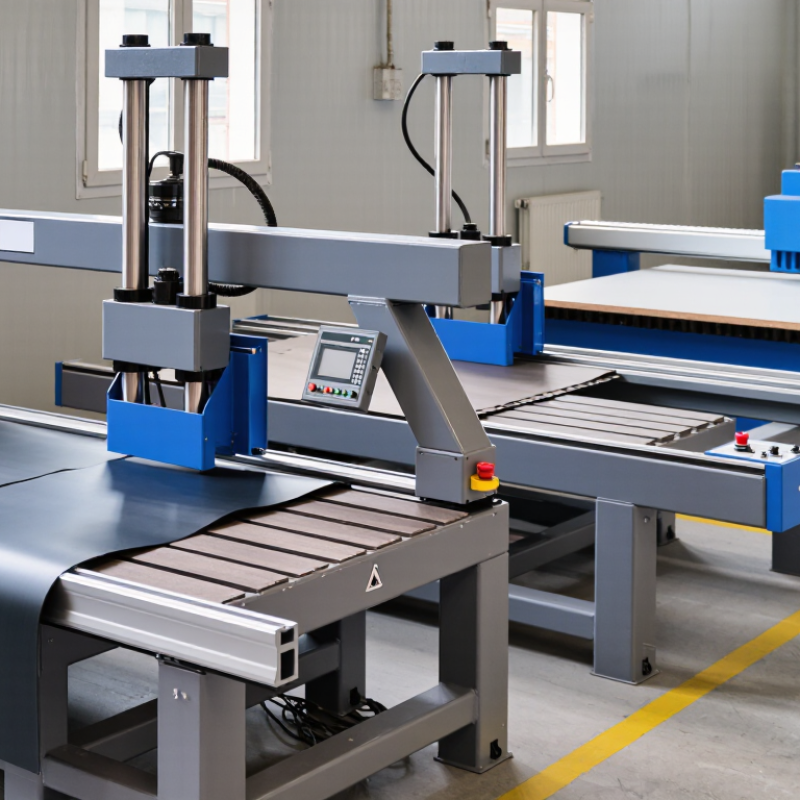
Hydraulic Cutting Machines: Main Types, Materials, and Industrial Uses
Hydraulic cutting machines use controlled fluid pressure to drive a blade or cutting head through sheet and layered materials. Swing-arm presses suit smaller parts and flexible layouts; operators can position work beneath the moving head. Traveling-head models cover larger tables, while beam presses apply force across a wider cutting area. Guillotine-style machines are designed for straight cuts in sheet stock. Each type has limits. The right choice depends on material thickness, part size, production volume, and required edge quality.
Leather, rubber, foam, textiles, gaskets, and some plastics are common applications. A die can cut repeat shapes from stacked fabric, while a flat blade may suit simpler sheet work. In a workshop, a foam converter might use a broad table for mattress components; a gasket maker may need consistent pressure around small, detailed patterns. Watch for compression. Soft foam can rebound, and dense rubber may need more force or a different tool. A setting that works for one material may damage another.
For reliable results, check cutting force, stroke depth, table dimensions, guarding, and access to replacement blades. Match pressure to the material and die, then test on offcuts before production. Keep the work surface clear and inspect hydraulic hoses for wear. Not every listed capacity reflects everyday performance. Real materials vary, and setup takes judgment. That part is easy to underestimate.
Top Hydraulic Cutting Machines for Sale Worldwide: Main Types, Materials, and Industrial Uses
Compare common hydraulic cutting machine types, the materials they process, and the applications they serve.
| Machine Type | How It Cuts | Typical Materials | Typical Capacity or Work Range | Common Industrial Uses | Key Selection Factors |
|---|---|---|---|---|---|
| Hydraulic Guillotine Shear | A hydraulically driven blade descends against a fixed lower blade to shear sheet material. | Mild steel, stainless steel, aluminum, and other sheet metals. | Many standard machines handle sheet widths of about 2–6 m and mild-steel thicknesses of roughly 6–25 mm; capacity depends on blade length, material strength, and machine design. | Sheet-metal fabrication, equipment enclosures, vehicle components, and structural workshops. | Maximum thickness and width, blade clearance adjustment, backgauge accuracy, and required cutting angle. |
| Swing-Arm Hydraulic Die Cutting Press | A pivoting arm applies vertical force through a cutting die onto sheet or layered material. | Leather, textiles, rubber, foam, cork, and flexible synthetic sheets. | Available in a range of pressing forces; usable cutting area depends on the arm and bed dimensions, die size, and material. | Footwear, leather goods, upholstery, gasket production, and craft or textile cutting. | Pressing force, arm reach, bed size, cutting accuracy, and the maximum die dimensions. |
| Travelling-Head Hydraulic Die Cutting Press | A powered cutting head moves across the bed and presses a die into the material. | Foam, rubber, textiles, leather, composites, and layered sheet materials. | Cutting area is determined by the bed and head travel; force and die size vary by machine configuration. | Automotive trim, packaging, footwear, insulation, and large-format gasket production. | Bed dimensions, head travel, cutting force, positioning system, and production rate. |
| Four-Column Hydraulic Die Cutting Press | A guided platen moves vertically under hydraulic force to press a die through the work material. | Rubber, plastics, foam, fiber, composites, and non-metallic sheet stock. | Press force, platen size, stroke, and daylight are specified for the intended die and material; capacities vary widely by design. | Gasket and seal manufacturing, insulation processing, rubber products, and composite-part production. | Required force, platen parallelism, stroke, daylight, safety guarding, and tooling compatibility. |
| Hydraulic Hose Cutting Machine | A driven abrasive or toothed cutting wheel severs hose assemblies; hydraulic operation may control the clamping or feed system. | Rubber and thermoplastic hydraulic hose, including reinforced hose constructions. | Cutting range depends on hose outside diameter, reinforcement, and blade design; check the specified maximum hose size. | Hose assembly, maintenance workshops, agricultural equipment service, and industrial fluid-power systems. | Supported hose diameter, cut quality, blade type, clamping method, and dust or fume management. |
| Hydraulic Scrap Shear | Hydraulic blades or jaws apply concentrated force to sever or reduce metal stock and scrap. | Ferrous and non-ferrous scrap, including plate, sections, and selected structural offcuts. | Capacity depends on the material profile, grade, blade opening, and machine force; verify the rated size for each material type. | Metal recycling yards, scrap processing, steel service centers, and demolition-material recovery. | Material profile, cutting force, blade opening, cycle rate, feed arrangement, and site safety requirements. |
Note: Capacity ranges are indicative examples, not guaranteed ratings. Confirm specifications with the machine supplier for the exact material grade, thickness, width, tooling, and operating conditions.