Who Are the Top Drying Oven Manufacturers for Global Buyers?
For global buyers, choosing among Drying Oven Manufacturers is about more than comparing prices or catalog photographs. A reliable oven should match the material, batch size, temperature range, and daily production schedule. In a laboratory, stable conditions and clear temperature records may matter most. On a factory floor, usable capacity, loading access, and recovery time after opening the door can shape productivity. Small details matter. A tight door seal, evenly spaced shelves, and accessible controls can affect results over months of routine use. Buyers should also consider installation support, spare-part availability, and the supplier’s ability to explain maintenance requirements.
This guide examines manufacturers through practical criteria, including product range, temperature uniformity, construction, customization, documentation, and after-sales service. It also points to evidence buyers can request, such as test reports, operating manuals, and references for comparable applications. These details help distinguish demonstrated capability from broad marketing claims. Ask for specifics. A polished product page is not proof of consistent performance, and a familiar brand may not suit every process. Rankings can be imperfect, too: public information varies, and one supplier’s strengths may be another buyer’s unnecessary expense. The aim is not to declare one universal winner, but to help global purchasing teams build a shortlist, ask sharper questions, and verify whether an oven fits their actual workload.
What Drying Ovens Do and Where They Are Used
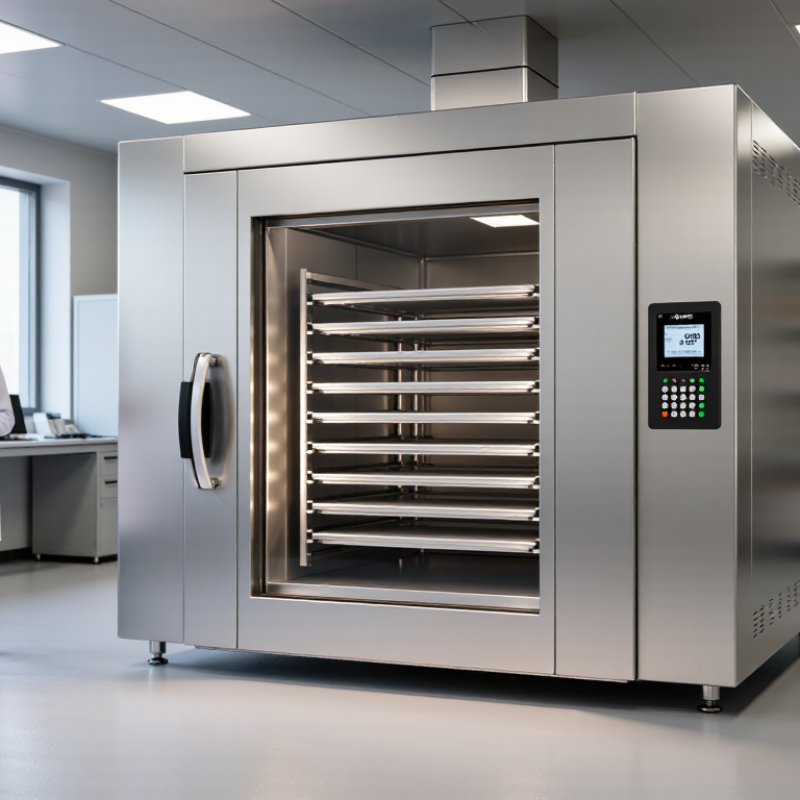
A drying oven removes moisture with controlled heat and airflow. It is used for more than drying. Laboratories dry glassware and samples; food processors reduce moisture in ingredients; manufacturers cure coatings and condition components. Some ovens run at low temperatures for delicate materials. Others need stronger airflow to dry thick loads evenly. Small details matter: a crowded tray can leave damp spots, even when the display shows the correct temperature.
The U.S. Department of Energy’s Improving Process Heating System Performance estimates that process heating uses about two-thirds of manufacturing energy. The IEA reported that industry consumed 37% of global final energy in 2022. These figures cover far more than drying ovens, but they show why heat use and control deserve attention. Good selection starts with the material, target moisture, load size, and required temperature uniformity. It also considers ventilation, insulation, and how often the door opens. Practical checks help.
Still, a warm chamber is not proof of a reliable process. I would question a specification that lists temperature range but says little about airflow or load testing. Operators should verify results with representative materials and documented measurements. That takes time. The extra check can catch uneven drying before it affects a batch.
How Drying Oven Technologies Differ Across Industries
Drying ovens differ because each industry removes moisture under different quality and production constraints. The U.S. Department of Energy’s 2022 Industrial Decarbonization Roadmap estimates process heat uses about 51% of U.S. manufacturing energy. That makes heat recovery, insulation, and airflow design more than minor purchasing details.
Food processors often need high-volume convection ovens with controlled exhaust. Moisture must leave evenly, while trays and product loads can obstruct airflow. Sanitation matters, too. Pharmaceutical production may favor vacuum drying for heat-sensitive materials, paired with documented temperature control and cleanable interiors. Vacuum systems can reduce thermal stress, but they add equipment complexity. Not every product benefits.
Electronics and coating lines have different priorities. Electronics manufacturers may require clean, tightly controlled heating to limit contamination and protect components. Coating operations may use convection, infrared, or combined systems, depending on coating thickness and line speed. Infrared heats surfaces quickly; it may not heat complex loads evenly. Real production loads matter more than an empty-chamber test. Specifications look precise on paper, yet actual loading patterns can expose uneven zones. A pilot run is often wiser than assuming one oven design fits an entire sector.
Criteria for Evaluating Drying Oven Manufacturers
When evaluating drying oven manufacturers, start with performance data rather than headline temperature. Ask how temperature uniformity was measured, at what load, and where sensors were placed. A chamber may reach its set point yet heat unevenly when shelves are full. Request a test report or arrange a sample run using representative parts. Small details matter.
Check whether controls support stable operation, clear alarms, and traceable temperature records. Ask about calibration methods, airflow design, insulation, and materials that contact your products. A useful supplier will explain these choices in plain language and provide operating and maintenance documents. Look for specifics, not promises.
Consider the realities of your site, too. Confirm power requirements, chamber dimensions, door clearance, installation needs, and access to spare parts. For international purchases, clarify shipping protection, technical support hours, training options, and documentation languages. Ask for references from users with similar processes, then verify the details where possible. A polished brochure is not proof.
I would still treat a single demonstration cautiously; an empty oven can behave differently from a loaded one. Compare evidence under conditions close to your own, and note what remains untested.
Leading Manufacturers and Their Product Strengths
Leading drying oven manufacturers usually stand out through process fit, not a long feature list. Some specialize in compact laboratory ovens, where uniform temperature and clear controls support repeatable sample preparation. Others build large batch or conveyor systems for production lines, with stronger insulation, durable chambers, and service access designed for frequent use. Good suppliers explain usable chamber volume, temperature stability, recovery time, and airflow patterns in practical terms. These details help buyers compare equipment with actual loads, tray spacing, and daily operating hours. A polished brochure is not enough. Details matter.
For global buyers, manufacturers offering configurable voltage, thorough documentation, remote troubleshooting, and accessible replacement parts can reduce commissioning delays. Check whether stated performance comes from an empty chamber or a loaded test; results may differ when shelves restrict airflow. Ask for temperature mapping data and a clear description of calibration options. It is also useful to inspect door seals, exhaust controls, and controller alarms during a demonstration. Strong engineering is valuable, but after-sales response matters just as much. No oven fits every process. A supplier may offer excellent uniformity yet limited customization, so confirm requirements before purchase. Some specifications still deserve scrutiny.
How Global Buyers Can Choose the Right Supplier
Global buyers should compare drying oven suppliers by verified performance, not brochure temperature alone. Request chamber-uniformity data, recovery time, usable dimensions, and results under a representative load. A tray of damp components behaves differently from an empty chamber. Ask how the supplier measures temperature and whether calibration records are traceable. ASTM E145 provides performance requirements for laboratory ovens; confirm which requirements apply to your process.
Energy use deserves attention. The IEA’s Energy Efficiency 2023 report estimates that industry accounts for about 37% of global energy consumption. Ask suppliers for rated power, insulation details, and expected operating costs under your duty cycle. Also check local voltage compatibility, spare-parts availability, commissioning support, and clear operating manuals. A low purchase price can become costly when service takes weeks.
Tips: Send suppliers your actual product, load size, target temperature, and drying time. Request a test run and review the data before ordering. Small details matter. I would still question any “uniformity” claim without stated test conditions; even good suppliers can leave that unclear.
Who Are the Top Drying Oven Manufacturers for Global Buyers? — How Global Buyers Can Choose the Right Supplier
Suggested evaluation weights for comparing suppliers. These are a practical scoring framework, not survey results or ratings of specific manufacturers.
Adjust the weights to match your process, then verify each supplier’s claims with technical documents, application-specific testing, and service coverage in your region.
