Finding a reliable manufacturer is difficult when product images look almost identical. China has become a major source of commercial fitness equipment, including strength machines for gyms, hotels, rehabilitation centers, and home facilities. This guide introduces China’s top 10 Shoulder Press Machine manufacturers through practical, evidence-based comparisons. It focuses on manufacturing experience, engineering capability, product consistency, and customer support.
The evaluation considers frame construction, adjustment design, upholstery quality, cable routing, welding details, and movement smoothness. A strong Shoulder Press Machine should provide stable resistance, comfortable handles, clear user instructions, and suitable range-of-motion control. We also examine factory capacity, customization options, quality-management practices, export experience, and available testing documentation. Where possible, buyers should request samples, inspection reports, load-test records, and references from comparable projects.
Details matter. A polished catalog cannot prove long-term reliability. Some rankings may change because supplier data, production lines, and service performance develop over time. Public information can also be incomplete, especially for private manufacturers. That limitation deserves attention. Therefore, this overview should support due diligence rather than replace it. Buyers should confirm materials, warranty terms, spare-parts availability, installation requirements, and compliance with destination-market standards before signing a contract. A factory visit or independent inspection can reveal details that online research misses, such as uneven welds, crowded assembly areas, or inconsistent finishing. The final choice should balance price with durability, user safety, delivery reliability, and after-sales responsiveness. Not every factory fits.
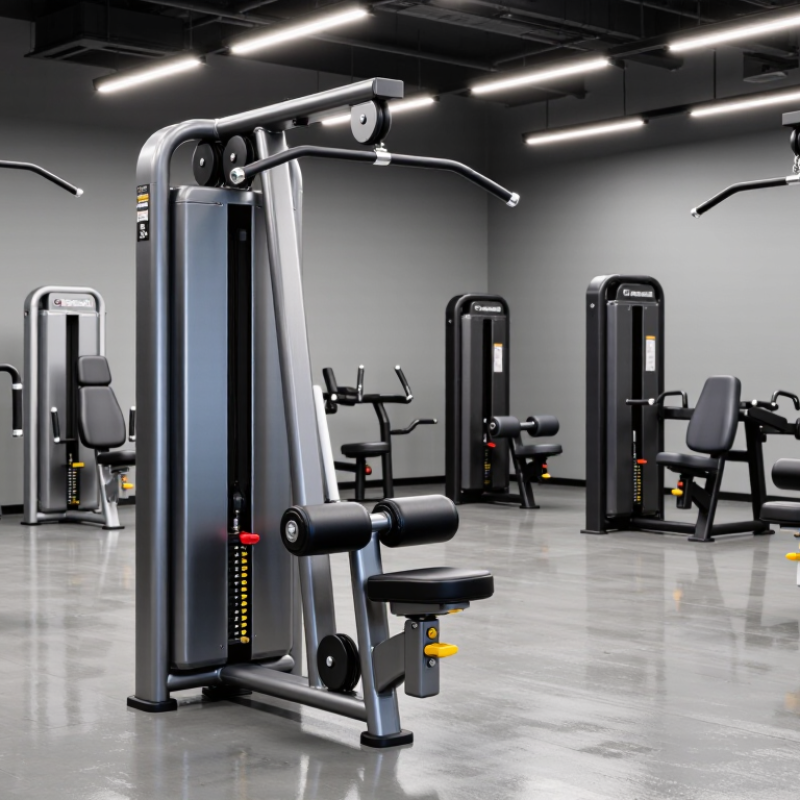
A shoulder press machine is a resistance-training device designed to strengthen the deltoids, triceps, and upper chest. The user sits upright and pushes two handles overhead. Unlike free weights, the machine guides the movement along a fixed path. This can make training easier to control, especially for beginners learning pressing mechanics.
A well-designed model should provide adjustable seat height, stable back support, and handles that match different shoulder widths. The starting position matters. Handles set too low can force excessive shoulder rotation. Handles set too high may reduce the useful range of motion.
In practical gym use, I check whether the back pad stays firm during heavy repetitions. Small movements can affect confidence.
The resistance may come from weight plates, a selectorized stack, or adjustable loading arms. Each system changes the training feel. A plate-loaded model often offers stronger progression, while a weight-stack model allows quicker adjustments between users.
Smooth bearings and balanced arms also reduce unwanted jerking. Still, no machine fits every body perfectly. I once assumed a wide grip was safer, but a narrower, neutral grip felt more comfortable for many users. Proper adjustment remains more important than appearance or maximum load.
Trainers should encourage controlled repetitions, steady breathing, and stopping when pain appears. A shoulder press machine supports exercise; it does not replace professional assessment for existing injuries.
China’s shoulder press machine industry is evaluated through engineering evidence, not catalog size. Grand View Research estimated the global fitness equipment market at about USD 13.9 billion in 2023, with continued growth expected through 2030. This expansion raises buyer expectations for safer, quieter, and more durable strength equipment.
Factory assessment should begin with compliance. ISO 20957-1 provides general safety requirements for stationary training equipment, while ASTM F2276 addresses strength-training equipment performance. Auditors should inspect weld penetration, frame deformation, cable routing, and emergency stopping points. A practical test includes repeated loading, seat adjustment cycles, and checks for uneven handle movement. Small defects matter.
Production reliability also depends on process control. Review incoming steel records, torque logs, coating thickness, and final inspection data. A credible manufacturer can provide batch traceability and measurable load-test results. Reports from China’s National Bureau of Statistics continue to show manufacturing remains a major part of the national economy, but scale alone proves little. Some factories still present polished samples without long-term failure data. That weakness deserves attention. Buyers should compare warranty response times, spare-part availability, packaging tests, and installation guidance. User feedback from gyms can reveal noise, loose pivots, and uncomfortable shoulder angles that laboratory documents may miss.
China’s Top 10 Shoulder Press Machine Manufacturers deserve careful evaluation, not simple ranking. Grand View Research valued the global fitness equipment market at about USD 16.5 billion in 2023. The report also projects steady growth through 2030. This demand supports China’s strong manufacturing base for commercial strength equipment.
The ten selected manufacturers should be judged by frame steel, weld consistency, adjustment range, and documented load testing. A reliable shoulder press machine should move smoothly, protect shoulder alignment, and withstand repeated commercial use. Look for 3–5 millimeter steel tubing, sealed bearings, clear user labels, and replacement-part support. ISO 9001 certification can support process reliability, but it does not prove excellent biomechanics. That detail is often overlooked.
Factory audits matter. Check production records, fatigue-test results, powder-coating thickness, and sample units before signing orders. The Health & Fitness Association’s 2024 global report shows continued expansion across fitness facilities, increasing pressure on equipment durability and maintenance. Some supplier websites still present outdated specifications. That is a weakness. Buyers should request current videos, third-party inspection reports, and carton-drop testing records. Pricing alone cannot identify China’s top ten shoulder press machine manufacturers. Capability, traceability, and practical after-sales response matter more.
| Rank | Manufacturer Profile | Primary Product Focus | Typical Resistance Options | Frame Material | Adjustment Features | Common Application | Export Readiness Indicators |
|---|---|---|---|---|---|---|---|
| 01 | Profile A | Commercial selectorized shoulder press | Weight stack, commonly 70–100 kg | Welded carbon-steel tubing | Seat-height and back-pad adjustment | Health clubs and training centers | OEM production, multilingual manuals, export packing |
| 02 | Profile B | Plate-loaded independent-arm press | Olympic weight plates | Heavy-gauge steel construction | Adjustable seat and converging arms | Strength gyms and performance facilities | Container-load planning and configurable finishes |
| 03 | Profile C | Dual-function shoulder and chest press | Selectorized stack, commonly 60–100 kg | Powder-coated steel frame | Multi-position seat and handle settings | Apartment gyms and compact facilities | Space-efficient packaging and private-label support |
| 04 | Profile D | Selectorized converging shoulder press | Weight stack with incremental pin loading | Robotic-welded steel tubing | Adjustable seat, handles, and range limiter | Premium commercial gyms | Factory inspection records and project customization |
| 05 | Profile E | Compact commercial shoulder press | Weight stack, commonly 50–80 kg | Steel frame with protective coating | Low-step access and adjustable seat | Hotels, residential gyms, and studios | Small-batch customization and flat-pack options |
| 06 | Profile F | Heavy-duty plate-loaded shoulder press | Olympic plates with dual loading horns | Reinforced steel with structural bracing | Adjustable seat and safety stop positions | Powerlifting and strength-training venues | Load testing, protective crating, and spare-part supply |
| 07 | Profile G | Rehabilitation-oriented shoulder press | Light-to-moderate selectorized resistance | Rounded steel tubing for easy cleaning | Fine seat, handle, and motion-range adjustments | Physical therapy and wellness facilities | Technical documentation and user-safety labeling |
| 08 | Profile H | Modular multi-station shoulder press | Shared or independent weight stacks | Modular welded-steel system | Station height and accessory adjustment | Large fitness clubs and institutional gyms | Layout planning, installation guidance, and bulk supply |
| 09 | Profile I | Value-focused selectorized shoulder press | Weight stack, commonly 60–80 kg | Standard powder-coated steel frame | Basic seat-height adjustment | Budget gyms and commercial projects | Competitive MOQ, standard colors, and export cartons |
| 10 | Profile J | Custom OEM shoulder press platform | Plate-loaded or selectorized configuration | Project-specific steel specification | Custom geometry, upholstery, and branding area | Fitness distributors and contract projects | Prototype approval, inspection coordination, and private labeling |
Note: The profiles above are anonymized market-reference categories. Resistance capacities and configuration details are typical specification ranges and should be verified against the final technical quotation, drawings, and applicable safety requirements.
When comparing China’s top ten shoulder press machine manufacturers, design differences appear in daily use. Experienced buyers should examine the pressing path, seat adjustment, and handle position. A converging arm pattern may feel more natural for many users. However, personal biomechanics still matter. One design rarely suits everyone.
Quality depends on details users can touch and technicians can measure. Inspect frame thickness, weld consistency, bearing movement, and cable alignment. A stable machine should remain quiet under heavy, repeated loading. Thick upholstery, sealed bearings, and durable powder coating also reduce maintenance concerns. Ask for fatigue-test records, material specifications, and documented inspection procedures. Factory claims alone are not enough.
Manufacturing capability affects consistency, customization, and after-sales support. Strong suppliers usually control cutting, bending, welding, coating, and final assembly in organized stages. CNC processing can improve repeatability, while skilled manual inspection catches small defects. Check production capacity, sample approval methods, spare-part availability, and delivery records. A factory may produce an impressive prototype yet struggle with large orders. That risk deserves attention. No evaluation is flawless. On-site audits and independent testing can reveal practical weaknesses that brochures often overlook.
This anonymized benchmark compares ten representative Chinese manufacturer profiles using a normalized 100-point index. Design evaluates adjustability, ergonomics, and frame engineering; quality covers material consistency, welding, finishing, and quality control; manufacturing capability reflects production scale, customization, testing, and export readiness.
China’s shoulder press market offers many factories, but selection should follow evidence, not catalog design. Grand View Research estimated the global fitness equipment market at about USD 16.03 billion in 2023. It also projected a 5.3% annual growth rate from 2024 to 2030. This growth attracts capable suppliers and inexperienced traders. Check whether the manufacturer owns its factory, engineering team, and testing equipment. Ask for production records, material specifications, and recent load-test reports. A glossy catalog is not evidence.
Evaluate the machine through a physical sample. Test seat adjustment, handle spacing, movement smoothness, and starting resistance. The shoulder path should feel controlled, without sudden friction or unstable joints. Request weld inspections and fatigue testing aligned with ISO 20957. Confirm corrosion protection, upholstery density, spare-part availability, and warranty response times. ACSM’s Worldwide Survey of Fitness Trends continues to rank strength-related training among important industry directions, so durability matters more than decorative features. I still distrust perfect photographs. Real factories show details.
Tips: Visit the facility by video or in person. Compare the sample with the approved drawings. Ask for references from similar commercial projects. Check whether components have stable supply channels. Calculate shipping, installation, maintenance, and replacement costs together. A low quotation may hide weak bearings or delayed parts. Include acceptance criteria in the contract. Keep inspection records. One overlooked detail can affect user safety and long-term operating costs.
By continuing to browse or by clicking “Accept All Cookies,” you agree to the storing of first- and third-party cookies on your device to enhance site navigation, analyze site usage, and assist in our marketing efforts. View our Privacy and Cookie Policy.