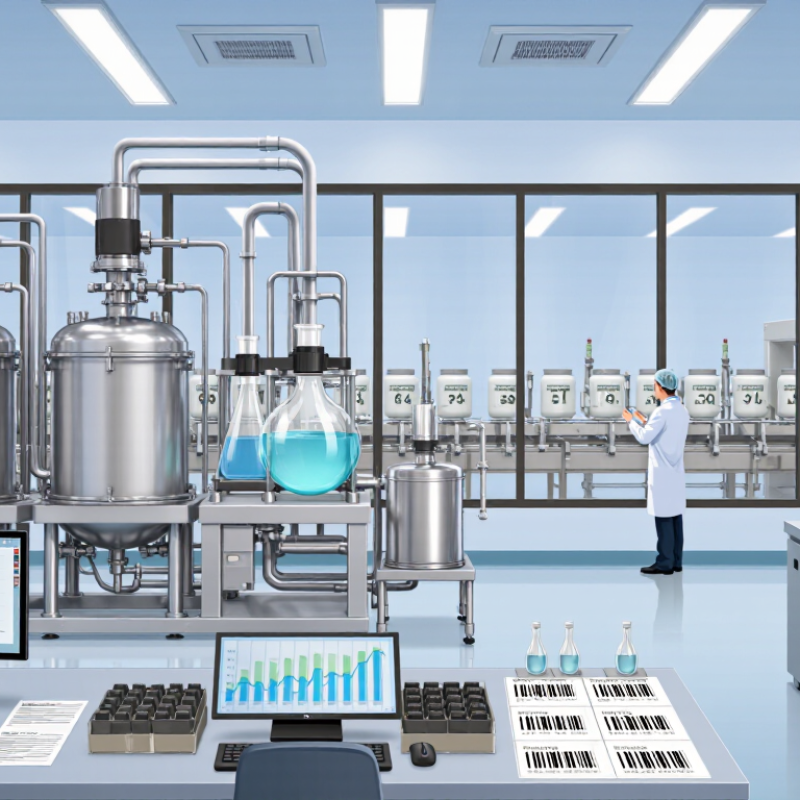
Pharmaceutical Intermediates form the essential bridge between raw materials and finished medicines. They support the production of tablets, capsules, injectables, and other regulated dosage forms. This guide introduces the Top 10 Pharmaceutical Intermediates Manufacturers Worldwide, focusing on capability, compliance, quality systems, and international reliability. These companies serve demanding pharmaceutical markets, where a small impurity can affect an entire production batch.
A credible manufacturer needs more than large reactors. It should demonstrate GMP-aligned operations, traceable batch records, validated analytical methods, and consistent impurity control. Technical teams may review chromatograms, stability data, reaction yields, and cleaning procedures before approving a supplier. Manufacturing scale also matters. A company producing pilot quantities may not deliver the same consistency at commercial volume. We consider this difference carefully.
Supply reliability matters too. Buyers often examine audit history, regulatory documentation, export experience, and response times during technical discussions. Some manufacturers offer custom synthesis, while others specialize in high-volume intermediates with established production routes. Both models can be valuable. The right choice depends on the molecule, market, documentation needs, and risk profile.
No ranking remains perfect forever. Public information can be incomplete, and company performance may change after an acquisition, inspection, or capacity expansion. Therefore, this overview should support due diligence, not replace it. Readers should confirm current certifications, product specifications, manufacturing sites, and applicable regional requirements before making a commercial decision. That practical caution is important. Quality is proven batch by batch, not through impressive marketing alone.
Pharmaceutical intermediates are chemical substances formed during the multi-step production of an active pharmaceutical ingredient. They are not usually the final medicine. Instead, they connect one reaction stage to the next. A simple way to picture them is as carefully inspected building blocks, moving through a controlled manufacturing route.
Their role is both practical and scientific. An intermediate can influence yield, impurity formation, reaction safety, and final product quality. Experienced manufacturers monitor its identity, purity, moisture, particle characteristics, and stability. Analytical methods such as chromatography and spectroscopy help confirm that each batch matches approved specifications. Small changes can matter. A minor impurity may become harder to remove later.
The term is not always used consistently across the industry. Some materials are called advanced intermediates, while others are described as starting materials or processing compounds. That difference can affect documentation, testing, and supplier qualification. A reliable manufacturer therefore provides traceable records, validated processes, change-control procedures, and clear storage guidance. Production teams also examine scale-up behavior, because a reaction that works in a laboratory vessel may behave differently in a larger reactor. This is where practical experience becomes important. A clean-looking result is not automatically a dependable result. Careful review remains necessary.
Comparing global pharmaceutical intermediate manufacturers requires more than checking production volume. Experienced buyers examine GMP alignment, quality documentation, and batch-to-batch consistency. A reliable supplier should provide clear specifications, validated analytical methods, and complete traceability from raw materials to shipment. Audit readiness matters. So does communication.
Technical capability also separates strong manufacturers from ordinary ones. Review their reaction chemistry, impurity-control systems, pilot-scale capacity, and ability to manage process changes. Ask for evidence, not attractive claims. Capacity should match your forecast without weakening quality. Delivery records, backup equipment, and regional logistics reveal supply resilience. Regulatory support is equally important when documentation must satisfy different markets.
Tips: Request recent certificates, anonymized batch data, and deviation histories. Compare response times during technical discussions. Visit the site when practical. A polished presentation can hide weak controls. Also, sustainability deserves careful review, including solvent recovery, waste treatment, worker protection, and energy use. These factors affect long-term cost and operational risk.
No manufacturer is perfect. Even a capable partner may face delays, equipment failures, or unexpected impurity trends. A useful comparison therefore includes corrective-action speed, openness during problems, and willingness to improve. Price still matters, but the lowest quotation may create higher testing, delay, or compliance costs later.
Top 10 Pharmaceutical Intermediates Manufacturers Worldwide
The global pharmaceutical intermediates sector is becoming more technical, regional, and quality-driven. Grand View Research identifies steady mid-single-digit growth for the market through 2030, supported by rising generic medicine production and complex drug development. The IQVIA Institute also projects global medicine spending above USD 2.3 trillion by 2028. That demand reaches far beyond finished products. It begins with controlled reactions, validated analytical methods, and reliable intermediate supply.
The leading ten manufacturers are usually judged by more than production volume. Strong candidates show multi-site capacity, documented batch traceability, and consistent impurity control. Their plants often use stainless-steel reactors, automated temperature monitoring, and separate areas for high-potency materials. Regulatory inspection history matters. So does technical support during process scale-up. A low quoted price can hide weak change-control systems. That risk is easy to underestimate.
Recent industry analyses from Mordor Intelligence and MarketsandMarkets highlight outsourcing, supply-chain diversification, and investment in advanced manufacturing as major growth factors. Manufacturers serving several regions may therefore gain resilience. Yet rankings remain imperfect. Public reports often mix pharmaceutical intermediates with active ingredient segments, making direct comparisons difficult. Buyers should verify capacity, audit records, solvent recovery, and delivery performance before accepting any “top ten” list. Data should guide decisions, not replace practical due diligence.
Ranking the top ten pharmaceutical intermediates manufacturers requires more than comparing production capacity. Manufacturing technology is the sharper test. Modern facilities increasingly combine continuous processing, automated crystallization, and real-time process analytics. These systems can reduce batch variation and improve solvent recovery. They also demand highly trained operators.
Quality must follow recognized standards, not marketing language. ICH Q7 expects controlled production, documented deviations, validated cleaning, and traceable raw materials. ICH Q9 adds formal risk management, while ICH Q10 connects process knowledge with continual improvement. The FDA’s 2019 Drug Shortages report found that approximately 62% of shortages involved manufacturing or product-quality problems. That figure remains uncomfortable. A reliable supplier should therefore show stability data, impurity profiles, audit records, and corrective-action performance.
Analytical depth matters.
High-performing plants use HPLC, GC, Karl Fischer moisture testing, and elemental analysis where appropriate. They should also monitor polymorphs, residual solvents, and metal impurities before release. The European Medicines Agency’s nitrosamine guidance demonstrates how small contamination risks can reshape oversight across the supply chain. Still, no ranking is perfect. Public data may hide subcontracted production, outdated equipment, or uneven performance between sites. Buyers should verify recent inspection histories, change-control records, and batch-level certificates rather than trust a polished brochure. Lower costs can be useful, but unexplained savings deserve closer questioning.
| Rank | Anonymous Manufacturing Profile | Primary Manufacturing Region | Typical Intermediate Portfolio | Core Manufacturing Technologies | Typical Production Scale | Quality and GMP Frameworks | Analytical and Process Controls | Common Regulatory Support |
|---|---|---|---|---|---|---|---|---|
| 1 | Integrated large-scale synthetic intermediate producer | Asia-Pacific | Small-molecule intermediates Heterocyclic compounds Aromatic building blocks | Multi-step organic synthesis, catalytic hydrogenation, crystallization, solvent recovery, and process intensification | Commercial scale with dedicated and multipurpose production lines | ICH Q7, applicable regional GMP requirements, ISO 9001 quality management, validated cleaning and change-control systems | HPLC, GC, LC-MS, NMR, Karl Fischer water analysis, impurity profiling, in-process testing, and stability-support testing | DMF support, technical packages, impurity data, batch documentation, audit support, and change-notification procedures |
| 2 | High-containment manufacturer for potent intermediates | Europe | Highly potent intermediates Oncology-related building blocks Chiral compounds | Closed handling, isolator technology, contained charging and unloading, asymmetric synthesis, and preparative chromatography | Laboratory, pilot, and commercial scale under occupational exposure controls | EU GMP principles, ICH Q7, risk-based containment assessment, ISO 14001, ISO 45001, and formal deviation and CAPA management | UPLC, chiral HPLC, LC-MS/MS, particle-size analysis, residual-solvent testing, elemental impurities, and occupational exposure monitoring | GMP declarations, quality agreements, extractables and leachables information, toxicological data packages, and regulatory audit support |
| 3 | Custom synthesis and route-development specialist | North America | Early-stage intermediates Process-development compounds Complex APIs precursors | Route scouting, scale-up chemistry, low-temperature reactions, flow chemistry, high-pressure reactions, and telescoped synthesis | Milligram-to-kilogram development followed by commercial technology transfer | ICH Q7-aligned systems, laboratory data integrity controls, GMP documentation for regulated projects, and validated analytical methods | HPLC, GC-MS, LC-MS, NMR, reaction calorimetry, in-process control, forced-degradation studies, and impurity fate tracking | Process descriptions, control strategies, analytical method reports, scale-up risk assessments, and CMC technical support |
| 4 | Specialty manufacturer for chiral and stereochemically defined intermediates | Western Europe | Chiral amines Optically active alcohols Enantiopure heterocycles | Asymmetric catalysis, enzymatic resolution, diastereomeric salt resolution, chiral chromatography, and crystallization-based enrichment | Development through commercial production with controlled stereochemical purity | ICH Q7, EU GMP expectations where applicable, ISO 9001, validated supplier qualification, and documented stereochemical controls | Chiral HPLC, polarimetry, NMR, HPLC purity testing, residual solvents, water content, and specific impurity quantification | Chiral purity certificates, analytical validation summaries, process impurity profiles, and technical transfer documentation |
| 5 | Biocatalytic and fermentation-derived intermediate producer | Asia-Pacific | Amino-acid derivatives Enzyme-derived intermediates Fermentation products | Microbial fermentation, enzymatic transformation, cell removal, membrane filtration, spray drying, and controlled crystallization | Controlled fermentation scale with downstream purification operations | ICH Q7 principles, GMP-based contamination control, HACCP-style risk assessment, ISO 9001, and validated cleaning procedures | HPLC, GC, microbial limits, endotoxin testing where relevant, bioburden monitoring, protein or residual-enzyme analysis, and moisture testing | Raw-material traceability, fermentation records, allergen statements where relevant, process validation data, and regulatory information packages |
| 6 | Continuous-processing and flow-chemistry manufacturer | United Kingdom and Western Europe | Reactive intermediates Nitration products Hydrogenation intermediates | Continuous flow reactors, inline mixing, photochemistry, electrochemistry, real-time process monitoring, and automated quenching | Small-to-commercial scale through modular and intensified processing | ICH Q7, quality-by-design principles, process analytical technology, ISO 9001, and documented process-control strategies | Inline spectroscopy, HPLC, GC, reaction calorimetry, particle-size analysis, residence-time monitoring, and automated control-chart review | Continuous-process validation packages, control strategies, process capability data, and technology-transfer protocols |
| 7 | Manufacturer specializing in fluorinated and halogenated intermediates | East Asia | Fluorinated building blocks Halogenated aromatics Heterocyclic intermediates | Controlled halogenation, fluorination, low-temperature synthesis, corrosion-resistant equipment, and specialized purification | Pilot to commercial scale with enhanced chemical safety controls | ICH Q7, ISO 9001, process-safety management, hazardous-material handling procedures, and formal waste-control systems | GC-MS, LC-MS, ion chromatography, HPLC, residual-metal analysis, elemental impurities, and corrosion or equipment-integrity monitoring | Safety data sheets, impurity profiles, process hazard assessments, transport documentation, and customer qualification support |
| 8 | Peptide and protected-amino-acid intermediate producer | North America and Europe | Protected amino acids Peptide fragments Linker intermediates | Solution-phase synthesis, solid-phase synthesis, coupling chemistry, deprotection, preparative chromatography, and lyophilization | Development, clinical supply, and commercial batch production | ICH Q7, GMP documentation for regulated supply, validated computerized systems, data-integrity controls, and supplier audits | HPLC, LC-MS, amino-acid analysis, peptide mapping, residual-solvent testing, water content, and related-substance profiling | Certificate of analysis, sequence or structure confirmation, impurity characterization, batch genealogy, and CMC documentation |
| 9 | Industrial-scale manufacturer of pharmaceutical aromatic intermediates | South Asia | Aromatic acids Anilines Benzyl derivatives Heteroaromatics | Friedel-Crafts chemistry, oxidation and reduction, coupling reactions, nitrile conversion, crystallization, and solvent recovery | Commercial-scale multipurpose production with campaign manufacturing | ICH Q7, applicable national GMP regulations, ISO 9001, environmental management procedures, and documented batch-release controls | HPLC, GC, FTIR, NMR, residual-solvent testing, heavy-metal or elemental impurity analysis, and particle-size testing | Product specifications, certificates of analysis, manufacturing process descriptions, audit questionnaires, and change controls |
| 10 | Specialty manufacturer for advanced heterocyclic intermediates | Middle East and Mediterranean region | Nitrogen heterocycles Sulfur heterocycles Fused-ring systems | Ring formation, cross-coupling, selective reduction, metal-catalyzed synthesis, impurity purge, and controlled crystallization | Custom, pilot, and commercial production depending on project requirements | ICH Q7, ISO 9001, documented quality-risk management, equipment qualification, process validation, and CAPA systems | HPLC, LC-MS, GC, NMR, ICP-MS for elemental impurities, residual-solvent analysis, and polymorph or solid-form assessment | Technical data packages, impurity and genotoxic impurity assessments, stability information, batch records, and customer audit support |

The top pharmaceutical intermediates manufacturers are facing a stricter market than before. Buyers now examine more than price, capacity, and delivery speed. They review GMP compliance, impurity profiles, batch records, and supplier histories. A consistent intermediate may pass quality testing, yet still fail commercial evaluation if documentation is incomplete. Small details matter.
Regulatory expectations are expanding across major markets. Authorities increasingly request stronger data integrity, traceable raw materials, and clearer change-control procedures. Manufacturers are investing in closed production systems, electronic records, and analytical equipment that detects low-level impurities. Environmental rules also influence production decisions. Solvent recovery, wastewater treatment, and lower-energy processes are becoming practical requirements, not optional improvements.
The future will favor suppliers that combine technical depth with flexible manufacturing. Demand is growing for customized intermediates, shorter development cycles, and reliable multi-region supply. Continuous processing and process analytical technology may reduce waste and improve batch consistency. However, digital systems can create new risks when staff lack proper training. Compliance is never finished. Even well-managed facilities can overlook a weak vendor audit or an unclear deviation report. That gap deserves more attention as pharmaceutical supply chains become increasingly complex.
By continuing to browse or by clicking “Accept All Cookies,” you agree to the storing of first- and third-party cookies on your device to enhance site navigation, analyze site usage, and assist in our marketing efforts. View our Privacy and Cookie Policy.