Top 10 Metal Sandwich Panel Roof Manufacturers Worldwide
A Metal Sandwich Panel Roof can help protect a building while combining insulation and weather resistance in one assembly. Yet the right product depends on more than a brochure’s thermal figures. Panel thickness, core material, joint design, coating, and local climate all affect performance. A warehouse exposed to driving rain has different needs from a small workshop facing wide temperature swings.
This guide introduces ten manufacturers serving markets around the world. It considers practical factors buyers can verify, including product range, published technical data, quality systems, project experience, and access to installation guidance. Details matter: a clear span table, compatible fasteners, and a well-sealed panel joint can influence results on site. So can shipping distance and the availability of replacement components.
A ranking is never universal. Regional building requirements, supply conditions, and project budgets can change which supplier is the best fit. That deserves a closer look. Manufacturer information also changes, so readers should confirm current specifications and certifications directly before making a decision. Some comparisons will remain imperfect, especially when companies publish different levels of technical detail. The aim here is not to declare one global winner, but to give architects, contractors, and facility owners a useful starting point for evaluating suppliers and asking better questions.
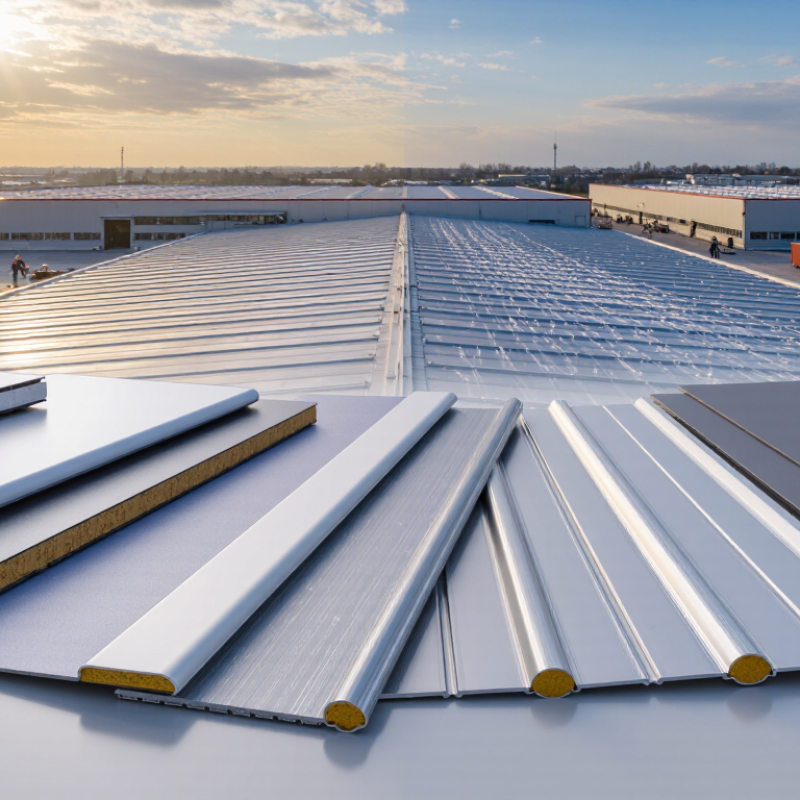
What Metal Sandwich Panel Roofing Is and How It Is Made
A metal sandwich roof panel combines two thin metal facings with an insulating core. The outer sheet is often profiled to shed rain, while the inner facing forms the underside. Core materials may include PIR or mineral wool; each offers different insulation, fire, and acoustic characteristics. The panel is not simply two sheets with foam between them. Bonding quality and edge details affect how well the layers work together.
In production, metal coils are unrolled and formed into sheets. The core is placed between them, then bonded, often in a continuous lamination line. Panels are cut to length and checked for dimensions, surface damage, and bond consistency. At the roof, shaped side joints connect adjacent panels, while screws and washers secure them to supporting purlins. Small errors matter. A poorly aligned joint or over-tightened fastener can invite water entry or damage the facing. Performance also depends on installation and site conditions, not just the panel specification.
Tips: Match the core to the building’s insulation and fire requirements. Keep joints clean, use the specified fasteners, and inspect cut edges. Details are easy to underestimate—and worth checking twice.
How to Evaluate Metal Sandwich Panel Roof Manufacturers
Assess a manufacturer by the evidence behind its panels, not catalogue thickness alone. Request independent reports on fire performance, wind uplift, water penetration, and thermal transmittance. Confirm the tested assembly matches the proposed core, metal gauge, joint profile, and fasteners. Small differences matter.
The 2023 Global Status Report for Buildings and Construction says buildings and construction used 34% of global energy and produced 37% of energy- and process-related CO₂ emissions in 2022. Insulation and airtight joints are more than sales features. The U.S. Department of Energy’s Energy Saver guidance notes that cool roofs can be up to 50°F cooler than conventional roofs in sunny conditions. Compare coating reflectance and emittance data, and ask how the values were measured. A fresh sample is not enough.
Review factory quality controls, batch traceability, corrosion protection, warranty exclusions, and replacement-panel availability. Request span tables for your support spacing and local snow and wind loads; generic brochures cannot answer every site question. Ask for references from projects with similar climates, roof slopes, and exposure. Some quotes omit edge details or sealant maintenance. That deserves a question, not an assumption.
Profiles of Ten Leading Manufacturers Worldwide
A northern European manufacturer may focus on insulated roof panels for cold, wet climates, with concealed fixings and carefully sealed side laps. A central European producer often offers varied core thicknesses and metal finishes for industrial buildings. A North American specialist may design wide panels around local snow and wind loads. Details matter. An East Asian manufacturer can combine high-volume production with custom lengths, helping reduce site cutting and waste.
A South Asian producer may serve fast-growing warehouse markets, where dependable delivery can matter as much as panel performance. An East Asian exporter may offer mineral-wool cores for projects prioritizing fire performance and sound control. A Middle Eastern manufacturer can tailor coatings for intense sun and dusty conditions, though color fading still deserves review. An Australasian producer may emphasize cyclone-rated assemblies and tested fixing patterns.
A Latin American supplier may provide practical panel systems for agricultural and commercial roofs. A second European manufacturer might specialize in curved or architectural profiles, requiring closer coordination between design and installation. These profiles describe common strengths, not a verified ranking; product ranges and testing vary by facility. Buyers should compare full-system test data, coating specifications, warranty terms, and installer guidance. A strong panel can still underperform when laps, fasteners, or roof drainage are poorly detailed.
How Their Products, Markets, and Capabilities Compare
Metal sandwich panel roof manufacturers differ less by appearance than by engineering choices. Most offer insulated panels with steel or aluminum faces, but core materials, coating systems, and joint geometry vary. These details affect thermal performance, weather resistance, and installation speed. A panel edge matters. A poorly matched joint can allow water or air leakage, even when the panel itself meets its published specifications.
Market needs shape product ranges. Manufacturers serving cold regions may emphasize thicker insulation and reduced thermal bridging, while hot, humid markets often prioritize reflective finishes and moisture control. Coastal projects need careful attention to corrosion protection. Not every supplier offers the same panel widths, lengths, or load data, so buyers should compare technical documents rather than relying on headline performance claims. Small differences matter.
Production capability is another dividing line. Larger facilities may support consistent output and custom lengths, while regional producers can offer closer coordination and shorter delivery routes. Ask how panels are tested, how tolerances are checked, and whether installation guidance is available. Also review fire, wind-load, and thermal data for the intended building conditions. Paper specifications are useful, but field workmanship still counts. Comparisons can feel imperfect: published figures may use different test methods, and transport costs can change the practical value of an otherwise suitable product.
Top 10 Metal Sandwich Panel Roof Manufacturers Worldwide — How Their Products, Markets, and Capabilities Compare
This chart shows typical thermal conductivity ranges for insulation-core materials used in metal sandwich panels. Lower values indicate better insulating performance. Values are indicative material ranges, not company-specific product specifications or a manufacturer ranking.
Factors to Consider When Selecting a Manufacturer
When comparing metal sandwich panel roof manufacturers, look beyond panel price and advertised insulation values. The 2024 Global Status Report for Buildings and Construction estimated that buildings used 32% of global energy in 2022 and produced 34% of energy-related carbon emissions. Ask manufacturers for tested thermal transmittance values, including joints and fasteners, not just core-material figures. Small gaps matter.
Check whether panels have been tested to EN 14509, the European standard for factory-made, double-skin metal-faced insulating panels. Request independent test reports for structural load, fire performance, and thermal properties. Confirm that the stated results match your panel thickness, facing metals, and installation details. A polished brochure is not enough.
Manufacturing consistency matters on site. Ask how the supplier controls core density, panel dimensions, coating quality, and batch traceability. Review completed projects in similar climates, then speak with installers about fit, cut edges, and replacement-part availability. Read warranty exclusions carefully, especially for coastal exposure and standing water. Even strong test data has limits. I would also check delivery capacity and technical support; these practical details are easy to overlook.
