
China’s Lightning Arrester industry is expanding with grid modernization, renewable energy, and data-center construction. Grand View Research identifies rising infrastructure investment as a major market driver. MarketsandMarkets also reports growing demand for surge protection across power systems, buildings, and industrial equipment. Exact market figures differ between reports. That difference deserves attention.
This guide examines China’s top 10 Lightning Arrester manufacturers through measurable evidence. The review considers IEC 60099-4 compliance, IEEE C62.11 testing, production capacity, export experience, and independent laboratory records. It also checks practical specifications, including continuous operating voltage, nominal discharge current, residual voltage, and 8/20 microsecond impulse performance. A product may look impressive on paper. Its test documentation may tell another story.
Lightning expert Martin A. Uman described lightning as “a giant electrical spark.” That simple phrase explains the challenge. A Lightning Arrester must divert severe transient energy within milliseconds, while remaining stable during normal system voltage. Field experience matters here. Engineers should inspect sealing quality, zinc-oxide aging, pollution resistance, and installation support. China has many capable suppliers, but not every factory offers equal consistency. Some rankings rely heavily on sales claims, which can be misleading. This comparison therefore favors verifiable certifications, transparent test reports, application experience, and after-sales responsiveness. The final list is useful, but it is not perfect. Local grid conditions, climate, and project voltage levels can change the best choice.
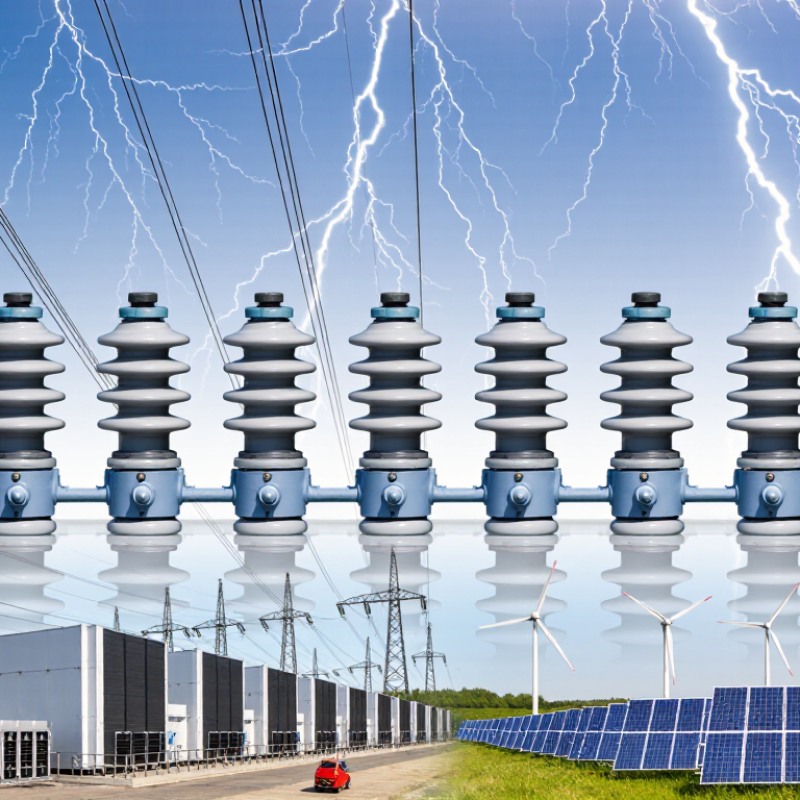
China’s top ten lightning arrester manufacturers should be judged by IEC 60099-4 compliance, not production volume alone. The standard covers metal-oxide surge arresters used in power systems. It also requires evidence from controlled electrical tests.
A credible manufacturer should provide type-test reports, routine-test records, and traceable product data. Look for tests involving residual voltage, leakage current, thermal stability, and long-duration current impulses. Factory experience matters here. Engineers should understand how zinc-oxide blocks behave after repeated surge stress. A clear quality system also supports consistent assembly, sealing, and pressure-relief performance.
The strongest candidates usually maintain accredited laboratories or work with independent testing institutions. Their technical documents should state voltage ratings, discharge classes, energy capability, and environmental limits. Field references are useful, especially for coastal substations, industrial plants, and high-altitude installations. Small details matter. Check terminal design, housing material, creepage distance, and inspection labels.
No ranking is flawless. Public test evidence can be incomplete, and marketing language may hide important limits. I would verify every certificate with the issuing laboratory and compare test conditions carefully. A product passing one test does not prove universal suitability. Site altitude, pollution level, lightning exposure, and grounding resistance still influence performance. That is where many purchasing decisions become less certain. Manufacturers willing to disclose weaknesses often appear more reliable than those offering only polished brochures.
This manufacturer-neutral chart shows the nominal discharge current classes recognized in IEC 60099-4 for metal-oxide surge arresters without gaps. These standardized classes support technical comparison, but they do not constitute a ranking of individual manufacturers or brands.
When comparing China’s top 10 lightning arrester manufacturers, engineers often notice the 10 kA nominal discharge current rating. This rating uses an 8/20 microsecond impulse waveform, not a continuous fault current. It provides a repeatable test reference for the arrester’s protective behavior. That number matters. A 10 kA arrester should conduct surge energy and limit voltage without damaging connected insulation under stated test conditions.
In field selection, I check more than the headline rating. Maximum continuous operating voltage, temporary overvoltage withstand, residual voltage, pressure relief, and pollution performance affect reliability. A 10 kA arrester with excessive residual voltage may still expose a transformer or control cabinet to harmful stress. Cable length, grounding impedance, and lead routing also change the voltage seen by equipment. Short leads help.
Testing should follow the applicable standard and include production records, thermal stability evidence, and sealing inspections. Nominal discharge current does not equal maximum discharge current, short-circuit capability, or service life. This distinction is often missed in quick comparisons. I would request waveform data and lot traceability before accepting a supplier’s claim. In practice, site conditions rarely match the laboratory perfectly. That is where selection becomes less certain, and periodic inspection remains necessary.
When comparing the top ten lightning arrester manufacturers, Uc and MCOV deserve close attention. Uc is the maximum continuous operating voltage, while MCOV is the comparable term used in North American practice. These values must suit the system’s highest line-to-ground voltage, grounding method, and temporary overvoltage exposure. A higher rating is not automatically safer. It may also reduce protective sensitivity.
Residual voltage shows how much voltage remains across the arrester during a surge. Compare it at the same discharge current and waveform, such as 10 kA with an 8/20 microsecond impulse. IEC 60099-4 requires standardized performance tests, while IEEE C62.11 defines related testing for metal-oxide surge arresters. Without identical test conditions, two attractive data sheets can create a false comparison. A low residual voltage matters near transformers and sensitive control equipment.
Energy ratings need more caution. Line-discharge class, charge, and thermal-energy capability describe different stresses. They should be checked with expected lightning current, switching surges, and system voltage.
A 2024 Grand View Research assessment estimated the global surge protection device market at about USD 4 billion in 2023, with continued growth through 2030. That expansion may encourage simplified purchasing. It should not replace engineering review.
In field inspections, I would also examine leakage current, sealing quality, disconnect behavior, and aging evidence. Ratings alone are incomplete. My own comparison method is imperfect, especially when manufacturers publish different test formats.
China’s top ten lightning arrester manufacturers generally serve utility, industrial, railway, and renewable-energy projects. Their product ranges often include polymer-housed and porcelain-housed arresters, distribution-class units, station arresters, line arresters, and compact designs for enclosed switchgear. Some suppliers also produce arresters for photovoltaic plants, wind farms, traction systems, and high-voltage substations.
Manufacturer profiles should show more than catalogue ratings. Reliable suppliers describe rated voltage, continuous operating voltage, nominal discharge current, and expected service conditions. Testing capacity is equally important. Many facilities perform residual-voltage tests, power-frequency withstand tests, thermal stability checks, ageing tests, and impulse-current tests. Independent laboratory records add credibility. However, factory capability claims still require verification.
Application experience can reveal practical strengths. A coastal substation may need strong pollution resistance and sealed housing. A railway project may require compact dimensions and vibration resistance. Renewable sites often demand careful coordination with inverters and transformer insulation. Field feedback matters.
Not every profile is equally complete. Some omit failure-rate data, maintenance records, or test dates. That gap deserves attention. Buyers should compare certificates, sample reports, inspection procedures, and warranty terms before technical approval. A technically sound arrester is not automatically suitable for every network. Soil conditions, grounding design, lightning exposure, and system voltage must guide the final selection.
China Top 10 Lightning Arrester Manufacturers: Selection Criteria for China’s Lightning Arresters in 2026 Projects
Selecting among China’s top ten lightning arrester manufacturers requires more than comparing prices. Project engineers should verify metal-oxide arrester ratings, continuous operating voltage, discharge current, and energy capability. The equipment must match the system voltage, insulation level, grounding method, and local lightning conditions. Check compliance with applicable IEC and national standards. Test reports should identify the exact model, test date, laboratory, and production batch.
Ask for factory inspection records, routine test procedures, and traceability documents. A reliable manufacturer can explain zinc-oxide varistor performance, sealing methods, aging tests, and pressure-relief design without vague claims. Inspect housings, terminals, grading rings, and sealing surfaces. Small defects matter. In coastal projects, salt contamination and moisture resistance deserve special attention. In high-altitude sites, insulation correction factors should not be ignored.
Field performance also depends on installation. Confirm creepage distance, lead length, counter placement, and disconnecting-device coordination. Request references for similar substations, renewable-energy systems, or industrial networks. A low purchase price may hide weaker testing or limited technical support. Yet an expensive product is not automatically better. A spreadsheet can still mislead. Some selection teams focus heavily on certificates and overlook transportation damage, spare-part access, or replacement procedures. The final review should include warranty terms, delivery consistency, inspection rights, and clear communication during abnormal discharge events.
| No. | Selection Criterion | Practical 2026 Project Benchmark | Documents or Tests to Request | Why It Matters |
|---|---|---|---|---|
| 1 | Applicable Product Standard | Medium- and high-voltage metal-oxide arresters should be designed and tested to IEC 60099-4 and the applicable GB/T 11032 requirements. Low-voltage surge protective devices should be assessed under IEC 61643-11 and GB/T 18802.11. | Current type-test certificate, standard edition, laboratory accreditation, and a clause-by-clause compliance matrix. | Confirms that the arrester has been evaluated against recognized electrical, mechanical, and environmental requirements. |
| 2 | System Voltage and Continuous Operating Voltage | Select the rated voltage and continuous operating voltage according to the system’s highest operating voltage, grounding method, temporary overvoltage, and fault-clearing time. Typical distribution-system Uc values must be calculated rather than chosen only from the nominal line voltage. | Voltage-system study, grounding data, temporary-overvoltage calculation, and the manufacturer’s Uc/Ur selection table. | An underspecified Uc can cause thermal instability, while an unnecessarily high Uc can reduce protective performance. |
| 3 | Nominal Discharge Current | Common metal-oxide distribution arresters use an 8/20 μs nominal discharge-current rating of 5 kA or 10 kA. Higher-risk substations and exposed transmission applications may require higher ratings based on the insulation-coordination study. | 8/20 μs current test results, product data sheet, energy-duty documentation, and application-specific selection calculation. | Indicates the reference discharge capability used for residual-voltage and aging-performance comparisons. |
| 4 | Lightning Impulse Protection Level | The arrester’s residual voltage at the specified discharge current should remain below the protected equipment’s lightning impulse withstand level, with an engineering coordination margin commonly applied. | Residual-voltage curves at 0.5, 1.0, and 2.0 times nominal discharge current, plus the protected equipment’s BIL or LIWV value. | Directly affects insulation coordination for transformers, switchgear, cables, motors, and other connected equipment. |
| 5 | Energy and Thermal Stability | Verify the arrester’s long-duration current capability, switching-surge duty, and thermal recovery after temporary overvoltage. The required energy rating depends on network configuration, line length, cable characteristics, and switching conditions. | Operating-duty test report, thermal-stability test data, long-duration-current test results, and temporary-overvoltage withstand curve. | Reduces the risk of thermal runaway and premature failure during repeated or high-energy surge events. |
| 6 | Housing and Environmental Protection | Outdoor units should use weather-resistant polymeric or porcelain housings suitable for the site’s pollution, ultraviolet radiation, humidity, altitude, wind, and temperature conditions. For low-voltage SPDs, the enclosure should match the required installation environment. | Insulation-distance data, pollution-class suitability, UV-aging results, ingress-protection rating where applicable, and environmental test reports. | Supports stable insulation performance and mechanical reliability in coastal, industrial, desert, cold, or high-humidity locations. |
| 7 | Disconnector and Failure Indication | Distribution arresters should provide a reliable disconnector or failure-indication arrangement where required by the protection design. Low-voltage SPDs should include a clear status indicator and replaceable-module option when specified. | Disconnector operating test, fault-current coordination data, visual-status documentation, and installation photographs or drawings. | Helps isolate failed units safely and makes inspection and maintenance faster. |
| 8 | Manufacturing Quality and Traceability | Prefer a documented quality-management system, controlled zinc-oxide varistor production, routine testing for every unit, serial-number traceability, and stable process records for sealing, aging, and assembly. | Quality-management certificate, routine-test format, sample serial-number records, incoming-material controls, and factory-inspection procedure. | Reduces variation between production batches and improves investigation of field failures. |
| 9 | Independent Testing and Compliance Evidence | Type tests should be completed by a competent laboratory with a report matching the exact product family, electrical ratings, housing design, and configuration offered for the project. | Full test report, laboratory accreditation scope, report authenticity, product configuration comparison, and validity of certificates. | Prevents reliance on certificates that apply only to a different rating, enclosure, or product design. |
| 10 | Delivery, Warranty, and Technical Support | Evaluate documented lead time, spare-part availability, installation instructions, commissioning support, warranty terms, failure-analysis capability, and response time for project claims. | Contractual delivery schedule, warranty statement, service-level agreement, spare-parts list, installation manual, and references from comparable projects. | Total project risk depends not only on electrical performance but also on availability, support, and lifecycle service. |
By continuing to browse or by clicking “Accept All Cookies,” you agree to the storing of first- and third-party cookies on your device to enhance site navigation, analyze site usage, and assist in our marketing efforts. View our Privacy and Cookie Policy.