
The future of Electric Sports Motorcycles is both exciting and uncertain. As per a report by McKinsey & Company, the global electric vehicle market is projected to grow by 25% annually until 2030. This growth directly impacts the electric sports motorcycle segment. Enthusiasts are drawn to the combination of high performance and eco-friendliness.
However, challenges remain. Battery technology must advance to enhance range and reduce charging time. Currently, many riders find limitations with existing electric models. A study from Navigant Research indicates that 56% of consumers cite range anxiety as a primary concern. The market also struggles with the perception of electric motorcycles being less powerful than traditional models.
Despite these hurdles, companies are investing heavily. Major brands like Harley-Davidson and Ducati are developing electric models. They recognize that Electric Sports Motorcycles can redefine the riding experience. The balance between performance and sustainability will be crucial in this evolving landscape. Riders and manufacturers alike must adapt to these changes diligently. The road ahead is full of opportunities and reflections on what lies beyond conventional riding.
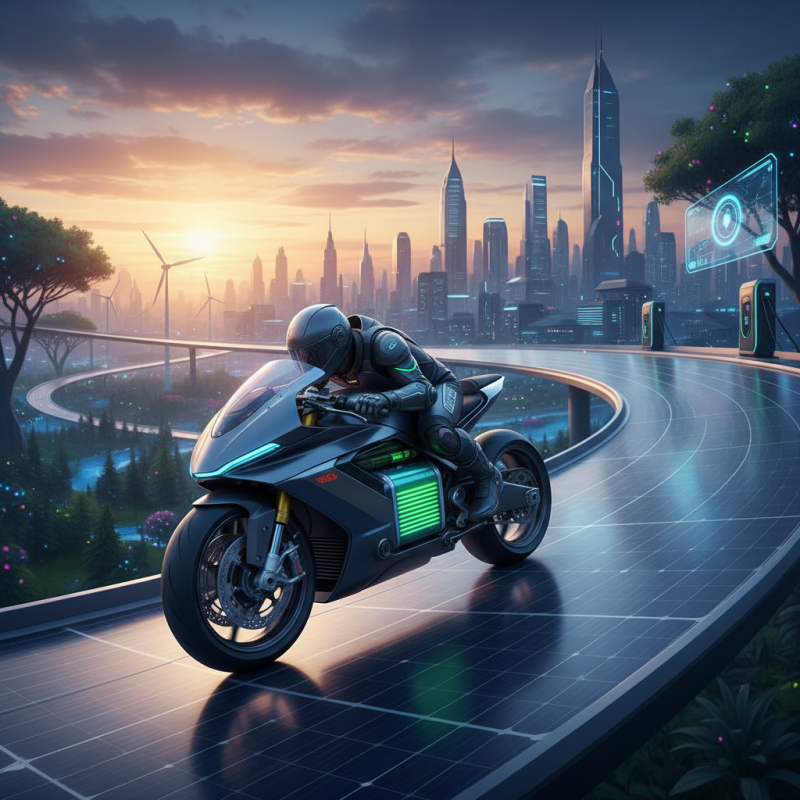
The electric sports motorcycle market is rapidly changing. New technology is making these bikes faster and more efficient. Many riders are excited about the potential for performance. Lightweight materials improve speed and agility. Enhanced battery life means longer rides. The thrill of the ride is transforming.
Tips: Always check charging station apps before long rides. Planning ahead ensures a smooth experience.
Rider communities are also growing. Enthusiasts share tips and experiences online. However, there are challenges. Infrastructure for charging is still developing. Not every area has enough stations. This can impact long-distance travel.
Tips: Join forums for the latest news on charging networks. Being informed can help avoid frustration.
Overall, the future looks bright yet complex. Electric sports motorcycles are pushing boundaries in design and sustainability. As technology evolves, so will the challenges that come with it.
| Year | Projected Market Size (USD) | Annual Growth Rate (%) | Key Drivers | Region with Highest Growth |
|---|---|---|---|---|
| 2023 | $1.5 billion | 15% | Increasing interest in eco-friendly transport | North America |
| 2024 | $1.8 billion | 20% | Technological advancements | Europe |
| 2025 | $2.2 billion | 25% | Government incentives for EVs | Asia Pacific |
| 2026 | $2.7 billion | 30% | Rising health concerns related to pollution | North America |
| 2027 | $3.5 billion | 35% | Improved battery technology | Europe |
The electric sports motorcycle industry is rapidly evolving. Several key players are innovating to capture market share. According to a recent report by the International Energy Agency, the global electric motorcycle market is expected to grow at a CAGR of 25% from 2021 to 2026. This surge is driven by growing environmental concerns and enhanced performance capabilities.
New technologies are emerging in battery efficiency and motorcycle design. Lightweight materials reduce overall weight, enhancing speed and agility. Some manufacturers are integrating advanced software systems for better performance tracking and rider experience. As the industry matures, partnerships between tech companies and traditional manufacturers become common. This collaboration sparks fresh ideas and improves overall safety standards.
Tips: When considering an electric sports motorcycle, prioritize models with a robust warranty and positive customer feedback. Look for newer models that use cutting-edge battery technology to ensure longevity. Remember, not all manufacturers have the same reputation for reliability, so do thorough research. Investing in this developing sector could yield exciting experiences, but it's vital to choose wisely.
Electric sports motorcycles are evolving rapidly. Advances in technology enhance performance and rider experience. Battery technology is a key factor. Modern batteries improve energy density. Higher energy density means longer rides without frequent charging.
Electric motors are getting more efficient. This improves acceleration and speed. Riders can experience thrilling performance similar to gas-powered bikes. Innovative cooling systems prevent overheating during high-speed rides. This ensures stable performance over longer journeys.
However, there are challenges. Charging infrastructure is still developing in many areas. Riders may face long wait times to recharge. Also, weight remains an issue. While technology helps, heavy batteries can impact handling. Balancing performance with weight is crucial for future design. The path ahead is exciting yet complex.
Electric sports motorcycles are gaining popularity as an eco-friendly alternative to traditional bikes. One significant benefit is their reduced environmental impact. Unlike gas-powered motorcycles, electric models emit no direct emissions. This factor is crucial, especially in urban areas where air quality is a growing concern.
However, the sustainability of electric motorcycles extends beyond their immediate use. The production of lithium-ion batteries carries environmental costs. Mining for lithium can lead to habitat destruction and water scarcity. Additionally, disposing of old batteries can pose challenges. These issues highlight the need for better recycling methods and sustainable battery production.
Despite these challenges, the future holds promise. Advances in battery technology could lead to cleaner production processes. Furthermore, renewable energy sources can power charging stations. This shift would make electric sports motorcycles even more sustainable. Enthusiasts and manufacturers must collaborate to address these concerns. The journey toward true sustainability requires commitment and innovation.
The electric motorcycle market is evolving, attracting diverse demographics. According to recent studies, millennials and Gen Z represent a significant portion of early adopters. They prioritize sustainability and innovation. Interestingly, a report from the International Energy Agency indicates that electric motorcycle sales could reach 10 million units per year by 2030. This growth points to changing consumer preferences.
Urban areas are likely to see the highest adoption rates. Many younger riders view electric motorcycles as practical urban transportation. They appreciate the low emissions and lower running costs. Yet, challenges exist. Issues like range anxiety and the initial purchase cost can deter potential buyers. Data suggests that around 40% of consumers still worry about battery technology and charging infrastructure.
Tips: Consider test rides to experience different models. Research local charging stations to ease concerns. Engaging with communities can provide insights into the advantages of electric motorcycles. As technology improves, addressing consumer concerns can enhance acceptance. Adopting an electric motorcycle might require adjustment, but the benefits of reduced environmental impact and lower operating costs are compelling.
By continuing to browse or by clicking “Accept All Cookies,” you agree to the storing of first- and third-party cookies on your device to enhance site navigation, analyze site usage, and assist in our marketing efforts. View our Privacy and Cookie Policy.