How to Choose the Right Melt Filtration Disc?
Selecting the right Melt Filtration Disc is a practical quality decision, not a routine purchasing step. In polymer processing, the disc influences melt cleanliness, pressure stability, product appearance, and production continuity. A poor match may create rising back pressure, uneven flow, or frequent screen changes. Small particles can leave visible defects on film, fiber, pipe, or molded parts.
The scale of the plastics industry makes this choice increasingly important. PlasticsEurope’s Plastics—The Fast Facts 2023 reports global plastics production reached 400.3 million tonnes in 2022. The OECD Global Plastics Outlook estimates that only 9% of plastic waste was recycled in 2019. These figures show why recycled and mixed-feedstock polymers require careful melt filtration. Contamination levels are rarely consistent. That is the difficult part.
A reliable selection process should examine polymer type, melt temperature, viscosity, throughput, contamination size, filtration rating, disc material, and available pressure. Stainless steel remains common, but the exact alloy and construction still matter. A disc that performs well with clean polypropylene may fail sooner in abrasive recycled compounds. Operators should also review real production data, including pressure rise, changeover frequency, and scrap rate. Laboratory tests help, but they cannot fully reproduce a fluctuating extrusion line. This is where experience matters.
There is no universal best disc. The correct solution balances filtration efficiency, service life, energy demand, and operating cost. This guide explains how to compare these factors with greater confidence. It also highlights common assumptions that deserve reconsideration, because the cheapest disc may become the most expensive choice during continuous production.
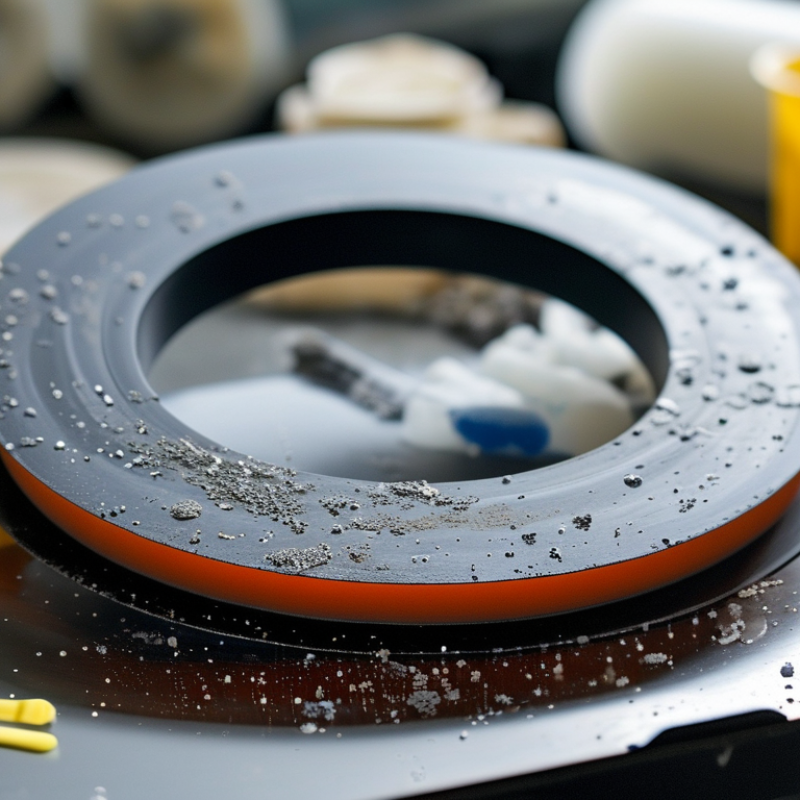
Understand the Role of Melt Filtration Discs
How to Choose the Right Melt Filtration Disc?
Understand the Role of Melt Filtration Discs
A melt filtration disc removes gels, unmelted particles, rust, and other contaminants from polymer melt. It protects downstream equipment and supports more consistent product quality. The disc also influences pressure, flow stability, and production efficiency. A finer filter is not automatically better. It may increase pressure drop and shorten service life. In practice, the correct choice depends on resin viscosity, melt temperature, throughput, and contamination level.
Experienced operators usually review the filtration area before selecting a micron rating. More surface area can reduce loading and extend operating time. Disc structure matters too. A stable multilayer design can support gradual filtration without collapsing under pressure. However, laboratory results may not match production conditions. A first trial can mislead. Record pressure changes, screen life, and product appearance during actual operation. These details often reveal problems that specifications hide.
Tips: Match the disc material with the melt temperature and chemical environment. Check the equipment’s maximum allowable pressure before testing. Start with a practical filtration grade, then adjust after observing pressure and output. Keep inspection records, including contamination type and replacement timing. Small particles are easy to ignore. They are not always harmless. Avoid choosing only by price, because frequent replacement can cost more than a slightly larger filtration area. Consult qualified process engineers when the material behaves unpredictably.
Identify the Key Material and Process Requirements
How to Choose the Right Melt Filtration Disc?
Identify the Key Material and Process Requirements
A melt filtration disc should match the polymer, temperature, pressure, and contamination profile. Start with the material. Polypropylene, polyethylene, PET, and engineering polymers flow differently under heat. Their viscosity affects pressure rise and filtration stability. The OECD Global Plastics Outlook reports 353 million tonnes of plastic waste in 2019, with only 9% recycled. Recycled feedstock can therefore contain paper, metal fines, pigments, and degraded polymer.
Check operating temperature before selecting disc construction. Stainless steel is common, but alloy grade and sintered structure still matter. PET processing may require high thermal stability and careful moisture control. A disc with excessive resistance can increase pressure quickly. A disc with oversized openings may pass harmful particles. It is a narrow balance.
Measure throughput in kilograms per hour, not by machine size alone. Record melt temperature, pressure before and after filtration, and pressure change over time. PlasticsEurope reported global plastics production at 400.3 million tonnes in 2022. That scale increases demand for consistent filtration, especially in recycled streams. Mesh count alone misleads. Open area, wire diameter, disc thickness, and pore shape also influence performance.
Small trials reveal more. Test the disc with actual material, not only laboratory pellets. Inspect the retained contaminants afterward. One imperfect assumption can distort the selection. Supplier datasheets help, but process data decides. Cite: OECD, Global Plastics Outlook, 2022; PlasticsEurope, Plastics—The Fast Facts, 2023.
Compare Disc Types, Ratings, and Filtration Performance
A melt filtration disc should be selected by filtration performance, not by micron rating alone. Woven wire discs offer defined openings and stable flow, making them suitable for consistent feedstock. Sintered metal or fiber discs provide depth filtration and greater contaminant-holding capacity. However, they can create higher pressure drop. A 20-micron label is not universal. Always confirm whether the rating is nominal or absolute, and ask for the test method.
PlasticsEurope’s Plastics—The Facts 2023 reports global plastics production reached 400.3 million tonnes in 2022. This scale increases the need for stable melt quality and reliable filtration. Industry testing should compare throughput, pressure rise, gel removal, and service life under real processing temperatures. A disc that lasts longer may still be unsuitable if it restricts flow too quickly. ASTM filtration testing practices can help standardize pressure-rise and contaminant-removal evaluations, but laboratory results do not perfectly represent every production line. That limitation matters.
In practical trials, record melt temperature, polymer type, contamination load, and screen-change pressure. Compare equal disc areas and similar layer structures. Thin mesh may appear efficient during the first hour. It may fail sooner with heavily contaminated recycled feedstock. I would avoid choosing from catalog ratings alone. A small pilot run often reveals more than a clean-sheet calculation.
How to Choose the Right Melt Filtration Disc? - Compare Disc Types, Ratings, and Filtration Performance
| Disc Type | Typical Filtration Rating | Filtration Rating Basis | Approx. Open Area | Contaminant-Holding Capacity | Pressure-Drop Behavior | Typical Operating Temperature | Best-Suited Applications |
| Woven Wire Mesh Disc | 20–2,000 µm | Usually nominal; depends on mesh count and wire diameter | Approximately 25–70% | Low to medium | Low initial pressure drop; rises quickly when the surface blinds | Commonly suitable for approximately 200–500°C, depending on alloy and polymer | General-purpose polymer extrusion, coarse gels, unmelted particles, and screen packs |
| Dutch Weave Mesh Disc | 5–250 µm | Typically nominal; tighter openings than plain square mesh | Approximately 20–45% | Medium | Higher initial pressure drop than square mesh; can provide more stable fine filtration | Commonly suitable for approximately 200–500°C, depending on alloy | Fine polymer melt filtration where consistent retention and mechanical strength are required |
| Sintered Wire Mesh Disc | 1–100 µm | Nominal or absolute, according to construction and test method | Approximately 25–50% | Medium to high | More gradual increase than single-layer mesh because of the multilayer structure | Often suitable for approximately 300–600°C with stainless-steel construction | Fine, repeatable filtration, high mechanical-load service, and applications requiring cleanability |
| Sintered Fiber Metal Disc | 1–40 µm | Often specified as absolute or near-absolute, subject to the test method | Approximately 55–75% | High | Gradual pressure increase and high dirt-holding capacity compared with fine mesh | Commonly suitable for approximately 300–600°C, depending on material | High-purity polymer melts, fine gels, catalyst particles, and long production runs |
| Sintered Porous Metal Disc | 0.5–100 µm | Nominal or absolute; confirm the manufacturer’s bubble-point or particle-retention test | Approximately 25–45% | Medium to high | Stable, predictable flow; pressure drop depends strongly on thickness and porosity | Approximately 300–900°C for suitable metal grades; application limits must be verified | High-temperature filtration, precision melt processing, and reusable filter assemblies |
| Metal Fiber Felt Disc | 3–100 µm | Typically nominal or absolute, depending on fiber diameter and thickness | Approximately 60–90% | High to very high | Low initial pressure drop with a gradual rise as the depth structure loads | Commonly suitable for approximately 300–600°C, depending on alloy and process conditions | High-viscosity melts, heavy contamination loads, and depth-filtration applications |
Selection Notes: Filtration ratings are not directly interchangeable between suppliers. A nominal rating indicates approximate particle retention, while an absolute rating is based on a defined test method. Actual performance depends on polymer viscosity, melt temperature, throughput, contaminant concentration, disc thickness, effective filtration area, and allowable pressure drop. Confirm the rating, test standard, material compatibility, and cleanability requirements before specifying a disc.
Match Disc Design to Equipment and Operating Conditions
How to Choose the Right Melt Filtration Disc?
Match Disc Design to Equipment and Operating Conditions
Choosing a melt filtration disc starts with the equipment, not the catalog. Measure the holder diameter, sealing area, flow direction, and available installation space. A disc can have excellent filtration accuracy yet fail if its edge does not seat correctly. Fit matters.
Match the disc’s open area and layer structure to the polymer’s viscosity and contamination level. High-viscosity melts usually need stronger support and adequate flow capacity. Fine filtration can remove small particles, but it may also increase pressure rapidly. Watch the pressure trend. For continuous systems, select a design that supports stable pressure and safe replacement intervals. Manual systems may require greater mechanical strength during handling.
Operating temperature also affects performance. Confirm that the disc materials tolerate the processing temperature and remain stable during cleaning cycles. In practical trials, I have seen a finer disc create better initial clarity but shorten production time. That result was not expected. A larger open area is not always better, either; weak support can allow deformation under pressure. Record pressure, output, melt temperature, and changeover time during testing. Keep the data. These details often reveal whether the problem comes from disc design, unstable heating, or inconsistent feedstock.
Evaluate Service Life, Maintenance, and Total Cost
How to Choose the Right Melt Filtration Disc?
Evaluate Service Life, Maintenance, and Total Cost
Choosing a melt filtration disc requires more than comparing its purchase price. Service life depends on polymer cleanliness, operating temperature, pressure, and contaminant levels. In daily production, a disc may appear efficient until pressure rises sharply. That warning often signals restricted flow and approaching replacement.
Experienced operators record pressure before and after filtration. They also track output, replacement intervals, labor hours, and rejected material. A disc lasting longer is not always better. If it causes unstable pressure, extra energy use, or frequent line adjustments, its real value decreases. Small details matter. A five-minute stoppage can become expensive during continuous production.
Maintenance should be simple, safe, and predictable. Check whether the disc can be changed without extended cooling or complicated tooling. Review cleaning requirements and inspect the filter surface for uneven loading. Total cost should include the disc, labor, downtime, energy, waste, and possible product loss. Cost per filtered kilogram offers a clearer comparison than unit price alone.
Tips: Track pressure trends, not isolated readings. Compare at least three production cycles. Set a replacement limit before quality declines. Leave room for human error; real operators may not record every detail perfectly. Recheck your assumptions after changing materials or processing conditions.
How to Choose the Right Melt Filtration Disc?
Evaluate service life, maintenance, and total cost using a comparative operating model.
The total cost index combines replacement media, maintenance labor, and estimated downtime, with single-layer woven mesh set as the baseline at 100. Longer service life and fewer maintenance events generally reduce operating cost. Actual results vary with polymer type, contamination load, pressure, temperature, and operating conditions.