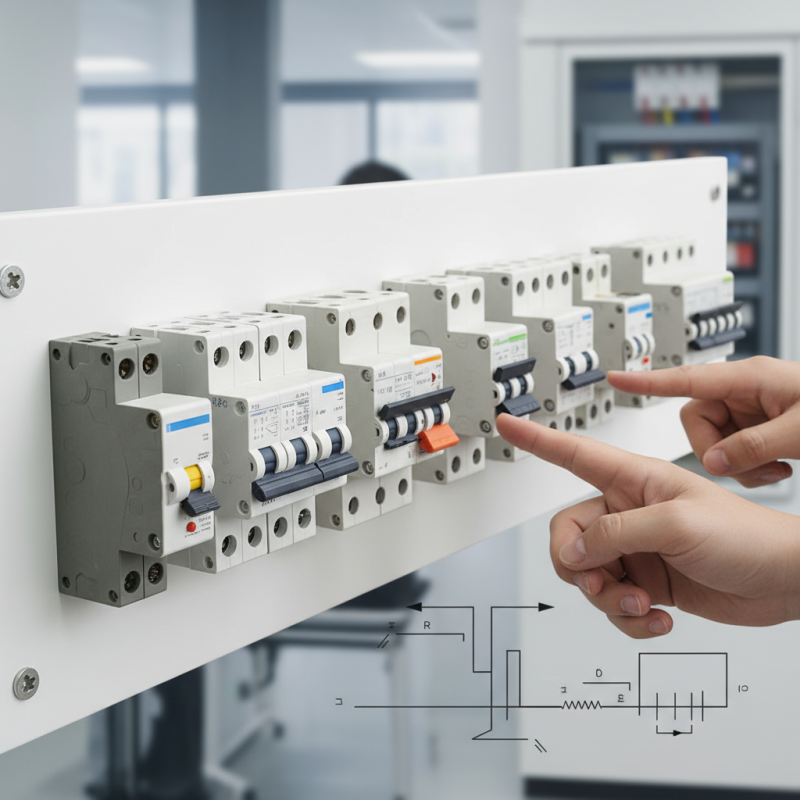
How to Choose the Right Miniature Circuit Breaker for Your Needs?
Choosing the right Miniature Circuit Breaker (MCB) is crucial for electrical safety. An MCB protects electrical circuits from overload and short circuits. Selecting the wrong type of MCB can lead to issues. It may not trip as needed, resulting in potential hazards.
Consider your specific requirements. Are you protecting a home or an industrial setting? Different applications demand different specifications. The rated current, voltage, and breaking capacity all play key roles. It’s alarming how many ignore these details. A mismatch can compromise safety and performance.
Reflect on the features of various MCBs available in the market. Some may seem ideal, but they may lack crucial functions. Do not rush the decision. Take time to evaluate all options. Prioritize quality over cost. Sometimes, cheaper choices lead to regrets.
Understanding the Function of Miniature Circuit Breakers (MCBs)
Miniature Circuit Breakers (MCBs) are crucial for electrical safety. They automatically cut off the current when it exceeds a certain limit, preventing potential hazards like fires. MCBs come in various types, each designed for different applications. Understanding their functions helps in selecting the right one for your needs.
Tips: Think about the specific requirements of your electrical system. Is it residential or commercial? Consider the load capacity, which is essential. Some MCBs cater to specific devices. Choosing the wrong type can lead to inefficient protection. Reflect on your environment—are there moisture or dust factors that may affect performance?
Pay attention to the tripping characteristics of MCBs. These indicate how quickly an MCB responds to overload conditions. Types include B, C, and D curves. Each has distinct characteristics suitable for different circuits. You may need a combination of types for proper coverage. Think carefully about your choices. A poor selection can lead to frequent trips or, worse, no protection at all.
How to Choose the Right Miniature Circuit Breaker for Your Needs? - Understanding the Function of Miniature Circuit Breakers (MCBs)
| Parameter | Description | Example Values |
| Current Rating (Amps) | Maximum load current the MCB can handle before tripping. | 6A, 10A, 16A, 20A, 32A |
| Voltage Rating (Volts) | Maximum voltage the MCB can interrupt. | 230V, 400V |
| Tripping Characteristics | Defines how quickly the MCB will trip under overload or short circuit conditions. | Type B, Type C, Type D |
| Number of Poles | Indicates how many circuits can be protected. | Single Pole, Double Pole, Triple Pole, Four Pole |
| Mounting Type | How the MCB is installed in the electrical panel. | DIN Rail Mounting, Panel Mounting |
| Standards Compliance | Certifications that the MCB complies with industry standards. | IEC 60898, UL 489 |
Identifying Your Electrical Load Requirements for MCB Selection
When selecting a miniature circuit breaker (MCB), understanding your electrical load requirements is crucial. Your total load is the sum of all devices that will use electricity simultaneously. It's not just about the wattage; consider the starting current of motors, which can be several times higher than their running current. This factor significantly influences your MCB choice.
Tips: Always calculate the load based on peak usage times. A common mistake is underestimating demand during busy hours. Monitor your appliances and devices over a full day. This will provide a better picture of your actual needs.
Many people overlook the importance of the MCB’s current rating. Choose an MCB that can handle continuous load without tripping. This means you should factor in future expansions. Adding devices later can lead to overload if you select an MCB too small for your demands.
Tips: Consult with an electrician if unsure. They can help assess load requirements accurately. A small miscalculation can lead to safety hazards or unnecessary costs. Think actively about how you use electricity every day; it might reveal surprising insights into your needs.
Evaluating the Types of Miniature Circuit Breakers Available
When choosing a miniature circuit breaker (MCB), understanding the types available is crucial. MCBs can vary significantly in their features and applications. The most common types include type B, C, and D. Each type responds differently to overloads and short circuits. For instance, Type B breakers are typically designed for residential applications with lower inrush currents, while Type C caters to commercial settings with higher inrush currents from motors and transformers.
A report by the International Electrotechnical Commission revealed that the demand for MCBs is expected to grow at a CAGR of 5.2% from 2023 to 2030. This growth is driven by increased electrical safety standards and the modernization of infrastructure. However, not all MCBs are created equal. An inadequate choice can lead to nuisance tripping or even system failure. It is essential to assess the load characteristics before selecting an MCB.
It's also worth noting that MCBs are not foolproof. They may fail to trip under certain circumstances, particularly if the installation is incorrect. A lack of proper maintenance can exacerbate these issues. Therefore, it’s vital to periodically review MCB performance to ensure safety and reliability. Potential buyers should prioritize understanding their specific needs and limitations before making a final decision.
Key Features to Consider When Choosing an MCB
When selecting a miniature circuit breaker (MCB), several key features are essential. Consider the current rating, which should match the load requirements. Typical ratings range from 1A to 125A. Choosing one too high may lead to inadequate protection. Alternatively, a lower rating can cause nuisance tripping, interrupting your power supply.
The breaking capacity is another critical aspect. This parameter indicates the maximum fault current an MCB can handle without failing. According to industry reports, MCBs with a breaking capacity of 6kA or higher are suitable for residential use, while commercial setups may require 10kA or more. It's vital to assess your system's fault current.
Tip: Always consult an electrician if unsure about the load requirements and fault levels.
Next, check the trip curve. MCBs come in various types like B, C, and D, tailored for different applications. For example, Type B is ideal for residential circuits, while Type C suits more inductive loads like motors.
Tip: Analyze your appliances to determine the right trip curve, as an incorrect selection can lead to system inefficiencies.
Lastly, consider the installation process. Some MCBs are user-friendly and allow for quick installation. Others may require careful integration with existing systems. Even a minor oversight can compromise safety and performance. Reflect on the installation environment to make the best choice.
Ensuring Compliance with Relevant Safety Standards and Regulations
When selecting a miniature circuit breaker (MCB), adherence to safety standards is crucial. Compliance with regulations like IEC 60898 ensures that breakers meet quality and performance benchmarks. According to a report by the International Electrotechnical Commission, about 30% of electrical fires are caused by circuit failures. This statistic underscores the importance of choosing the right MCB to protect your property and ensure safety.
Evaluating the specific conditions of your electrical system is essential. Different environments might require different protection levels. For example, an industrial setting may need MCBs with higher current ratings compared to residential use. The National Fire Protection Association (NFPA) emphasizes the need for proper circuit protection in various scenarios. Not following guidelines may lead to insufficient protection and increased risk of hazards.
Choosing an MCB isn't just about specifications. It's also about understanding how they function in demanding situations. Factors like short-circuit and overload protection must be considered. MCBs should trip at the right thresholds to avoid damage. Reports highlight that improper installation and selection can lead to malfunctions. Reflecting on these aspects can help in making better choices for safety.