
China Top 10 Industrial EMC Solution Providers?
Industrial equipment now works in crowded electrical environments. Variable-frequency drives, robot controllers, sensors, and wireless links often share the same factory floor. That makes a dependable Industrial EMC Solution essential for reducing interference and supporting stable operation. The need is growing. The International Federation of Robotics’ World Robotics 2024 report recorded 541,302 industrial robot installations worldwide in 2023. More connected machines mean more interfaces, cables, and potential coupling paths. The figure does not measure EMC failures, but it shows why careful design matters.
Good solutions begin before a product reaches the test chamber. Engineers check grounding, cable routing, enclosure seams, filtering, and immunity under realistic operating conditions. IEC 61000 provides widely used standards for electromagnetic compatibility testing, including emissions and immunity. Henry W. Ott, author of EMC Engineering, emphasizes a practical principle: EMC belongs in system design, not as a last-minute repair. That distinction matters. A filter added late may not fix a poorly routed cable or an unbonded panel.
This guide introduces ten China-based providers offering industrial EMC products, engineering support, or testing services. It is not an official market ranking; capabilities and project fit can vary. Look beyond a product catalogue. Ask for test methods, applicable standards, installation guidance, and evidence from comparable applications. A cabinet may look tidy. Its performance still depends on the details. The following overview helps buyers compare those details and identify questions worth asking before specifying an Industrial EMC Solution.
What Industrial EMC Solutions Include in China
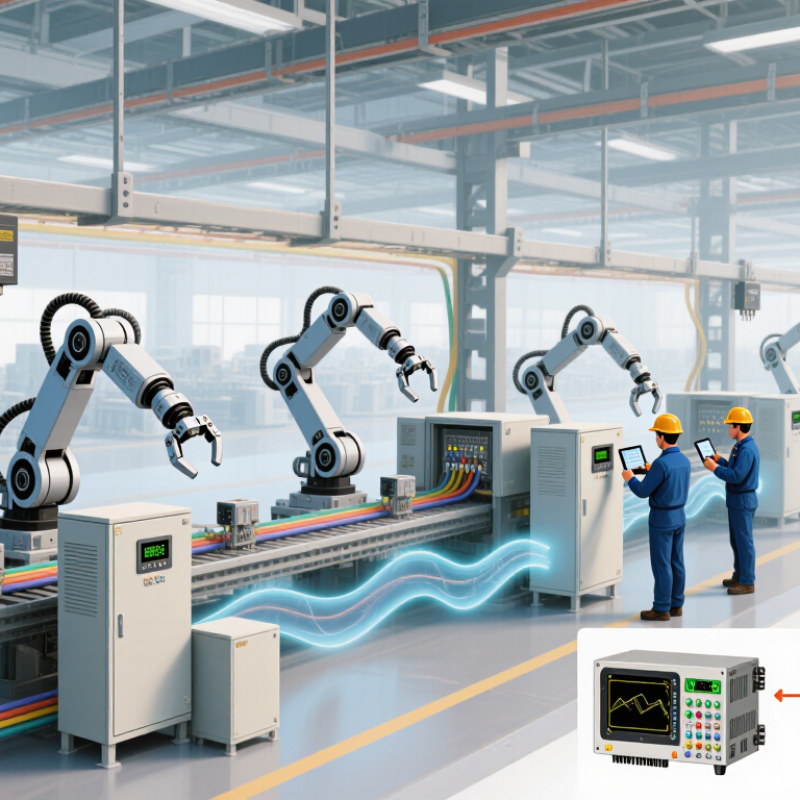
Industrial EMC solutions in China typically combine design review, on-site assessment, component selection, and verification testing. The aim is to limit unwanted electromagnetic emissions and help equipment keep working when nearby electrical noise is present. Small details matter. A variable-speed drive, a PLC cabinet, and a long sensor cable can interact in ways that a schematic alone may not reveal.
Practical work may include checking cable routes, improving bonding between cabinet panels, selecting suitable filters, and adding shielding where measurements show it is needed. Engineers may test conducted emissions, radiated emissions, and immunity before or after installation. Testing reveals gaps. For example, a control signal may become unstable when a motor starts, pointing to a grounding or cable-routing issue rather than a faulty controller. Solutions should fit the machine, operating conditions, and maintenance needs. More shielding is not always better; it can add cost, weight, or heat. A site visit and repeatable measurements help teams make informed choices, though real factories rarely match a perfect test setup.
China Top 10 Industrial EMC Solution Providers? – What Industrial EMC Solutions Include in China
The table below outlines ten common industrial EMC solution categories used in China. It is a technical overview, not a ranked list of companies or brands. Applicable requirements depend on the equipment, installation environment, and relevant product standards.
| No. | Solution category | EMC issue addressed | Typical engineering measures | Common applications | Relevant verification |
|---|---|---|---|---|---|
| 1 | EMI shielding and enclosure design | Radiated emissions escaping from equipment, or external RF fields coupling into it. | Use conductive enclosure materials or coatings, maintain electrical continuity across seams, and manage apertures, access panels, and cable entries. | Control cabinets, drives, communication equipment, and measurement systems. | Radiated emissions and radiated RF immunity testing, as applicable. |
| 2 | Power-line and signal-line filtering | Conducted RF noise and switching noise travelling along power or signal wiring. | Select input filters, common-mode chokes, capacitors, or ferrite components suited to the circuit; place filters near cable entry points and keep filtered and unfiltered wiring separated. | Switch-mode power supplies, PLC panels, motor drives, and industrial controllers. | Conducted emissions and conducted RF immunity tests, where required. |
| 3 | Grounding and equipotential bonding | Unwanted voltage differences, common-mode currents, and poor high-frequency return paths. | Bond conductive panels and equipment frames appropriately, use short and low-impedance connections, and follow the installation’s protective-earthing design. | Factory automation, machine tools, distributed control systems, and cabinet installations. | Installation inspection, bonding continuity checks, and EMC tests on the assembled system. |
| 4 | Cable routing and separation | Crosstalk and coupling between high-noise power circuits and sensitive control or measurement circuits. | Separate power, motor, and low-level signal cables; cross cables at right angles where practical; use suitable cable trays and avoid unnecessary loop area. | Production lines, servo systems, variable-speed drive installations, and sensor networks. | Wiring review and functional checks during representative equipment operation. |
| 5 | Surge and transient protection | Short-duration overvoltage events on power and signal ports, including switching-related surges. | Coordinate surge-protective devices with the port, installation category, earthing arrangement, and upstream protection; protect exposed signal interfaces where needed. | Outdoor equipment, long cable runs, industrial power inputs, and remote I/O. | Surge immunity testing, commonly addressed by GB/T 17626.5 / IEC 61000-4-5. |
| 6 | ESD protection and design | Electrostatic discharges to accessible surfaces or nearby conductive parts. | Select suitable interface protection, control discharge paths, review enclosure openings and touch points, and avoid sensitive circuit routing near likely discharge locations. | Operator panels, industrial computers, handheld terminals, and control interfaces. | ESD immunity testing, commonly addressed by GB/T 17626.2 / IEC 61000-4-2. |
| 7 | Fast transient and burst immunity | Repetitive fast transients coupled onto power, control, or signal connections. | Improve port filtering and decoupling, manage cable shields and bonding, and verify reset, alarm, and recovery behaviour during disturbances. | Relay-controlled equipment, industrial control cabinets, and systems near inductive loads. | Electrical fast transient/burst testing, commonly addressed by GB/T 17626.4 / IEC 61000-4-4. |
| 8 | RF immunity and interface hardening | Malfunction caused by radiated or conducted radio-frequency fields. | Improve enclosure and cable-entry shielding, filter vulnerable ports, strengthen interface protection, and test the equipment in defined operating modes. | Equipment installed near radio transmitters, wireless systems, or high-frequency industrial processes. | Radiated RF immunity and conducted RF immunity testing, as applicable. |
| 9 | Power-quality disturbance immunity | Voltage dips, interruptions, and variations that may interrupt operation or cause unintended states. | Define safe behaviour during supply disturbances, review hold-up and restart requirements, and coordinate power architecture with process continuity needs. | Controllers, industrial PCs, process monitoring, and equipment requiring controlled recovery. | Voltage dip and interruption testing, commonly addressed by GB/T 17626.11 / IEC 61000-4-11 for applicable equipment. |
| 10 | EMC testing and compliance engineering | Unverified emissions or immunity performance, and gaps between product design and applicable requirements. | Identify the applicable product and environment standards, establish a test plan, assess emissions and immunity, document results, and resolve failures through design changes and retesting. | New product development, design changes, production validation, and market-access preparation. | Relevant GB/T and IEC standards selected for the product; the GB/T 17626 series covers multiple immunity test methods. |
Note: GB/T 17626 methods specify test techniques; the applicable performance levels and acceptance criteria should be determined from the relevant product or generic EMC standard and the intended operating environment.