10 Best Drain Trim Set Manufacturers for Global Buyers
Choosing a reliable Drain Trim Set manufacturer requires more than comparing polished catalogs. Global buyers must examine design quality, material control, production experience, and after-sales support. A trim set may look attractive in a product photo, yet fail when exposed to hard water, humidity, or repeated cleaning. Small details matter, including thread accuracy, surface consistency, drainage performance, and protective packaging.
This guide reviews 10 Drain Trim Set manufacturers serving international markets. It considers stainless steel grades, brass construction, coating durability, customization capacity, minimum order quantities, and quality inspection practices. Factory certifications can provide useful evidence, but they should not replace direct verification. Buyers should request samples, review test reports, and inspect packaging before confirming large orders. A scratched finish says enough.
The selected manufacturers are assessed from a practical purchasing perspective. Their ability to maintain stable dimensions across production batches is especially important for contractors and distributors. Export experience also matters, since labeling, documentation, shipping protection, and communication can affect project schedules. Still, no ranking is permanent. Supplier capabilities change, and public information may remain incomplete. Buyers should confirm current specifications, production lead times, and warranty terms directly with each manufacturer. A careful comparison reduces avoidable risks and supports better long-term sourcing decisions. Attention to detail wins.
What Drain Trim Sets Are and Why Manufacturer Selection Matters
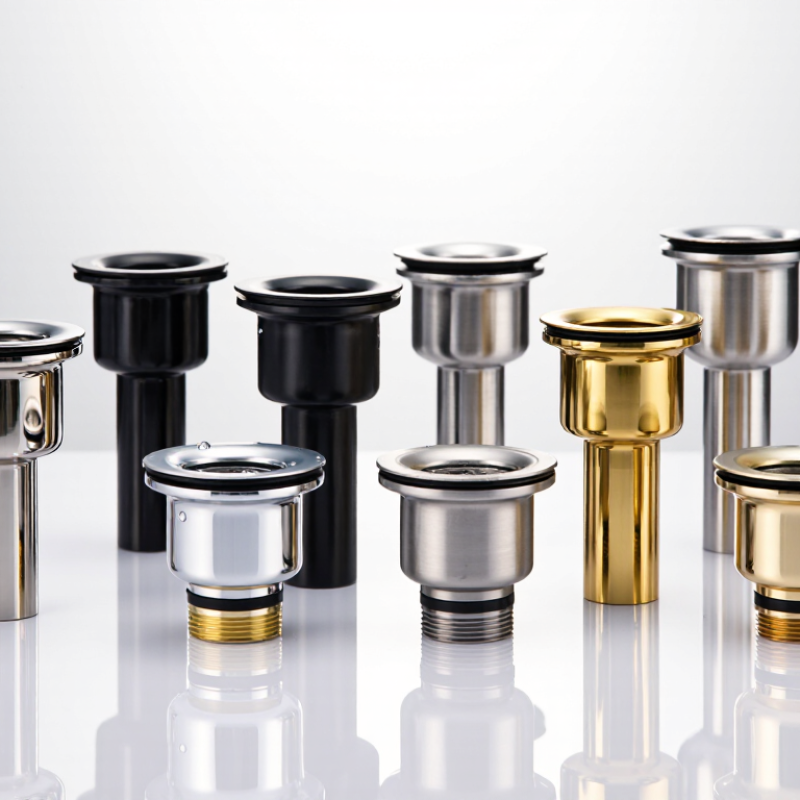
Drain trim sets are the visible finishing parts around a sink, bathtub, or shower drain. They usually include the flange, stopper, overflow cover, gasket, and connecting hardware. These small components control water release, protect surrounding surfaces, and complete the bathroom’s visual design. They are not merely decorative.
The U.S. Environmental Protection Agency reports that household leaks can waste nearly one trillion gallons of water annually. A poorly fitted drain trim set can contribute to hidden moisture damage, even when the leak appears minor. The WHO and UNICEF Joint Monitoring Programme also reported in 2023 that 2.2 billion people lacked safely managed drinking water. Efficient installation matters.
Manufacturer selection therefore affects more than appearance. Professional buyers should check material composition, gasket quality, thread accuracy, corrosion testing, and compatibility with local waste fittings. Stainless steel, brass, and coated alloys can perform differently in humid bathrooms. Ask for test records and installation tolerances. Do not trust polished surfaces alone.
Field installers often notice the real weakness later: a thin washer, unclear instructions, or unavailable replacement parts. That detail can delay an entire project. A reliable manufacturer should provide traceable batches, dimensional drawings, and consistent packaging for international shipping. Regional standards also deserve attention, because a visually identical set may not fit the same pipe system. I have seen specifications look complete, yet omit long-term finish testing. That is an uncomfortable gap. Test it.
10 Best Drain Trim Set Manufacturers for Global Buyers
Drain trim sets typically include visible and functional components such as grates, strainers, flanges, seals, and fastening hardware. For global buyers, manufacturer selection should focus on product quality, material performance, dimensional compatibility, compliance, delivery capability, and after-sales support.
The chart presents a practical, normalized buyer-evaluation model. Product quality and material durability receive the highest weights because drain trim sets operate in wet environments and must maintain reliable fit, drainage, and corrosion resistance over time. The scores are evaluation priorities rather than performance claims about any specific company or brand.
Key Criteria for Evaluating Global Drain Trim Set Manufacturers
Selecting a drain trim set manufacturer requires more than comparing polished catalogs and quoted unit prices.
On real projects, fit, finish, and delivery discipline often decide whether installation stays on schedule.
Start with material evidence. Request stainless steel grades, plating details, coating thickness, and test reports for corrosion and surface durability. Samples should match production parts, including threads, seals, and visible edges. A beautiful sample is not enough. Ask how dimensions are controlled during mass production.
Evaluate the manufacturer’s engineering depth through drawings, tolerances, drainage performance data, and installation guidance. Reliable suppliers should explain compatibility with different pipe sizes, floor structures, and maintenance conditions. Their quality system should include incoming material checks, in-process inspections, final testing, and batch traceability. Independent certifications can strengthen confidence, but certificates require verification. Some documents look impressive while offering little practical protection.
Supply reliability matters just as much. Review production capacity, tooling ownership, minimum order quantities, lead times, packaging methods, and replacement-part availability. Visit the factory when possible, or request dated inspection videos and recent quality records. Communication speed also reveals operational maturity. A supplier that avoids technical questions may create expensive delays later.
No manufacturer is flawless, including carefully audited ones. Small defects can still appear after shipping, so agree on inspection standards, corrective-action procedures, and response times before ordering. Procurement teams should record these details in writing, not rely on friendly conversations.
Top Drain Trim Set Manufacturers by Product Range and Market Strength
The ten strongest drain trim set manufacturers serve different purchasing priorities. Some focus on complete bathroom ranges, including waste outlets, overflow covers, grates, and matching accessories. Others produce narrow but highly refined lines for hotels, apartments, or plumbing distributors. Product range matters because buyers often need one finish across several fixtures.
Manufacturers with broad catalogs usually offer polished stainless steel, brass, matte black, brushed nickel, and custom finishes. Their stronger facilities provide drawing support, sample approval, batch testing, and stable packaging. Regional specialists may compete through faster lead times and flexible minimum order quantities. That distinction matters. A wide catalog is less useful when replacement parts are difficult to identify.
Market strength also depends on production consistency, export experience, and after-sales communication. Look for thread accuracy, clean edges, secure seals, and protective film that survives long transport. Ask for inspection records, material declarations, and photographs from final assembly. Practical experience shows that attractive samples can hide uneven plating or weak threads. No ranking is perfect. A manufacturer serving large projects may not suit a smaller importer. Buyers should compare warranty terms, tooling ownership, capacity during peak seasons, and response speed before approving a supplier. Details matter.
Comparing Materials, Standards, Customization, and Production Capacity
For global buyers, drain trim set manufacturers should be compared beyond surface appearance. Stainless steel grades such as 304 and 316 offer different corrosion resistance, while brass provides weight and machining flexibility. ABS and engineered plastics can reduce cost, but heat and chemical exposure require careful testing. The 2024 Plumbing Fixtures Market report by Fortune Business Insights estimates the sector at about USD 89 billion in 2024, with continued growth through 2032. That growth increases supplier choices, but not necessarily supplier quality.
Standards reveal production discipline. Buyers should check ASTM A240 documentation for stainless steel, ASME A112.18.2 or CSA B125.2 compliance for waste fittings, and EN 1253 suitability for floor drains. ISO 9001 certification helps, although it does not replace product inspection. Ask for salt-spray results, leak tests, coating thickness, batch traceability, and verified dimensional drawings. Small details matter.
Customization may include grate patterns, finishes, thread sizes, packaging, and private tooling. Confirm mold ownership before paying for development. Production capacity should be measured through monthly output, machine availability, inspection staffing, and realistic lead times. A factory claiming 100,000 sets monthly may still struggle with mixed finishes or small batches. I have seen polished samples conceal weak welds and inconsistent plating. That risk deserves attention. A third-party pre-shipment inspection remains useful, especially for first orders. Research and Markets also identifies customization and renovation demand as important plumbing-fixture growth factors, but forecasts can change. Treat them as planning signals, not guarantees.
How Global Buyers Can Select and Verify the Right Manufacturer
Selecting a drain trim set manufacturer requires more than comparing catalog photos and low prices. Global buyers should review material grades, surface finishes, drainage performance, and dimensional tolerances. Ask for technical drawings before requesting a quotation. A reliable supplier should explain how stainless steel, brass, or other approved materials are tested and traced. Look closely.
Request production samples with the same finish, packaging, and fittings used in bulk orders. Check threads, seals, welds, coating consistency, and installation clearance. A sample can look excellent while mass production varies. Independent testing may verify corrosion resistance, load performance, and water flow. Confirm the testing method, laboratory details, and report date. Do not accept vague certificates.
Manufacturer verification should include a documented factory audit, worker capacity, quality-control records, and export experience. A live video inspection can reveal storage conditions, inspection stations, and actual equipment. However, a polished factory tour proves little by itself. Buyers should contact recent customers and compare delivery records with contractual promises. I would also place a small trial order before committing to yearly volumes. That step costs time, but it exposes weak communication, unstable finishes, or poor carton protection. Keep written approval samples, inspection criteria, and corrective-action procedures. Even experienced purchasing teams can overlook packaging damage during busy seasons. Reflection matters: the cheapest offer may become expensive after rework, delays, and customer complaints.