What Is the Best Countertop Socket for Global Buyers?
Choosing the best Countertop Socket for global buyers involves more than comparing prices and finishes. A reliable model must suit local voltage, frequency, plug types, and installation practices. It should also provide safe grounding, durable materials, and clear technical documentation. Small details matter. A loose cover, weak spring, or shallow mounting box can create daily frustration. In kitchens, moisture resistance and easy cleaning deserve close attention. In offices, charging access and cable management may matter more.
Experienced buyers often request product drawings, wiring diagrams, material specifications, and test reports before placing an order. Certifications should come from recognized testing bodies, not unclear marketing claims. Compliance requirements vary between countries, so one socket cannot automatically fit every market. That assumption fails. Buyers should confirm dimensions, cutout size, child-safety features, overload protection, and compatible plugs with qualified installers. The countertop thickness also affects stability. A beautiful socket may still perform poorly if its clamp cannot hold the surface securely.
There is no perfect universal choice. Some retractable models save space but may collect dust inside. Pop-up designs look refined, yet their mechanisms need careful maintenance. USB charging ports add convenience, but their output should match modern devices. Real-world testing remains valuable. Try opening the socket with one hand, wiping it after cooking, and checking whether cables bend sharply. These practical observations often reveal more than photographs. A trustworthy supplier should answer technical questions clearly and admit product limitations. That honesty helps global buyers select a Countertop Socket that is safe, practical, and suitable for its intended environment.
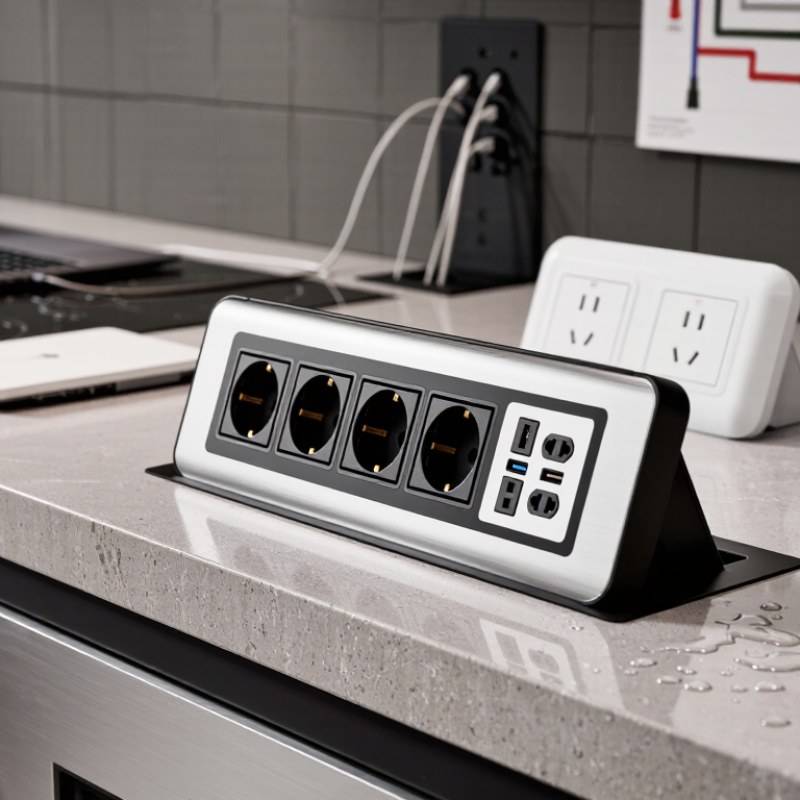
What Is a Countertop Socket and How Does It Work?
What Is a Countertop Socket and How Does It Work?
A countertop socket is a built-in electrical outlet installed into a kitchen island, worktop, or office counter. It brings power closer to appliances without leaving cords across the floor. Most models use a circular or rectangular cutout, a housing, internal wiring, and a protective cover. Some units rise from the surface. Others fold, slide, or remain flush with the counter.
The mechanism is simple. Pressing a switch releases the socket, or a motor lifts it vertically. Spring-loaded contacts and insulated terminals deliver electricity to connected devices. When unused, the cover helps reduce exposure to dust and accidental spills. However, it is not waterproof by default. A wet countertop can still create a serious hazard.
Global buyers should check voltage, frequency, plug configuration, grounding, and local installation rules. A socket designed for one market may not fit another wiring system. Look for clearly rated materials, overload protection, and heat-resistant construction. Installation should leave enough space below the counter for cables and ventilation. Tight cabinets often cause stress on connectors.
USB charging can be convenient. It can also increase heat inside a compact housing. This detail is easy to overlook. I would not choose a unit by appearance alone. The cover may look strong, while the internal terminals remain poorly protected. A qualified electrician should verify compatibility before installation, especially near sinks or cooking areas.
How Should Buyers Compare Installation, Materials, and Durability?
What Is the Best Countertop Socket for Global Buyers?
How Should Buyers Compare Installation, Materials, and Durability?
A countertop socket should match the installation environment, not just the kitchen design. Flush-mounted units need accurate cutting, protected cable routing, and enough space below the worktop. Pop-up models need a stable seal around the opening. Surface-mounted units install faster, but they may collect grease and moisture around their edges. For international projects, check voltage, frequency, plug configuration, and local electrical approval. IEC 60884-1 provides a useful reference for household socket-outlet safety, while local wiring rules remain decisive.
Material selection affects service life. Look for heat-resistant, flame-retardant housing and corrosion-resistant metal contacts. Stainless steel or treated aluminum usually handles cleaning better than ordinary plated metal. However, metal does not guarantee durability. Internal spring strength, terminal quality, and cable strain relief matter more than appearance. IEC 60529 defines IP protection ratings, but an IP rating alone does not make a socket suitable beside a sink. NFPA’s Home Structure Fires report identifies electrical distribution and lighting equipment in roughly one quarter of reported home fires. That figure deserves attention. I would not treat decorative testing claims as proof of long-term reliability.
Tips: Ask for test reports, rated cycles, wiring diagrams, and replacement-part availability. Confirm RCD or GFCI protection with a qualified electrician. Inspect the hinge, gasket, and socket alignment physically. A cheaper unit may win the quotation, then lose during installation.
What Makes a Countertop Socket the Best Choice for Each Market?
For global buyers, the best countertop socket is not the most feature-packed model. It is the one that fits local use. Market needs vary with voltage, frequency, plug standards, and kitchen habits. A socket for a European apartment may not suit a commercial workspace in Southeast Asia. Fit comes first.
Experienced installers usually check the cutout size before reviewing extra functions. They also inspect cable access, grounding, heat resistance, and moisture protection. A low-profile design can look elegant, but shallow cabinets may limit installation. Retractable sockets save space, while fixed units often provide stronger daily stability. Details matter. USB-C charging can help in offices, although it should not replace dependable power outlets.
Each market also expects different evidence of quality. Buyers should request clear technical drawings, electrical ratings, material information, and test documentation. Local certification requirements deserve careful checking before shipment. These details reduce installation delays and support safer purchasing decisions. I have seen attractive products fail during evaluation because their plug configuration was unsuitable. A universal design sounds efficient, but it can create compromises. Sometimes, one adjustable feature adds complexity without improving real usability. Buyers should compare cleaning needs, replacement access, warranty terms, and installer feedback. The best choice may be less stylish, yet easier to service after years of daily use.
What Is the Best Countertop Socket for Global Buyers?
The best countertop socket depends on the local electrical system. This chart compares typical residential mains voltage across major buyer markets, helping manufacturers select the correct voltage rating, plug configuration, and safety certification before sourcing.
Key takeaway: North America commonly uses 120 V, Japan uses 100 V, while most European, Asian, African, and Australian markets use approximately 220–240 V. A globally suitable countertop socket should match the destination market’s voltage, frequency, plug standard, grounding system, and local certification requirements.
