Choosing a dependable supplier for Black Rectangular Hollow Section involves more than comparing prices. The right choice can affect fit-up, coating preparation, transport, and the finished structure. This guide introduces ten suppliers and the practical details buyers can compare before requesting a quotation. Details matter.
Product descriptions may use different terms for finish, grade, and dimensional tolerance. Confirm whether “black” refers to an untreated steel surface, and check the listed wall thickness, outside dimensions, and available lengths. Ask for current product data and material documentation, especially when a project has defined technical requirements. A clear answer is useful; a vague one deserves follow-up.
The comparison considers factors such as product range, manufacturing or distribution capabilities, service coverage, and support for custom orders. It also highlights questions worth asking about stock availability, cutting, bundling, and delivery schedules. These details become concrete when a delivery arrives: bundle labels, straight lengths, and consistent dimensions can save time on site. Supplier information changes, and published claims may not cover every location or order size. No list can replace a direct technical review. Use the profiles as a starting point, verify specifications with each company, and compare quotations on the same basis. That extra check may feel slow, but it can prevent costly assumptions.
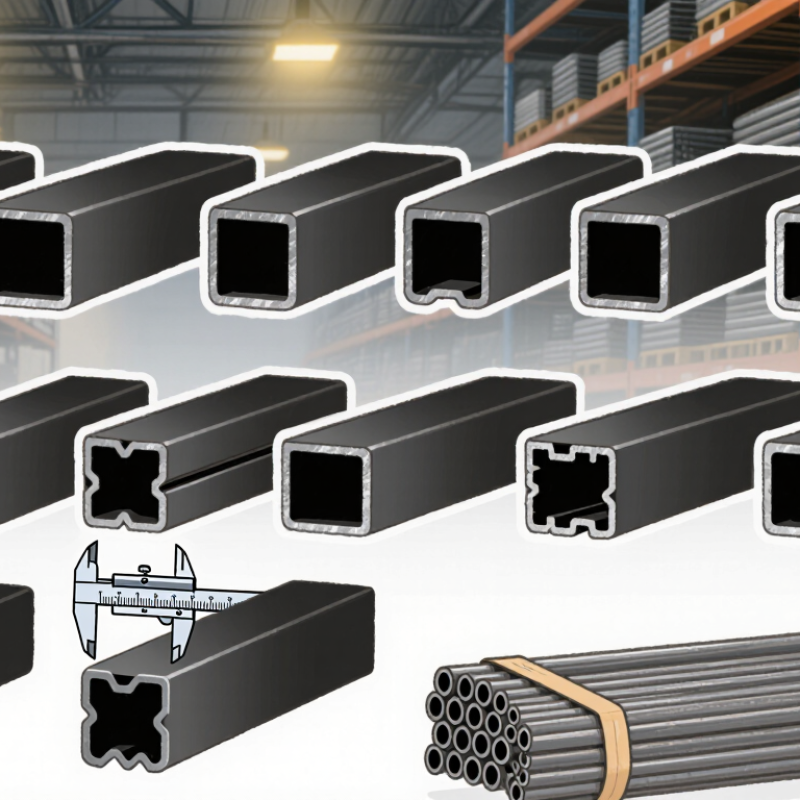
Black rectangular hollow sections, often called RHS, are steel tubes with a rectangular cross-section and a dark mill-finished surface. Their hollow center reduces weight compared with solid steel, while the flat faces simplify joining and mounting. They are available in different widths, heights, wall thicknesses, and lengths. The black finish is not necessarily a durable protective coating. It is not paint. The surface may show scale, scratches, or early rust if stored outdoors.
RHS is used in frames, gates, handrails, equipment supports, and building components. Its shape offers useful bending resistance, but performance depends on dimensions, steel grade, load, and connection details. A thin-walled section may dent or buckle under concentrated force. Designers typically check span, support conditions, welds, and corrosion exposure before specifying a section. For visible outdoor work, surface preparation and a suitable coating matter. Small details can become expensive later.
Tips: Compare actual wall thickness, not just outside dimensions. Check straightness and cut-end condition on delivery. Keep sections dry and raised off the ground. Check the edges. If the load is structural, confirm calculations with a qualified professional. The finish may look uniform at first, yet vary between batches.
Black rectangular hollow sections (RHS) are hollow carbon-steel profiles supplied without a protective coating. They are used in frames, supports, gates and general fabrication. Section availability varies by standard and supplier.
About the chart: The bars show indicative theoretical mass per metre for representative RHS sizes. Estimates use a steel density of 7,850 kg/m³ and a simplified sharp-corner geometry; actual section mass can differ because of rounded corners and manufacturing tolerances. Check the supplier’s section tables for product data, and use verified properties for structural design.
A reliable black rectangular hollow section supplier should provide traceable material records, consistent dimensions, and clear production details. The World Steel Association’s World Steel in Figures 2024 reports global crude steel production of 1,892.4 million tonnes in 2023. That scale makes supplier capacity worth checking, but volume alone says little about a section’s quality.
Ask for mill test certificates showing grade, chemistry, and mechanical properties, then compare them with the specified standard, such as ASTM A500/A500M where applicable. Check outside dimensions, wall thickness, straightness, and corner radii against the order. Small deviations can complicate a close-fitting frame. Request sample inspection results, too. Numbers help.
Confirm that “black” means the finish you expect, typically an uncoated, dark mill surface, and ask how products are stored to limit rust and handling damage. Review lead times, stock lengths, cut-to-size options, and packaging; inspect a delivered bundle for crushed corners or water staining. A polished certificate can still leave gaps. I would verify a few details by measuring a sample myself, even when the paperwork looks complete. Supplier comparisons should weigh documented quality and dependable delivery, not just the lowest quoted price.
A useful comparison of ten suppliers should examine stock range, traceability, cutting services, and delivery reliability—not just price. The World Steel Association’s World Steel in Figures 2025 reports 1,882.6 million tonnes of crude steel production in 2024, showing the scale of the market, but not the quality of any individual supplier. Request product-specific mill certificates and confirm section dimensions, wall thickness, and coating condition before ordering.
The ten profiles can represent distinct strengths: mill-direct supply for large orders; regional stockholding for quick collection; broad-size inventories; small-batch sales; precision cutting; project scheduling; export packing; documented material testing; consistent replenishment; and responsive technical support. A supplier with black RHS on the rack may still need to verify batch traceability or tolerances. Details matter.
Tips: Ask for a recent certificate and inspect cut ends for burrs, dents, and coating damage. Compare delivered cost, not only the quoted price. One more check. Confirm that the stated steel grade and dimensions match your drawings.
Black rectangular hollow section suppliers can look similar online, but their stock lists may differ considerably. Compare available widths, wall thicknesses, lengths, and grades against your drawings. Some suppliers offer standard six-metre lengths; others can provide cut pieces or less common sizes. Ask whether the black surface is mill finish or includes an added coating. It matters. A finish that looks uniform in a sample may not suit exposed, damp conditions without further protection.
Quality claims deserve a closer look. Request the applicable material standard, dimensional tolerances, and inspection documents for the specific batch. Check that certificates identify the grade and heat or batch number, rather than describing products in general terms. I would not treat a polished certificate pack as proof by itself; the details need to match the delivered section. Suppliers should also explain how they handle out-of-tolerance dimensions or damaged material. Their answer can reveal more than a broad quality statement.
Delivery comparisons should include lead time, minimum order quantities, cutting charges, and transport limits. Ask how sections are bundled and protected, especially if clean edges matter for fabrication. Small details matter. A low quoted price may not include unloading, short-length cutting, or a realistic delivery window. Confirm stock before scheduling workshop labor, since online availability can lag behind actual inventory.
This comparison describes ten common supplier types rather than named companies. Product availability, certification, stock, and delivery terms vary by supplier and location; confirm them against the quotation and order documentation.
| Supplier Type | Typical Product Range | Quality Standards and Checks | Documentation to Request | Delivery Services | Best Suited For |
|---|---|---|---|---|---|
| Regional steel stockholder | Common black, uncoated RHS sizes and wall thicknesses; stock selection depends on the local market. | Ask whether the material is specified to EN 10219, EN 10210, or another applicable standard. Check section dimensions and wall thickness against the order. | Material test certificate, grade, standard, heat or batch identification, and delivery note. | Local collection, scheduled truck delivery, and sometimes cut-to-length service; confirm stock before ordering. | Routine maintenance and general fabrication orders. |
| Structural steel distributor | Structural hollow sections alongside beams, channels, plates, and related steel products; sizes may be order-dependent. | Can supply sections to structural product specifications when requested. Verify the required grade, standard, and certificate for each item. | Product specification, inspection or test certificate where available, and traceability details. | Consolidated deliveries of multiple steel products; offloading arrangements should be agreed in advance. | Projects sourcing RHS together with other structural steel. |
| Hollow-section manufacturer | Manufactured hollow sections in a range of dimensions, grades, and wall thicknesses, subject to production capability and minimum quantities. | Confirm whether products are cold-formed to EN 10219 or hot-finished to EN 10210, as specified. Request documented dimensional and mechanical-property checks. | Mill test certificate, product standard, grade, batch or heat references, and applicable inspection records. | Production scheduling and mill dispatch; lead time depends on specification, quantity, and current capacity. | Large orders or projects with defined technical requirements. |
| Steel tube mill or producer | Welded structural tubing, potentially including rectangular sections in selected sizes and grades. | Check the product standard and manufacturing route stated on the certificate; confirm that the specification matches the intended structural use. | Certificate identifying the standard, grade, dimensions, and production batch; request inspection documentation when required. | Typically arranged by production batch or palletized load; transport and unloading details are quote-specific. | Repeat purchasing or requirements aligned with mill production runs. |
| Import and export steel wholesaler | Imported black RHS from multiple production sources; available sizes and grades vary by shipment. | Check the stated standard, country of origin, certificate issuer, and traceability. Do not assume equivalent grades are interchangeable. | Mill test certificate, origin information, packing list, and any conformity documents required by the destination market. | May offer port, warehouse, or onward delivery; customs, duties, and transit time depend on the trade route. | Buyers comparing international supply options or purchasing larger consignments. |
| Online metals supplier | Listed RHS sizes for online ordering, often with quantity limits and location-dependent availability. | Review the product listing and request confirmation of grade, standard, and whether the finish is uncoated black steel. | Order-specific specification and material certificate availability should be confirmed before purchase. | Online checkout may include shipment tracking or delivery options; lengths and access restrictions can affect service. | Small or standard-size orders where convenient ordering is important. |
| Fabrication-focused steel supplier | RHS selected for fabrication work, with possible cutting, drilling, or preparation services. | Confirm dimensions, grade, and standard before processing. Ask how cut lengths are measured and whether tolerances are stated. | Material certificate on request, cut list, and processing details linked to the supplied material. | Can coordinate prepared lengths with delivery; processing time is additional to material availability. | Workshops seeking material prepared for fabrication. |
| Project procurement supplier | Sources RHS across a specified bill of materials; may combine several sizes, grades, or supply origins. | Quality depends on the selected source. Require written approval of the standard, grade, certificates, and substitution rules. | Submittal pack, certificates, traceability schedule, and inspection documents as required by the project. | May coordinate phased or site deliveries; programme, packaging, and unloading requirements need agreement. | Construction projects with documented procurement and delivery schedules. |
| Value-added steel processor | Black RHS supplied with services such as cutting, bundling, or other agreed processing; capability varies by facility. | Check that processing does not alter the required specification and that identification is retained where traceability is needed. | Material certificate, processing record, and item or bundle identification where agreed. | Processed goods can be delivered as bundles or specified lengths; lead time depends on service workload. | Buyers needing fewer in-house cutting or handling operations. |
| Local steel service centre | Locally held steel products, potentially including commonly requested black rectangular sections and cut lengths. | Availability of standards and grades varies. Verify the exact specification and certificate before relying on the material for a design requirement. | Written grade and standard confirmation, material certificate if available, and batch details for traceability. | Local collection or short-distance delivery may be available; confirm vehicle access and unloading arrangements. | Urgent local requirements and smaller orders where nearby stock is available. |
Important: “Black” generally refers to an uncoated steel surface, not a specific grade or performance standard. Before ordering, specify the required dimensions, wall thickness, grade, product standard, finish, certificate requirements, quantity, and delivery location.
Selecting a supplier for black rectangular hollow sections begins with the actual job, not the lowest price. Share the required outside dimensions, wall thickness, lengths, quantity, and intended use. A section supporting a canopy may need different checks from one used for a visible frame. Be specific.
Ask how the supplier verifies dimensions and material grade, and request relevant inspection documents with the quotation. Confirm whether “black” means an uncoated, mill-finish surface; assumptions here can cause trouble after delivery. Check stock availability, cutting services, bundle sizes, and transport arrangements. A delivery that arrives late or in awkward lengths can disrupt fabrication. Small details matter.
Compare quotations line by line. Look for tolerances, packing, lead time, and how shortages or damaged sections are handled. If the project is critical, consider inspecting a sample or a recent batch before placing a large order. Measure the corners and wall thickness with suitable tools, and check for visible dents, rust, or inconsistent lengths. Clear communication is useful. It is not a guarantee. I would also ask who answers technical questions after the order is placed; this point is easy to overlook, and I have seen it treated as an afterthought. The best fit is a supplier whose documentation and delivery plan match your site’s real constraints.
By continuing to browse or by clicking “Accept All Cookies,” you agree to the storing of first- and third-party cookies on your device to enhance site navigation, analyze site usage, and assist in our marketing efforts. View our Privacy and Cookie Policy.