7 Best Zinc Oxide Arresters for Global Buyers
Choosing the right Zinc Oxide Arrester is a technical decision, not a simple catalog comparison. Global buyers must examine voltage rating, maximum continuous operating voltage, residual voltage, energy capability, and enclosure quality. Installation altitude, salt pollution, humidity, and lightning exposure can change the real performance.
Dr. Wolfgang Hauschild, a recognized high-voltage testing specialist, offers a useful principle: “Reliable protection begins with verified test conditions, not attractive specifications.” That reminder matters when comparing seven leading arrester options. A device may look impressive on paper, yet fail to suit a 132 kV substation, a coastal transformer yard, or a compact industrial panel. Small details matter.
This guide evaluates the 7 Best Zinc Oxide Arresters for Global Buyers through practical purchasing criteria. It considers electrical performance, thermal stability, sealing, mechanical strength, standards alignment, supplier documentation, and long-term service support. IEC 60099-4 test evidence deserves close attention. So do routine inspection records and declared manufacturing tolerances.
There is no universal winner. It depends.
A buyer in a dry inland grid may prioritize energy absorption and price. A coastal utility may need stronger housing and pollution resistance. A project engineer may value fast delivery, traceability, and replacement support more than a marginally lower quote. That judgment can be imperfect. Product pages often omit field aging data, and buyers may accept unclear claims too quickly. The following selection aims to make those weaknesses visible, helping procurement teams compare protection quality with greater confidence.
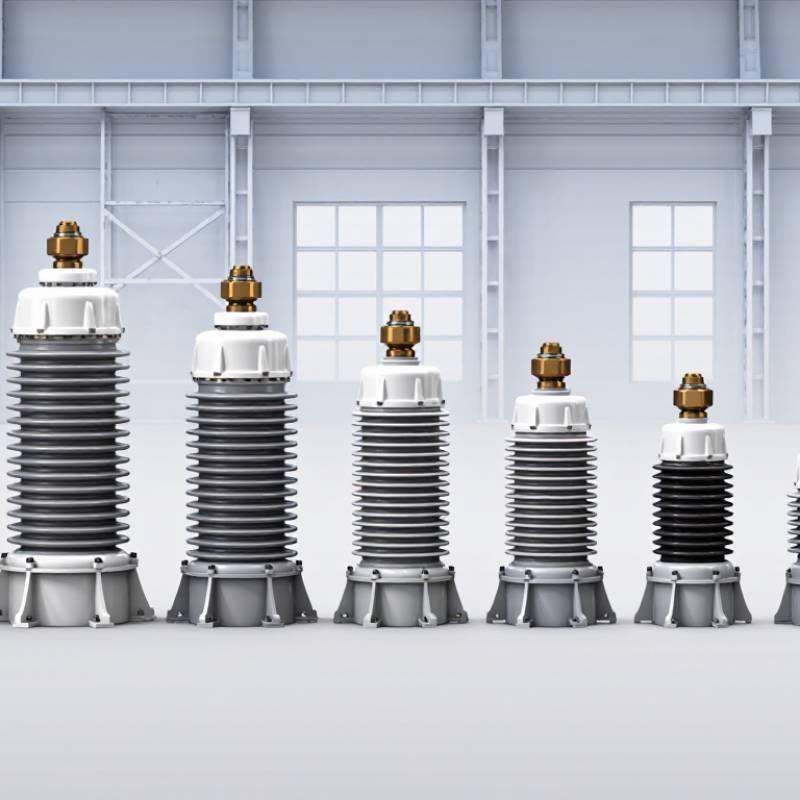
What Zinc Oxide Arresters Are and How They Protect Electrical Systems
Zinc oxide arresters protect electrical systems by diverting transient overvoltage to earth. Their zinc oxide blocks behave like high resistance during normal operation. When lightning or switching surges arrive, resistance falls sharply within microseconds. The surge current travels through the arrester, not through fragile transformer insulation. The danger is brief, but severe.
IEC 60099-4 defines testing for metal-oxide surge arresters, including the standard 8/20 microsecond discharge-current waveform. IEEE Std C62.11 also evaluates protective characteristics, energy capability, and temporary overvoltage performance. These tests help buyers compare residual voltage, rated voltage, and continuous operating voltage. A practical selection begins with the system’s highest continuous voltage, grounding method, fault duration, and expected lightning exposure. A poorly matched arrester may conduct continuously. That creates heat, ageing, and eventual failure.
Field inspection adds another layer of reliability. Look for cracked housings, contamination marks, loose earth connections, and unusual leakage-current readings. IEC testing cannot reproduce every coastal, industrial, or high-altitude condition. This limitation matters. CIGRE guidance on insulation coordination stresses that surge protection must work with transformer insulation levels, cable lengths, and grounding design. Buyers should request routine-test records, impulse-test results, thermal-stability data, and documented manufacturing traceability. The cheapest unit is not automatically economical. A failed arrester can leave a dark substation, damaged equipment, and difficult evidence after the event.
Key Features to Compare When Choosing a Zinc Oxide Arrester
7 Best Zinc Oxide Arresters for Global Buyers
When comparing zinc oxide arresters, begin with continuous operating voltage and rated voltage. These values must match the system’s actual voltage, grounding method, and temporary overvoltage conditions. A mismatch can cause early failure. Check the maximum discharge current, too. Higher capacity may suit exposed substations, but it can increase size and cost.
Energy-handling capability deserves close attention. Review the arrester’s residual voltage at the expected current, not only its catalog headline. Lower residual voltage generally provides stronger insulation protection. Examine housing material, creepage distance, sealing quality, and pollution resistance. In coastal or industrial areas, surface leakage can become a serious concern. Mechanical strength also matters during transport and installation. Some products look robust but lack clear test evidence.
Tips: Ask for routine and type-test reports, temperature limits, pressure-relief performance, and installation drawings. Confirm terminal sizes and mounting dimensions before ordering. Request traceable factory records. Small details prevent expensive delays. Do not rely on price alone. In my experience, delivery support and replacement availability often influence total value more than the initial quotation. However, field conditions vary, and a standard selection may still require review by a qualified electrical engineer. Check applicable IEC requirements and local grid specifications before approval.
7 Zinc Oxide Arrester Classes for Global Buyers
Comparison of maximum continuous operating voltage (MCOV) and typical residual voltage at a 10 kA discharge current across common IEC voltage classes.
Lower residual voltage generally indicates stronger overvoltage protection, while the MCOV must be selected above the system’s maximum continuous line-to-ground voltage. Values shown are representative engineering benchmarks for standard zinc oxide arrester classes; buyers should confirm the exact Uc, Ur, discharge class, energy capability, creepage distance, and housing requirements in the manufacturer’s datasheet.
Seven Leading Zinc Oxide Arrester Options for Global Buyers
For global buyers, seven leading zinc oxide arrester options cover different voltage levels, installation spaces, and environmental demands. Station-class arresters suit substations facing high-energy surges. Intermediate-class models fit medium-voltage networks. Distribution-class units protect transformers, feeders, and service equipment. The correct choice depends on system voltage, grounding, and expected fault current.
Polymer-housed arresters offer lighter weight and strong resistance to moisture and impact. Porcelain-housed designs remain useful where mechanical stability and familiar maintenance practices matter.
Line-discharge-class arresters can support overhead lines exposed to lightning activity. Compact elbow or dead-front arresters suit enclosed switchgear, where clearance is limited. They need careful interface matching.
During practical selection, I check continuous operating voltage, rated voltage, discharge current, pressure relief, and creepage distance. A larger energy rating is not automatically better. It may create unnecessary cost or installation difficulties. Field inspections often reveal damaged seals, loose terminals, or poor grounding rather than failed zinc oxide blocks. Small details matter.
Regional climate also changes the decision. Coastal salt, desert dust, tropical rain, and freezing temperatures affect housing performance. Request type-test records, routine-test data, drawings, and traceable quality documents. Ask whether the arrester has been evaluated under the intended duty cycle. A catalog can look convincing. Site conditions may disagree.
How to Match Arrester Ratings With Voltage and Operating Conditions
7 Best Zinc Oxide Arresters for Global Buyers
Matching arrester ratings begins with the system voltage, not the product catalogue. Record the highest continuous line-to-ground voltage at the installation point. Then check temporary overvoltage during faults, load rejection, and transformer energisation. IEC 60099-4 separates continuous operating voltage, rated voltage, residual voltage, and energy capability. Confusing these values can leave an arrester overstressed before a surge arrives.
Use the 8/20 μs current impulse as a practical comparison point. IEEE C62.11 defines this waveform for evaluating metal-oxide surge arresters, while the 4/10 μs impulse tests severe short-duration discharge duty. CIGRE Technical Brochure 549 also stresses that energy absorption depends on system conditions, not only the advertised discharge-current class. A 10 kA arrester may therefore be unsuitable where repeated switching surges or long cable sections increase thermal stress. Small detail. Big consequence.
For grounded medium-voltage networks, engineers commonly select Uc above the expected continuous phase-to-earth voltage, then verify fault duration and neutral grounding. In a 24 kV system, for example, measure the actual maximum operating voltage instead of assuming a nominal value. Review residual voltage against transformer insulation levels and local lightning exposure. My own caution is simple: catalogue tables rarely show every site variable. Soil resistance, altitude, pollution, and cable length deserve a separate check. A neat spreadsheet is not enough.
7 Best Zinc Oxide Arresters for Global Buyers - How to Match Arrester Ratings With Voltage and Operating Conditions
| No. | Recommended Arrester Configuration | Typical System Voltage | Rated Voltage
(Ur) | Maximum Continuous
Operating Voltage (Uc) | Nominal Discharge
Current | Housing / Installation | Typical Operating Conditions | Voltage-Matching Guidance |
| 1 | Low-voltage distribution ZnO arrester | 230/400 V | 0.28 kV | 0.22 kV | 5 kA, 8/20 μs | Polymer, service entrance or panel | Indoor or outdoor; ordinary pollution; continuous load current below 100 A per protected circuit | Use a device with Uc above the highest continuous line-to-earth voltage. Coordinate upstream short-circuit protection and installation lead length. |
| 2 | Medium-voltage feeder arrester | 3.3 kV | 3.0 kV | 2.4 kV | 10 kA, 8/20 μs | Silicone-rubber polymer, outdoor line or transformer side | Effectively grounded 3-phase network; moderate lightning exposure; normal altitude | The 2.4 kV Uc is suitable only where temporary overvoltage studies confirm that earth-fault and switching TOV remain below the arrester capability. |
| 3 | Industrial 6.6 kV network arrester | 6.6 kV | 6.0 kV | 4.8 kV | 10 kA, 8/20 μs | Polymer or porcelain, switchgear or motor feeder | Industrial switching surges; frequent motor starting; indoor metal-enclosed switchgear | Check repetitive switching transients and cable charging. A higher Uc may be necessary on resistance-grounded or ungrounded systems. |
| 4 | 12 kV distribution-line arrester | 12.47 kV | 10 kV | 8.4 kV | 10 kA, 8/20 μs | Polymer, riser-pole or transformer protection | Overhead distribution; high lightning density; line-to-earth installation at the equipment terminals | Maintain the shortest possible connection to earth. Verify that the selected Uc tolerates the system’s earth-fault duration and grounding method. |
| 5 | 69 kV substation arrester | 69 kV | 60 kV | 48 kV | 10 kA, 8/20 μs | Porcelain or polymer, station-class outdoor | Outdoor substation; transformer and bus protection; high-energy switching duty | Select protective levels below the transformer insulation coordination withstand. Confirm energy rating, pressure-relief performance and creepage distance. |
| 6 | 138 kV transmission-substation arrester | 138 kV | 120 kV | 96 kV | 10 kA, 8/20 μs | Station-class polymer or porcelain | High-voltage outdoor yard; transformer terminals, line entrances and cable transitions | Coordinate residual voltage at the specified discharge current with the protected equipment’s BIL/LIWL. Include switching-surge energy in the duty assessment. |
| 7 | 345 kV extra-high-voltage line arrester | 345 kV | 288 kV | 230 kV | 20 kA, 8/20 μs | Station-class polymer, multi-column outdoor assembly | Extra-high-voltage transmission; long lines; severe switching-surge and lightning exposure | Use a system study to determine Uc, temporary overvoltage withstand, energy capability and separation distance. Verify altitude correction, pollution creepage and mechanical loading. |
Technical note: Ur and Uc values shown are representative selection points for effectively grounded systems. Final arrester selection must be checked against the actual grounding method, temporary overvoltages, insulation coordination, lightning current, switching energy, altitude, pollution level and applicable requirements of IEC 60099-4 or IEEE C62.11.
Global Buying, Certification, Installation, and Maintenance Considerations
7 Best Zinc Oxide Arresters for Global Buyers
Global buyers should assess zinc oxide arresters by system voltage, maximum continuous operating voltage, and discharge class. A suitable arrester must match local grid conditions, not only catalogue ratings. Check IEC 60099-4 test evidence, routine test records, and factory quality documents. Some markets also require national approvals or utility-specific acceptance. Certification wording can be confusing. Verify every document with the manufacturer and an independent inspection body.
Installation quality strongly affects protection performance. Keep connection leads short and straight, with secure grounding to reduce residual voltage. Confirm phase-to-ground clearances, pollution exposure, altitude, and expected lightning activity before approval. Moisture seals deserve close attention, especially in coastal or tropical locations. Field teams often find loose earth connections during commissioning. That small defect can undermine an otherwise excellent arrester.
Tips: Photograph terminal connections before energizing. Record insulation resistance, leakage current, torque values, and installation dates. During maintenance, inspect cracks, discoloration, corrosion, and water ingress. Thermal imaging can reveal abnormal heating, but it should support electrical testing, not replace it. Recheck arresters after severe storms and compare readings with earlier records. A checklist helps, but it can still miss gradual deterioration. Train local technicians and keep replacement procedures clear for remote sites.