2026 Best Stainless Steel Fittings Manufacturers
Choosing the best stainless steel fittings manufacturers in 2026 takes more than comparing prices and delivery promises. A fitting must match the pressure, temperature, fluid, and installation conditions of its intended service. Small details matter. A missing material certificate or poorly finished sealing surface can turn an affordable purchase into costly maintenance. This guide examines manufacturers through practical criteria: material traceability, dimensional consistency, testing documentation, technical support, and realistic lead times. The goal is to help buyers compare evidence before committing to a supplier.
Fred A. Lennon, founder of fluid system component manufacturer Swagelok, expressed a principle relevant to this evaluation: “Make the best product possible to help customers succeed, and keep making it better.” For stainless steel fittings, that principle means checking what manufacturers can document, not simply what their catalogs promise. Buyers should request material certificates and confirm whether applicable specifications cover the actual product being purchased. Examples include ASTM A182 for forged components and ASME B16.11 for applicable forged socket-welding and threaded fittings. Standards have limits. Compliance with one specification does not establish suitability for every application, especially where chlorides, vibration, or repeated temperature changes are involved.
Even experienced buyers can give too much weight to brand recognition or an attractive sample. That judgment deserves another look. A sample reveals little about consistency across multiple production batches, and published capabilities may exceed a particular factory’s verified scope. Rather than declare one universal winner, this overview considers which manufacturers provide credible evidence for specific purchasing needs. Any 2026 shortlist should remain open to revision when documentation, service performance, or production conditions change.
Types and Applications of Stainless Steel Fittings
2026 Best Stainless Steel Fittings Manufacturers
Types and Applications of Stainless Steel Fittings
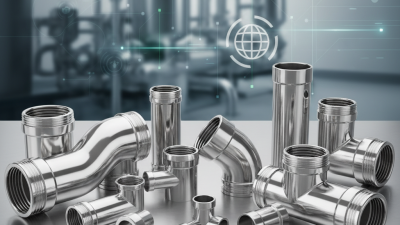
Stainless steel fittings redirect flow, connect pipe sections, and adapt line sizes. Elbows change direction. Tees create branches, while reducers connect different pipe diameters. According to worldstainless’ full-year 2024 production statistics, global stainless steel melt-shop output reached 62.6 million tonnes, up 7% from 2023. These figures describe overall stainless steel production, not the fittings market specifically. For buyers comparing manufacturers in 2026, application requirements deserve more attention than production scale.
Connection type matters. Butt-weld fittings suit permanent process piping, including chemical transfer lines, where sound welds help control leakage. Threaded fittings serve smaller utility connections, although exposed threads can complicate cleaning. Socket-weld fittings commonly serve small-bore industrial piping. Hygienic clamp fittings allow frequent disassembly in food and beverage processing. Grade 304L suits many mild environments; 316L offers improved resistance to chloride-related pitting because it contains molybdenum. However, 316L can still corrode in warm, chloride-rich service. Specifying it everywhere may waste money; choosing it without checking conditions can also disappoint.
Tips: Check dimensions, material certificates, surface requirements, and the pressure-temperature limits of the complete connection. ASME B16.9 covers factory-made wrought butt-welding fittings; ASME B16.11 addresses forged socket-welding and threaded fittings. For hygienic lines, request a measurable internal surface-finish requirement rather than accepting “food grade” alone. A polished exterior tells you little about internal crevices, weld quality, or cleanability.
Standards and Criteria for Evaluating Fittings Manufacturers
Evaluating stainless steel fittings manufacturers in 2026 requires evidence beyond polished catalogs and competitive prices. Start with the standards applicable to your fitting type and service conditions. Wrought butt-welding fittings commonly reference ASTM A403 for material requirements and ASME B16.9 for dimensions. Forged socket-weld and threaded fittings typically reference ASTM A182 and ASME B16.11, where applicable. Verify the details. Request material certificates showing heat numbers, chemical composition, and mechanical test results. Check whether those heat numbers match markings on actual fittings.
Manufacturing quality becomes clearer when you examine inspection records and sample components. Ask for dimensional reports covering wall thickness, end preparation, and alignment. For corrosion-sensitive applications, review grade selection, surface treatment, and contamination controls. A 316L designation alone does not establish suitability for every chloride-containing environment. Positive material identification can help verify alloy composition, but common handheld XRF instruments cannot confirm low carbon content. Carbon verification requires a suitable analytical method. Small gaps matter.
Supplier reliability also depends on how problems are handled after delivery. Request a documented example of a rejected batch, including root-cause analysis and corrective action. Review delivery records against promised dates, especially for unusual sizes. Certifications support evaluation, but their scope and validity still need checking. A clean audit can miss weaknesses, and a small sample may flatter inconsistent production. For critical purchases, define acceptance criteria before ordering and agree on how discrepancies will be resolved.
2026 Best Stainless Steel Fittings Manufacturers: Standards and Evaluation Criteria
Dimensional compatibility is a practical criterion for evaluating stainless steel fittings manufacturers.
The chart compares standardized stainless steel pipe wall thicknesses for Schedule 10S and Schedule 40S
across selected nominal pipe sizes, providing reference values for assessing matching butt-welding fitting ends.
Pipe Wall Thickness Benchmarks by Nominal Pipe Size
Schedule 40S has a greater nominal wall thickness than Schedule 10S at every size shown.
When evaluating a supplier, verify the specified size and schedule, applicable fitting standard,
material test reports, heat-number traceability, and inspection records. Greater wall thickness
alone does not establish product quality or a pressure rating; suitability also depends on material,
temperature, geometry, and the applicable design code.
Source: ASME B36.19M, Stainless Steel Pipe, nominal wall thickness tables.
NPS means Nominal Pipe Size; inch designations are nominal sizes, not measured diameters.
These are pipe reference dimensions, not manufacturer performance scores or thickness requirements
for every section of a fitting. For factory-made wrought butt-welding fittings, also assess
compliance with ASME B16.9 where applicable. The 2026 title identifies the evaluation guide year;
the plotted values are standardized dimensions, not annual market data.
Best Stainless Steel Fittings Manufacturers for 2026
The best stainless steel fittings manufacturers for 2026 should offer more than polished surfaces and competitive quotes. Buyers need traceable materials, consistent dimensions, and inspection records linked to each production batch. Documentation matters.
For wrought butt-weld fittings, ask whether the specified products meet applicable ASTM A403 requirements. A useful material certificate identifies the steel grade, heat number, chemical composition, and mechanical test results. Check that its heat number matches the fitting’s marking.
Manufacturing quality becomes clearer when you examine practical details. Look for clean internal surfaces, uniform bevels, and dimensions that match your piping specifications. Request inspection reports covering wall thickness and dimensional tolerances.
For chloride exposure, 316L may offer advantages over 304L, but temperature and chloride concentration still require careful evaluation. Neither grade is universally suitable. Ask how the manufacturer prevents carbon steel contamination during handling and finishing. Small details count.
Supplier comparisons should also cover delivery reliability, technical support, and responses to rejected parts. Request a sample elbow or tee before approving a large order. One sample cannot establish long-term consistency, though it can reveal obvious machining or marking problems.
A low quotation sometimes deserves reconsideration when certificates arrive late or inspection questions receive vague answers. Even a thorough checklist has limits; repeat-order performance provides evidence that an initial factory presentation cannot.
Comparison of Material Grades, Product Ranges, and Certifications
Choosing stainless steel fittings manufacturers in 2026 requires comparing material grades against actual service conditions. Grade 304 suits many indoor water systems and general fabrication applications. Grade 316 contains molybdenum, improving resistance to chloride-related pitting compared with 304. However, warm seawater can still challenge 316, especially around stagnant connections. Duplex 2205 offers higher strength and better chloride resistance, but fabrication requires tighter process control. Grade alone isn’t enough.
Product ranges reveal whether a manufacturer can support an entire piping specification. Compare elbows, tees, reducers, unions, threaded fittings, and sanitary connections against your drawings. A catalog listing “316L elbows” leaves important details unanswered. Request wall thickness, dimensional tolerances, connection standards, and available sizes, such as DN15 through DN100. For welded fittings, check whether dimensions follow ASME B16.9 or another specified standard. Sanitary applications also require documented surface finishes, with roughness limits matched to the process.
Documentation deserves scrutiny. An EN 10204 type 3.1 inspection certificate should connect supplied material with its heat number and test results. ISO 9001 certification addresses quality management; it does not establish every fitting’s suitability. Ask for sample certificates before ordering, then verify markings against delivery paperwork. This paperwork check is useful, although it cannot expose every manufacturing defect. A limited trial order can reveal inconsistent threads, poor packaging, or documentation gaps before a larger purchase.
How to Choose a Manufacturer for Your Project Requirements
Choosing a stainless steel fittings manufacturer in 2026 starts with your operating conditions, not a supplier ranking. Define the fluid, temperature range, design pressure, connection type, and installation environment before requesting quotes. Details matter. For example, a washdown line exposed to chlorides needs careful material selection; 316L is not automatically suitable. Ask manufacturers to explain their proposed grade against your actual service conditions, including cleaning chemicals and exposure duration. A generic “corrosion resistant” claim provides little evidence.
Tips: Send every shortlisted manufacturer the same drawing and specification sheet. Include dimensions, tolerances, quantities, surface finish, and required documentation. Request a sample. For butt-weld fittings, verify applicable dimensional requirements, such as ASME B16.9, alongside the relevant material specification.
Evaluate whether the manufacturer can consistently reproduce the approved sample across your full order. Request material test reports tied to heat numbers, inspection records, and a clear process for handling nonconforming parts. Confirm whether machining, forming, and testing occur internally or through subcontractors. Outsourcing alone does not establish poor quality, but unclear responsibility can complicate defect investigations. A polished sample can still conceal inconsistent production. That is an uncomfortable limitation of sample-based approval. For critical service, consider a qualified inspection plan covering traceability, dimensions, and any testing required by your specification.